Elderly people with dementia being subjected to violence, abuse and neglect in their own homes
There’s a clear downside to the Norwegian policy that encourages allowing elderly people to live at home for as long as possible. Caring for the ageing population has been left to worn-out family members.
The short version
- Two out of three caregivers report having committed at least one act of violence against an elderly person with dementia living at home in the past year, with psychological abuse being the most common form.
- Nursing home placements are being reduced, despite a steadily growing elderly population. Major caregiving responsibilities are being left to relatives, and in some cases, this leads to violence, abuse, and neglect.
- Researchers emphasize the need for more 24-hour care facilities and better municipal support—such as contact persons with expertise in dementia—to reduce the risk of abuse and ease the burden on caregivers.
AI assisted us with the summary, which was then quality-checked by the writer.
More than 500 caregivers have described the extent to which they have subjected elderly people with dementia living at home to violence, abuse and neglect, as documented in a recent doctoral dissertation from NTNU.
Two out of three caregivers report having committed at least one such act against the person with dementia they care for during the past year.
An incident of abuse can range from humiliating scolding, yelling, threats and pushing, to being pressured into transferring money or property. In the study, the most common type of incident was psychological abuse.
One in five caregivers reports having committed ten or more such acts against the person with dementia they care for over the past year.
Caregivers can range from the person’s spouse to a neighbour.
Municipal funding must be strengthened
“If action is not taken immediately, the future for the elderly in many Norwegian municipalities looks pretty bleak,” said Wenche Malmedal, an NTNU professor.

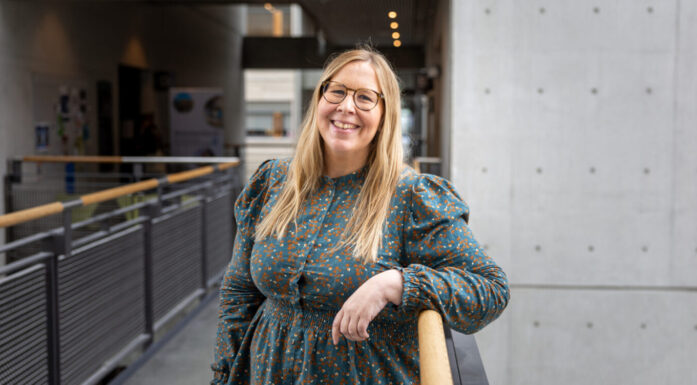
We are aware that many people take early retirement, reduce their working hours, or go on sick leave in order to care for their elderly relatives. This can hardly be a good solution, given that there are already too few people in the workforce in Norway today,” says Wenche Malmedal, professor at NTNU. Photo: NTNU
Norway already has a large ageing population, but so far, it is only a ripple compared to the “silver tsunami” that is on its way. In the next 20 years, Norway will have 250,000 more people over 80 years old. In just five years, there will be more elderly people than children in Norway for the first time.
It is estimated that there are just over 100,000 people currently living with dementia in Norway. By 2050, this figure is expected to more than double.
“We have been aware of this development for a long time. However, there are fewer nursing home spaces now than before. Instead of increasing capacity, it is being reduced,” said Susan Saga, an associate professor at NTNU.
Malmedal believes that municipal funding needs to be significantly strengthened – there is a need for more round-the-clock care spaces.
- You might also like: Patients’ experience of healthcare should be a greater part of assessing quality
Taking sick leave to care for the elderly
“The current system is not designed to handle what is happening now or in the future. We are aware that many people choose to take early retirement, reduce their working hours, or take sick leave in order to care for their elderly relatives. Given that there aren’t enough people in the current workforce in Norway, this is hardly a good solution,” said Malmedal.
Both Saga and Malmedal have been supervisors for Gunn Steinsheim, who wrote her doctoral thesis at NTNU. It provides a glimpse of what it can be like for an elderly person with dementia currently living at home in Norway.
As mentioned above, two out of three caregivers have committed at least one abusive act against the person with dementia over the past year.
Here’s a breakdown of the types of violence, abuse and neglect elders were subjected to:
- 63.5% psychological
- 9.4% physical
- 3.9% financial exploitation
- 2.4% sexual acts
- 6.5% neglect
More about what these five categories entail
- Psychological or emotional abuse (threatening, humiliating, or isolating)
- Physical violence (pinching, pushing, hitting, or over-/under-medicating)
- Financial or material abuse (taking or using an elderly person’s money or belongings without permission)
- Sexual abuse (unwanted sexual touching, verbal violations, or rape)
- Neglect or abandonment (failing to provide necessary care or assistance)
The examples in parentheses are not exhaustive but illustrate what the different types of abuse may involve.
Violence can go both ways
Some caregivers report that the person with dementia has carried out similar acts against them, and one in three caregivers has experienced aggression from the person with dementia they care for. In these situations, psychological abuse is also the most prevalent.

We’ve wondered whether the burden placed on relatives by leaving major caregiving responsibilities to them is being stretched too far. The answer to that is an absolute yes,” says Gunn Steinsheim, university lecturer at NTNU. Photo: NTNU
The risk of violent episodes by caregivers toward people with dementia was higher when the caregiver was a spouse or partner of the person with dementia, and when they experienced aggression from the person with dementia.
Stensheim points out that the caregivers may be struggling with their own health problems, and that the ability to cope with a demanding caregiving situation will vary. In addition, it is quite common for people with dementia to develop challenging behavioural and psychological symptoms.
The study also shows that these symptoms are closely linked to a high perceived caregiving burden among caregivers.
“Even though the vast majority of caregivers provide good care, we cannot help but wonder whether the limits are being pushed too far by leaving major caregiving responsibilities to this group of people. The answer to that is an emphatic yes,” said Gunn Steinsheim, an assistant professor at NTNU.
Her thesis shows that many caregivers had clear symptoms of anxiety and depression.
“We do not know if this is due to the caregiving burden, but it is easy to imagine that it could well be,” Steinsheim said.
- You might also like: Abuse of the elderly is widespread
System failure and underfunding
“If caregivers do not receive enough support, you risk ending up with two people in need of help instead of one,” said Malmedal.

The demographic boom of ageing people has arrived, but so far it’s just a ripple compared to what’s coming. “Still, there are fewer nursing home beds now than before. Capacity is being reduced rather than expanded,” says Susan Saga, associate professor at NTNU. Photo: NTNU
In addition to significant political efforts that genuinely improve municipal funding and more round-the-clock care spaces, the thesis shows that even small changes can make a big difference.
“The risk of abuse can be reduced by having a municipal contact person who has knowledge about dementia and who can also assist with bureaucracy and provide proactive support. Some municipalities have good systems in place, but not all,” Steinsheim said.
Saga believes that what this thesis and other similar studies show is a result of system failure and underfunding.
“No one wants the elderly to suffer, or for them to be left to caregivers who have to work themselves to the bone taking care of them,” concluded Saga.
References
Gunn Steinsheim Stretched to the Limit? Informal caregiver burden and elder abuse among home-dwelling persons with dementia, NTNU Open 2025
Gjøra L, Strand BH, Bergh S, et al. Current and Future Prevalence Estimates of Mild Cognitive Impairment, Dementia, and Its Subtypes in a Population-Based Sample of People 70 Years and Older in Norway: The HUNT Study. Journal of Alzheimer’s Disease. 2021;79(3):1213-1226
Official Norwegian Report NOU 2023: 4: Time to Act. The Personnel in a Sustainable Health and Care Service
Norwegian Directorate of Health (in Norwegian): Public health in a life-cycle perspective