Graphene coatings – an eco-friendly alternative
Tired of hauling your boat out of the water to clean its hull? Graphene can replace the toxic chemicals usually used to do this job.
In brief
- Researchers at NTNU have developed graphene-based coatings that can prevent biofouling on boat hulls without the use of toxic biocides.
- Graphene, an ultrathin layer of carbon atoms, physically damages cells and inhibits fouling without being chemically toxic.
- Experiments show that such coatings can protect both boats and maritime infrastructure in a more environmentally friendly and durable way.
- This summary was produced using artificial intelligence and subsequently reviewed by a member of the editorial staff.
Hull fouling is a problem familiar to most boat owners, and for the maritime industry, marine biofouling represents a significant challenge.
Biofouling consists of various living organisms that attach themselves to parts of boats below the waterline. These can include microorganisms, algae and shells. Fouling increases water resistance, fuel consumption and maintenance costs. Many owners commonly haul their boat out of the water once a year to clean the hull.
“The traditional way to remove fouling is to use toxic biocides. However, this has a negative impact on the environment, and we should therefore limit their use,” said Michael Kelly from the FACET research group at NTNU’s Department of Materials Science and Engineering.
- You might also like: Cheap, dirty leftovers can produce pure oxygen
More eco-friendly
Kelly’s recent doctoral thesis investigates a more environmentally friendly alternative. This alternative goes by the rather complicated name of ‘graphene-based polymer nanocomposite coatings’. Graphene is a material consisting of a single layer of carbon atoms.
“The graphene coating is both durable and less toxic than biocides, while also acting as an anti-fouling agent,” explained Kelly.
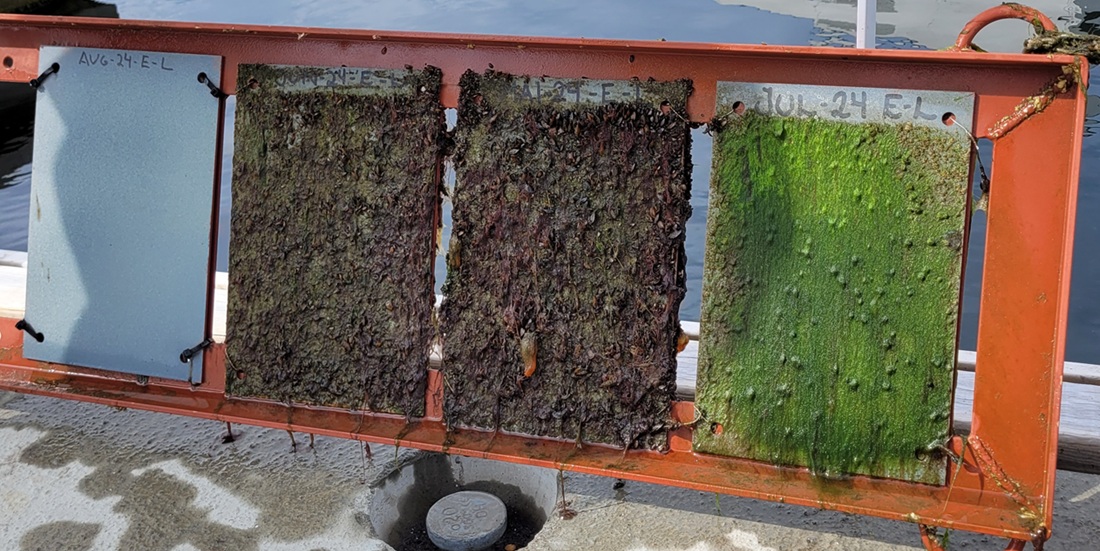
He studied the effect of mixing graphene, graphene oxide and metal oxide nanoparticles with epoxy and silicone. The aim is to establish how these materials can prevent fouling and the formation of biofilm both in the laboratory and in the sea.
- You might also like: Atomic-level 3D models show us how gadgets work
Graphene damages cells upon contact

Michael Robert Kelly. Photo: NTNU
“The findings show that graphene nanomaterials prevent fouling not primarily by being chemically toxic, but by physically damaging cells upon contact with the material,” explained Kelly.
He also investigated different epoxy blends and graphene oxide fillers to improve the coatings’ strength and durability.
“The results are promising in terms of developing effective coatings that protect both vessels and infrastructure with minimal environmental impact,” Kelly said.