This special solar cell system produces both electricity and heat
Researchers have developed a solar cell system that uses mirrors to concentrate solar energy. In addition to electricity, it produces heat for a plant that will capture carbon from industrial emissions.
The solar cells in the large pilot plant are a full five metres high and consist of many mirrors that are angled towards the solar cells to concentrate sunlight. They make it possible to collect the sun’s rays into concentrated solar energy, as well as heat that supports a plant designed to capture CO2.
“The system has been tested and validated. It is quite innovative and unique and stands out by storing heat in addition to the electrical current,” says SINTEF research scientist Alfredo Sanchez Garcia.
The energy from the plant will be used to capture carbon from industrial emissions.
The researchers have collaborated with Svalin Solar on the development of the plant. Their inspiration was taken from a similar plant that the Norwegian manufacturer has already constructed for floating solar energy systems.
Hot water for the heat pump
The solar cells in the plant have a tracker that follows the sun. It moves constantly to make the best use of the sun and capture as much daylight as possible. In addition to producing electricity, the plant also stores heat using pipes that contain liquid, located under the solar cells.
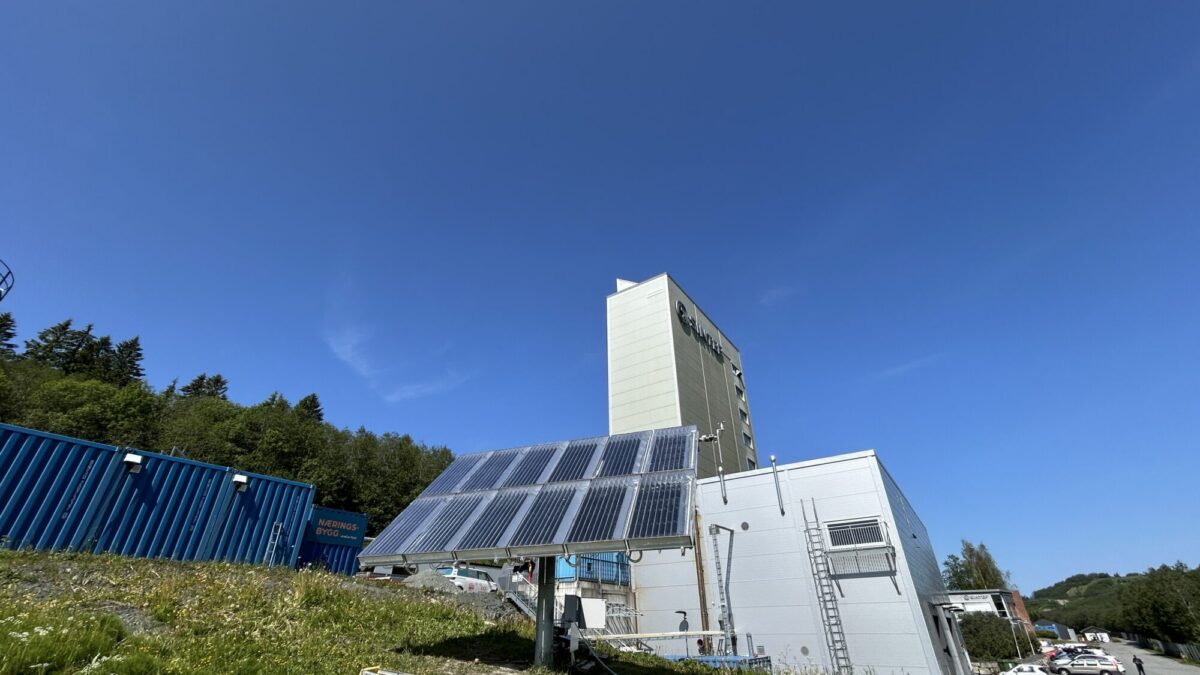
Cold water is introduced and circulates beneath the solar cells where the water absorbs heat. It then travels on to a heat pump that increases its temperature further. Illustration: SINTEF
“The captured heat is around 60 degrees. That’s really high for solar energy, but not warm enough for carbon capture. Therefore, we’ve also developed an advanced heat pump that can use the heated water to generate 130 degrees, which is necessary to start the carbon capture process,” says SINTEF research scientist Richard Randle-Boggis.
Saving energy
A pilot plant was set up last year, and is now being tested at the Multiphase Laboratory at Tiller south of Trondheim. Here it is connected to an existing carbon capture plant. The goal is to look at the potential of solar thermal energy to assist in the carbon capture process.
“Carbon capture is a very energy-intensive process, normally requiring about 3.1 megajoules per tonne of CO2. Our system can reduce the amount of energy this process needs,” says Randle-Boggis.
The tests carried out at the pilot plant showed that the new system used 0.52 megajoules less energy, a reduction of about 17 percent.
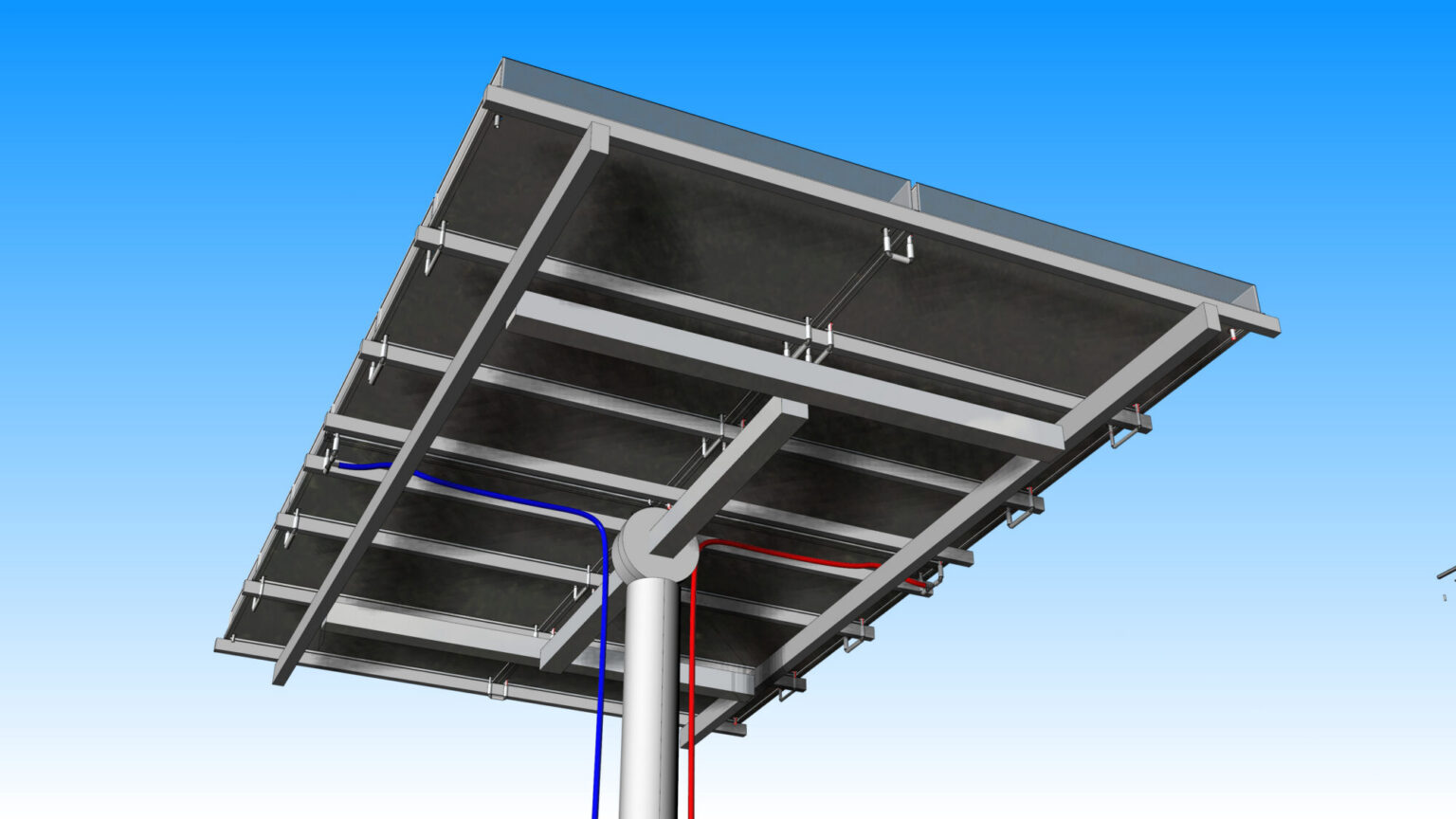
The pilot plant was tested at Tiller this past summer. The solar panels follow the sun’s path to maximize the effect of the solar radiation. Photo: SINTEF
“Based on model calculations, the results show that if the system is optimized and scaled up – for example by reducing heat loss and improving solar concentration – the energy requirement for carbon capture could be reduced by up to 39 percent. This shows that the potential for further improvements is significant,” says Garcia.
Project facts:
Trineflex is a large four-year EU project that started in 2022 to address the energy needs of heavy industry. The project has a total cost of 19.3 million euros and involves 28 partners. The main goal of Trineflex is to support heavy industry in the transition to achieve its sustainability goals using renewable energy and digitalization. SINTEF is a partner in the project.
Weather-dependent solution
The results of the tests were naturally very weather dependent. The test period in August 2025 was unusually grey with very little sun, which limited energy production.
“There was less sun than normal on the days we tested. We could have achieved even better results if we had been luckier with the weather,” says Garcia.
He also points out that the tests were conducted under Nordic conditions. In countries with more sun, such as further south in Europe, the plant would be able to produce more energy and utilize it even better.
“However, this test shows the system’s dependence on weather conditions. If conditions aren’t good enough, the system would need to have extra electrical heat supplied to the heat pump to maintain operation,” says Garcia.
Industrial pilot in Italy
The pilot plant in Trondheim was built to validate a new model for carbon capture that integrates the use of renewable energy.
“Now that the model has been validated, it will be used in an industrial pilot at a glass manufacturer in Italy,” says Garcia.
This will give the research team an answer as to how well the concept works under industrial conditions.
Garcia believes that other energy-intensive industries could also benefit from this solution. The next step will be to optimize the system.
- You might also like the project page Trineflex – Transforming energy intensive industrial processes