Why do we cheer when our sports favourite does well?
Why are we so happy when our favourite wins, especially against the odds?
It’s time for the Winter Olympics, and people across the globe will sit in front of their TVs with the hope that their country brings home lots of medals.
But why does this make us happy? Why do we get so excited when the person we support is doing well in sports? After all, we’re not the ones who are actually winning anything.
“It’s likely because we can identify with this person ourselves,” says Hans Martin Thomassen, an associate professor at NTNU’s Department of Geography and Social Anthropology.
Thomassen is an anthropologist, and anthropology is the study of humans as a species and as social beings. He has a good grasp of why people behave like people. And a useful understanding about sports too, as it turns out.
- You might also like: Making the world’s fastest skis
The contrast in the impossible that is still possible
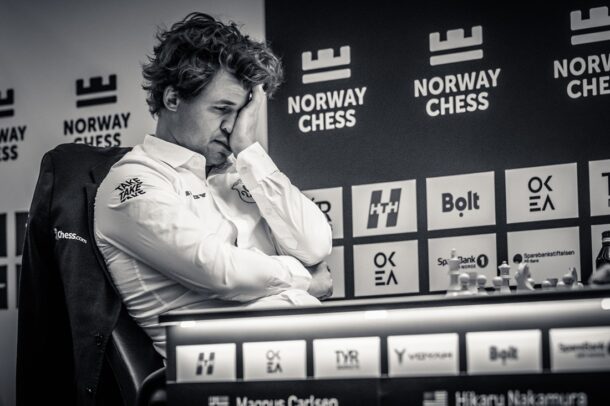
Magnus Carlsen during the Norway Chess competition in 2025, which he won – even though he doesn’t look like he won. Photo: Michal Walusza, Norway Chess
“When Magnus Carlsen usually wins either the World Championship in blitz and/or rapid chess match, that makes many Norwegians excited. That’s because Magnus comes from a rural village in Norway. It shouldn’t be possible to come from such a small place and at the same time crush other chess masters that come from much larger places,” says Thomassen.
And this contrast is one of the key reasons we cheer.
“Those of us who sit at home on the couch and enjoy watching chess can easily identify with people who come from places where no one would think anyone could live and who at the same time do something great. In that sense, all athletes in Norway are potential national heroes,” he says.
Winter sports still popular – despite Klæbo’s superiority
The fact that Norway is doing brilliantly in winter sports is not exactly something new. Norway is by far the nation that has consistently won the most medals in the Winter Olympics. However, in recent decades, Norwegians have also become more proficient in other sports, even world sports such as football, tennis, and golf.
Can winter sports continue to evoke the same enthusiasm it used to in the Norwegian public?
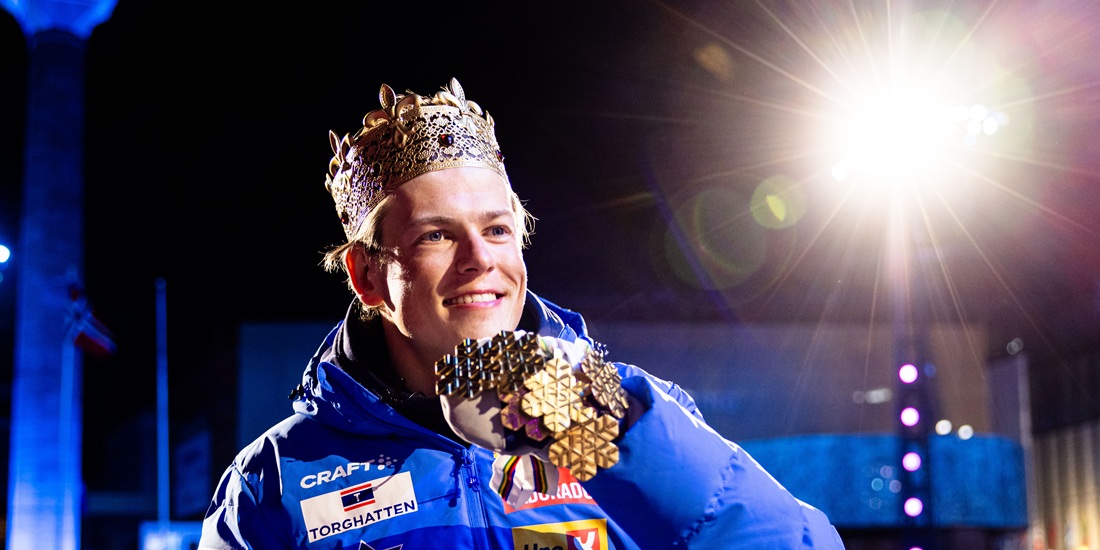
Norway’s cross-country ski phenomenon Johannes Høsflot Klæbo didn’t even win Norway’s 2025 sportsperson of the year award, even though he won six Nordic World Ski Championship gold medals last year.
“Klæbo is a potential sports hero, but didn’t succeed in the tough national competition for ‘sportsperson of the year’ simply because he never has to fight that hard to win,” says Thomassen.
His athletic performance simply didn’t look difficult enough. Klæbo wins too easily, he is far better than the competition.
“He’s already king of the hill, and that means he gets less attention,” Thomassen said.
Superiority is a small problem
If Norway always wins, that give us a small problem. Maybe a luxury problem, but still.
“In winter sports, and especially in cross-country skiing, we mostly know in advance who will win. There’s not much that surprises us there,” says Thomassen.
But the outsiders, they usually show up. That is where the hope lies.
The outsiders who win keep the spirit alive
“Our enthusiasm can still be kept alive by a continued belief that a phoenix may appear from the ashes,” he said.
An example of this is the Norwegian Pål Trulsen, Olympic curling champion during the 2002 Salt Lake City Olympics. The Norwegian team, against all odds, won against giant Canada in the final, and more or less the whole of Norway cheered.
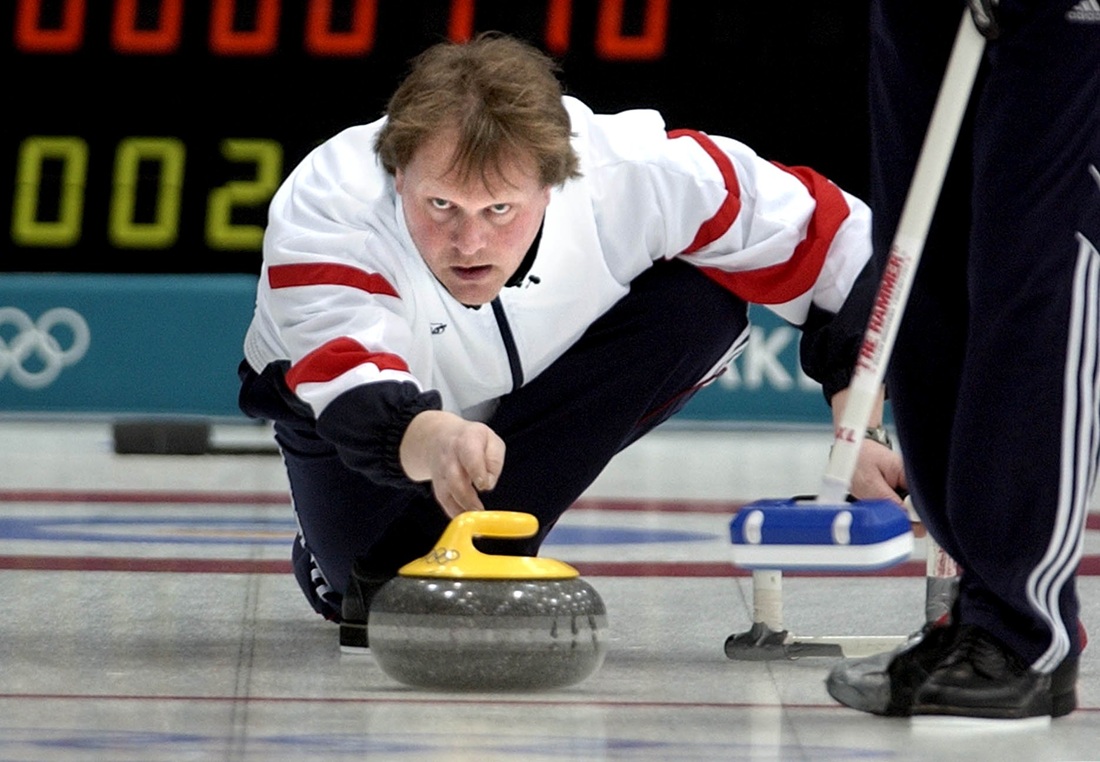
Pål Trulsen of Norway in action. Trulsen and his teammates Torger Nergaard, Bent Ånund Ramsfjell, Flemming Davanger and Lars Vågberg unexpectedly defeated the Canadians and won gold in curling during the 2002 Olympics in Salt Lake City. Photo: Claudio Bresciana, SCANPIX, NTB
Trulsen and his gang appeared out of nowhere, were down for the count, but got up again, against all odds.
Trulsen and the team won in the “right way”, according to Norwegian culture. Struggling, against the odds.
“In this place we call Norway, it is expected that winning will be not only balm for the soul or ego, but important for morale. Being a Norwegian athlete involves far more than just the physical demands of competition,” he said.
Winter sports give us a high
“I feel confident that as the Olympic broadcasts are sent from Milan, and as the medals tick in, Norwegians will feel excited,” says Thomassen.

Hans Martin Thomassen. Photo: NTNU
He believes that many people will feel the intoxication that follows from the athletes’ successful quest for Olympic metals. And also the intoxication that follows from the contrast between the “underdogs” and the geopolitical superpowers.
“Personally, I look forward to and dread the Olympics. I look forward to watching all the competitions that feature powerful and elegant female Dutch speed skaters and Swedish female cross-country skiers. I dread it a little when after a few days I will probably also be a little intoxicated by all of Norway’s medal wins. Fortunately, this intoxication is of the short-term kind,” Thomassen said.