Super microscopes help make greener batteries
Researchers rely on super microscopes to develop more efficient next-generation batteries.


Researchers rely on super microscopes to develop more efficient next-generation batteries.

Longyearbyen, the world’s most northerly city, could save more than 100 million kroner (11.5 million US dollars) a year in the cost of electricity, if a completely green hydrogen-fuelled power station is built in preference to laying a cable from the mainland, according to calculations made by SINTEF scientists.

In a few years we’ll be able to charge virtually wherever and whenever we want with only minimal buildout of the power grid, according to electrical engineering professor Magnus Korpås.

Researchers have established a technique that will help ensure a stable supply of electricity even as new renewable energy sources come on line. The trick is helping all of the subsystems to work in concert.
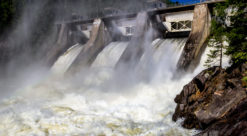
It’s not easy for big, profitable companies to respond to huge technological changes. One NTNU researcher hopes to help Norway’s electric power industry cope with the market challenges from renewable energy and changed consumer behaviour.

Research shows that fitting tyres with very low rolling resistance, combined with the right road surfacing, can provide just as much noise reduction as traditional noise barriers.
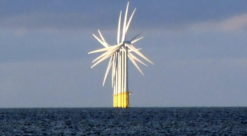
Policymakers, industry and government officials will have to invest US $2.5 trillion for electricity generation over the next 20 years. A new report presents the environmental costs and benefits linked to different renewable energy sources, and makes one thing abundantly clear: anything is better than coal.
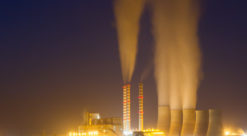
NTNU was given only two admission tickets to the UN climate talks in Paris later this month. The tickets will be used in part by two researchers from the university’s Industrial Ecology Programme to give a workshop about carbon accounting.

There’s no time to waste in shifting to renewable energy sources if we are to avoid dangerous climate change. That’s especially true when it comes to bioenergy, which causes a temporary increase in CO2 levels that is later removed as replacement biostocks grow.

In Italy, researchers and drilling technologists are on the verge of making a geological breakthrough. They’re drilling deep enough to find what they call ‘supercritical’ water. If they succeed it will be a major technological breakthrough.
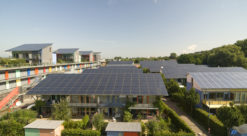
Norway’s wealth and prosperity over the last four decades has been built on oil, but Jeremy Rifkin, a futurist and social and economic thinker, says it’s time for the country to change. The Third Industrial Revolution is coming, and Norway needs to abandon fossil fuels and move towards a greener future that relies on renewable energy, shared transport and ultra-efficient housing.
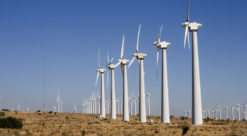
The countries of the world wrapped up preliminary climate talks in Lima, Peru this weekend with an agreement on how the UN’s 194 countries will tackle climate change. The agreement comes in advance of major negotiations scheduled for Paris next year to designed to curb the world’s production of greenhouse gases. In a publication from earlier this year, researchers at NTNU’s Industrial Ecology Programme report that the low-carbon future that would result from curbing greenhouse gas emissions is both feasible from a practical standpoint, and will also substantially reduce air pollution.
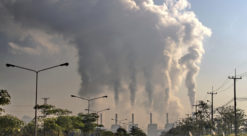
Climate talks in New York this week have offered a glimmer of hope that the world’s political leaders finally understand the need to act to curb global warming. An NTNU researcher says that these actions will have a beneficial side effect: cleaner air in some of the most polluted places on the planet.

With more and more Norwegian households owning one or even two electric cars requiring charging overnight, how will we manage without sacrificing our hot morning shower and fresh bread for breakfast?

Many people are concerned that electric cars produce dangerous magnetic fields. New research shows that this is not the case.