Technology focused motorists are positive to road pricing
Road pricing may soon be replacing toll charges on Norwegian roads. But researchers still don’t know if this will help to reduce and regulate road traffic.


Road pricing may soon be replacing toll charges on Norwegian roads. But researchers still don’t know if this will help to reduce and regulate road traffic.
Energy efficiency measures in buildings can offer Norway a three-fold benefit – by contributing to avoiding an energy deficit and high electricity prices, and to achieving its stated climate change mitigation targets for 2030 and 2050.

Recent research indicates that the best environmental solution is in fact to install less insulation in our homes and consume more electricity for heating. But first, some preconditions have to be met.
Today, products that utilise rare materials are for the most part manufactured in China. However, the EU has recently decided to boost its raw materials supply security. Researchers and the minerals industry are now looking to Norway.

Four of the six Gulf States are among the top five biggest greenhouse gas emitters per capita. Why? Oil is the answer, but not quite in the way you might think.

What should power the future’s shipping fleets? How can we change the way we build buildings so that they’re truly climate neutral? If we’re going to actively alter the planet’s climate, how should we study this?
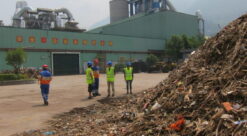
Groundbreaking projects funded by Norway demonstrate that foreign aid can help to combat both poverty and environmental problems. One result is that uncontrolled plastic waste may become a resource for the cement industry.
Urban growth, densification and climate change are putting increasing pressure on our water drainage systems. We now need better systems to manage the increasing number of uncontrolled stormwater events.
Research institutions from Norway and other countries have collected a great amount of data from the northern oceans in recent years. Many people want access to this information.

Up until now, car manufacturers and others have been recommending using electricity from the grid to warm up your car on cold winter mornings because this will save the battery and ensure maximum range. But research is showing that this isn’t always necessary. Nor does it save you money.
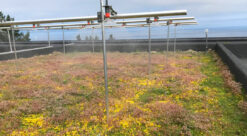
Vegetable farmers will soon be helping to reduce greenhouse gas emissions and environmental pollution while at the same time boosting our self-sufficiency.

Unstable winters are making reindeer herding more difficult. The animals are also having trouble finding food on their own.

The addition of slag has been shown to reduce greenhouse gas emissions from concrete manufacture by more than 95 per cent. Researchers have now discovered that the concrete delivers.
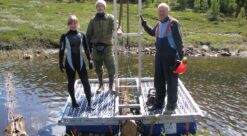
We think of trees as silent sentinels, watching as the world goes by and the ages pass. But what if you could interview them about what they have seen?
It is essential to speed up electrification of the Norwegian heavy transport sector. We believe that this is possible in spite of full capacity utilisation in the electricity grid. Here are our three recommendations.

Several whale species disappeared from Europe long before whaling became a major industry. Two of the most common species are no longer found here, and one of them is almost extinct.

In the future, we will see the emergence of local energy communities made up of households and businesses who buy and sell electricity among themselves. But someone will have to work out how to determine the price.

Solar panels installed on roofs and facades increase the fire risk. However, research shows that small changes in construction can make a big difference.
To limit global warming to 1.5 degrees, the EU’s Science Advisory Board on Climate Change recommends that Europe reduce its greenhouse gas emissions by 90-95% by 2040 compared to 1990. Fossil fuels should be phased out as quickly as possible.
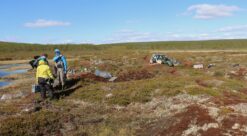
Ever wonder how climate researchers know what they know? 63 Degrees North journeys to 69.5 degrees North to find the answer to that exact question.

NTNU Amos is an expansive ocean research and innovation community that’s composed of both highly honed specialist expertise and an incredibly broad scope of knowledge. It also adheres to a popular Norwegian football strategy: Develop talents by allowing them to do what they do best – and playing to each other’s strengths.
Norwegian hydrogen research laboratories have recently been celebrating breakthroughs that can help heavy industry to achieve climate neutrality. But current Norwegian government policy means that these findings will most likely only benefit our competitors.
The Nyhavna industrial area in Trondheim, which is being developed into a new mixed-use neighbourhood, has seen significant maritime technology research and innovation. NTNU Nyhavna for autonomous vessels is now officially opened.

Calculations reveal that hydrogen, batteries and solar panels will make it possible to use electric construction machinery on sites where access to the grid is limited.