Tomorrow’s fish farms will be unmanned
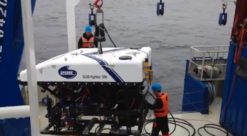
Robotics technology is making inroads into the aquaculture sector, making it possible to regulate facilities from onshore.

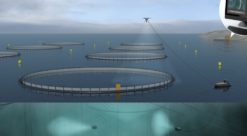
Robotics technology is making inroads into the aquaculture sector, making it possible to regulate facilities from onshore.
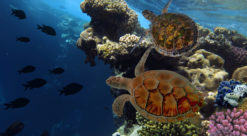
Science has made great strides since Svante Arrhenius, the Swedish Nobel Laureate who in 1896 first determined that carbon dioxide from human activity could warm the planet. The same progress hasn’t been made in increasing the number of women in the sciences.
The close relationship between SINTEF and NTNU has catapulted the university to a number one ranking among the world’s universities when it comes to publishing in partnership with a single industry collaborator.
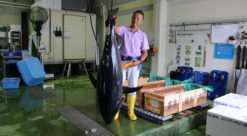
The Japanese eat one in ten of the world’s fish, and 80 per cent of the planet’s prized —and critically threatened — Bluefin tuna. Tuna aquaculture pioneered at Kindai University in Japan offers hope for both fish lovers and the fish.
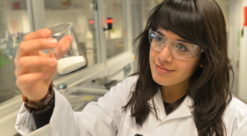
Every year 340,000 tonnes of usable whitefish by-product are discarded into the sea. But the fisheries industry has now identified ways of halting this practice.
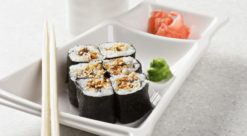
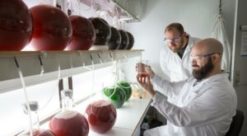
First time cultivation of red Porphyra algae in a Norwegian lab.
Minute particles of plastic, called microplastics, are everywhere. An international research team is now about to investigate how toxic microplastics are to marine animals such as plankton, crabs and fish, and to find out if such plastics accumulate in the food chain.
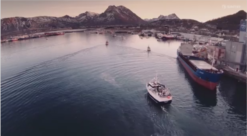
Big Data means that professional fishermen will soon be getting their own decision-making tool. It will tell them where fish shoals are located, and how their vessels can be operated as economically as possible.
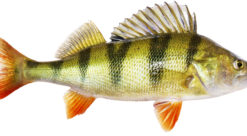
Fish can adapt their metabolisms to cope with warmer ocean temperatures, but not necessarily with extreme heat.
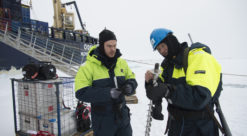
Representatives from Japanese and Norwegian universities, research institutions, government agencies and industries interested in polar issues will gather in Tokyo in early June to present research results and build partnerships.
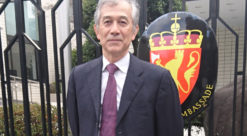
Starting today, Hiroshito Matsumoto will work from a base in Toyko on behalf of NTNU and the University of Bergen to build new research partnerships between Japan and Norway.
Overfishing is part of the climate problem. There is little doubt that we need to change our habits, but what exactly do we need to do, and why is it so difficult?
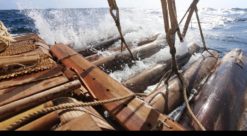
The Kon-Tiki2 expedition aims to both reinforce and challenge Heyerdahl’s theories – and NTNU will gather unique research material from the major oceans that the expedition crosses
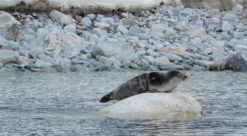
Every year, an estimated 8 million metric tons of plastic waste blows, falls or flows into the world’s oceans. Earlier this autumn, participants in the annual Svalbard Course plucked up 512 kg of the stuff from just one beach in two hours.
The science program Daily Planet has 8 million viewers. During the last week of June, a production crew from the program filmed an expedition to look for a plane wreck from the Second World War that is located on the bottom of Trondheim Fjord.
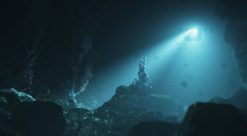
NTNU researchers are delving deep to investigate the seabed and opportunities for deep sea mining to extract precious metals that lie several thousand metres deep.
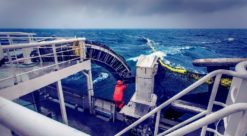
Robots equipped with machine vision enable us to classify catches on board vessels with high levels of accuracy – saving fishing crews time and money.
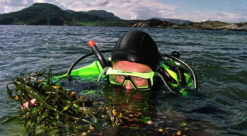
A Norwegian research group has been able to achieve bio-oil yields of 79% from a common kelp. Other researchers working with the same species have yields closer to 20%. The secret is to heat the kelp very quickly and bring it to the right temperature within seconds.
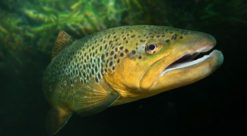
Armed with special acoustic tags, a team of researchers is following 50 individual fish for as long as seven months to learn more about their life – and death — in Norwegian fjords.
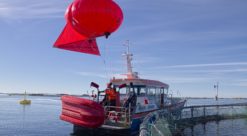
Drones and “flying eyes” are making a major advance into the aquaculture industry.
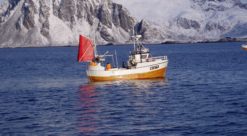
It isn’t just car manufacturers that are looking into hybrid energy systems. A Norwegian boat builder is now aiming to become the world’s first supplier of environmentally friendly fishing vessels.
There is often a need during seine net fishing for […]
The smaller fishing fleet is disproportionately represented when it comes […]
There is often a need during seine net fishing for […]