Stroke patients with delirium may struggle more afterwards
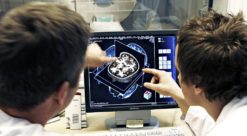
Stroke patients who experience delirium during a stroke could be more prone to developing cognitive and psychiatric difficulties.

Stroke patients who experience delirium during a stroke could be more prone to developing cognitive and psychiatric difficulties.

Things slow down for a lot of us as we get older. But your brain can stay healthy longer with a little effort.

Twice as many women as men suffer from headaches. Migraines are the leading cause of disability for people under the age of 50.

Many people who experience problems with memory after a stroke regain their memory within three months.

How can we get an artificial hand or foot to communicate with the brain? NTNU researchers want to use the fat layer just under our skin.
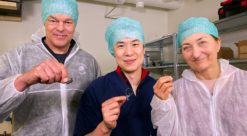
Meet Mini2P – a tiny brain explorer that allows us to discover completely new landscapes in the live and active brain.

More than half of the individuals who suffer a stroke subsequently struggle with concentration and problem solving. Cognitive impairment following a stroke doesn’t go away. The problem has been overlooked, according to a major research project.

Researchers have gained a first insight into how the brain structures higher-level information. By extracting and analysing data from a neural network of grid cells, they found that the collective neural activity is shaped like the surface of a doughnut. The study, from NTNU’s Kavli Institute for Systems Neuroscience and collaborators, is published in Nature.
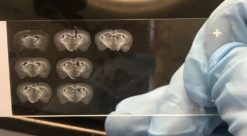
New findings show how experiments with animals can provide helpful information to understand Alzheimer’s and learn how we can better fight the disease.

You may think that they’re random movements, but they’re not: The way you use your eyes when perceiving the world around you reveals something significant about you and how you engage with the world. It can even be a diagnostic of brain disease.
The University of Bergen and the Kavli Institute at NTNU are joining forces on brain research with support from the Trond Mohn Foundation.
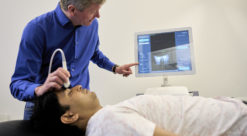
A new invention may be on the verge of replacing a costly cranial surgical procedure currently being performed on some traffic accident victims and other patient groups. The ultrasound-based technology has now been granted CE approval for the European market.
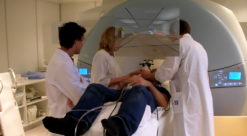
Do you find it easier to remember exactly where something is located rather than remembering exactly what is there? In that case, your experience is in sync with NTNU brain researchers’ new findings about memory.
A tiny region in the middle of the brain plays a far more important role than previously known in helping it respond to changes in the environment, a new study shows.

The culprit behind a large number of cancerous tumours is known to be a certain protein. Now for the first time, research shows that the same protein is the cause of several rare brain syndromes.

Researchers at NTNU are studying brain cells in the lab to investigate the foggy beginnings of diseases like Parkinson’s and Alzheimer’s.
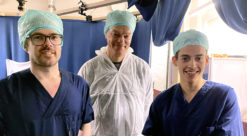
Nobel laureate and Kavli Institute for Systems Neuroscience founding director and professor Edvard Moser says a new technology “opens doors to experiments we could only dream about 5 years ago.” The technology in question is called Neuropixels 2.0, a new favourite in the neuroscientists’ toolbox.
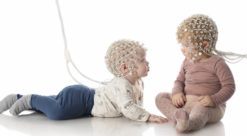
For the first time, researchers are measuring the brain processes that control an infant’s first arm movements. The findings may shatter old myths about the immature baby brain.
The 2020 ISI/Web of Science Highly Cited Researchers list includes seven researchers affiliated with NTNU. The list includes authors who have multiple articles ranked in the top 1 per cent by citation in their field over the last decade.

A Norwegian-Israeli team of neuroscientists has been awarded an ERC Synergy Grant to explore the biological basis of spatial operations in the brain.

A sizable research consortium coordinated by NTNU and St. Olavs Hospital will analyse large amounts of MRI exam data from around the world. The data will help researchers gain important new understanding about brain injuries in people who have had trauma to the head. The goal is to improve patient health care.
A new study shows that people who have had concussions sometimes develop long-term after effects, including sleep disturbances. The findings could also be of use to other patient groups.

A lot of people struggle with poor memory and impaired attention after a concussion, but how they experience their symptoms differs from their test results.

A daily 10-minute training session using an app could reduce migraine attacks for many sufferers, according to researchers.