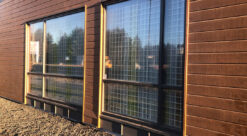
A new reuse guide seeks to reduce material waste
How to know whether building materials are fit for reuse? A new guide can tell.

How to know whether building materials are fit for reuse? A new guide can tell.
A game-based test that detects hearing loss in children has recently been awarded a European innovation medal. Both the test and the technology behind it have been developed by Norwegian researchers.
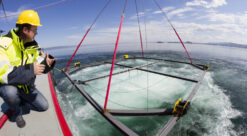
Norway has developed subsea technologies that you may never have heard of to ensure the safe operation of Norwegian oil and gas installations. Our experts are ready and waiting to assist in the Baltic Sea.

Norway needs to take proactive steps to retain its lead in developing floating offshore wind, says NTNU professor.

The fourth industrial revolution (Industry 4.0) put automation, digitalisation and robotisation very much in the driving seat. But something was missing. The introduction of Industry 5.0 will hand control back to you and me.
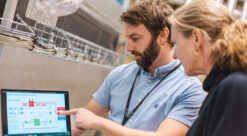
Up until now it has been a challenge to store the energy we generate when the sun is shining and the wind is blowing. But researchers at a laboratory in Trondheim in Norway have succeeded in doing just this – and entirely without any form of advanced battery technology.
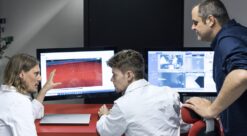
New research on semiconductors using microscopes that provide 3-D models at an atomic level could one day have an impact on your electronic gadgets.
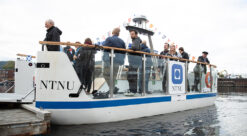
In earlier times, cities like Trondheim and Bergen had a ferryman who rowed people from place to place. They were the taxi drivers of the waterways. Now, a new, future-oriented form of water transport will be available to the public.
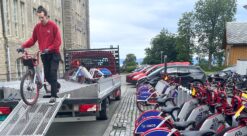
Bike-sharing is a way for cities to cut their greenhouse gas emissions while limiting urban congestion. But bikes have to be available when and where people want them. A new approach can help by ensuring bikes are in the right place at the right time.

The number of abuse cases against children via the internet has increased by almost 50 per cent in five years, according to the Norwegian Broadcasting Corporation. Researchers at NTNU in Gjøvik have developed algorithms that can help detect planned online grooming by analysing conversations.
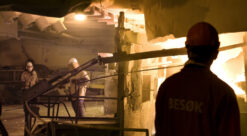
Most people know that metals are made from ore, but how do we make gold from gravel? That’s the process we must understand to be able to make the metal industry climate friendly. Here are some alternatives for CO2-free metal production.
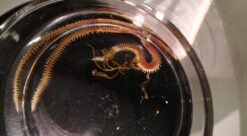
Researchers had the crazy idea of feeding ragworms with locally-cultivated seaweeds. The results were as gold-edged as the worms themselves – a high-quality, locally-sourced and sustainable feed for farmed salmon.

A team of Norwegian researchers has succeeded in producing hydrogen using a far more efficient method than is currently in use. The technology was ready as early as in 2017. The team has also demonstrated that the process can be scaled up for commercial application.
Very soon, there will be enormous numbers of used EV batteries available, but we have yet to work out how we will be organising the reuse of this massive resource.
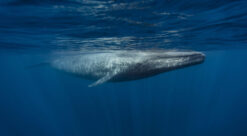
The Earth’s oceans are crisscrossed with roughly 1.2 million km of fibre optic telecommunication cables — enough to girdle the planet 30 times. Researchers have now succeeded in using fibre in a submarine cable as a passive listening system, enabling them to listen to and monitor whales.
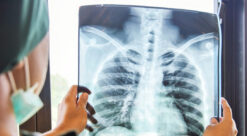
Lung cancer is one of the most dangerous forms of cancer. Treatments are available, but they are demanding on patients and less than 30 percent survive. But mRNA technology is offering new hope for higher survival rates because treatments target the malignant cells in an entirely new way.
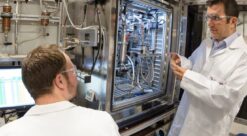
As part of a six-year research project, researchers have succeeded in developing a membrane that captures CO2 in an entirely innovative way. Their work has resulted in an article published in the prestigious research periodical Science Magazine.
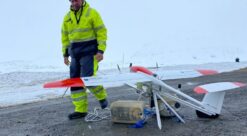
NTNU researchers from AMOS, the Centre for Autonomous Marine Operations and Systems, used small satellites and subsea robots — and everything in between — to study marine life in Svalbard’s Kongsfjorden in a first-ever experiment in May.

Drug dealers have tricked shipping cargo tracking systems to think drugs are “bananas” and unknown actors have jammed GPS signals in northern Norwegian waters. Fixing these problems requires understanding how seafarers themselves perceive cyber risks — so they can do a better job protecting themselves and their vessels.
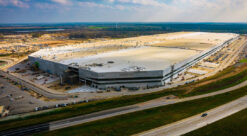
The idea behind batteries is to make the planet greener, but they all start their lives as energy-demanding environmental liabilities. Research scientists at SINTEF have succeeded in making batteries cheaper and simpler using a process that requires much less energy consumption.

What if a concrete building could heat itself – while being built? Research scientists are about to make this dream a reality.
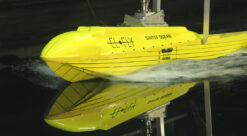
With this seaplane you will be able to take off from Trondheim Fjord or Flesland Airport in Bergen, Norway, and land in the Geiranger Fjord one hour later.

Electrification of the Norwegian continental shelf is a long-standing political issue. Now research scientists believe this can be done using fuel cells installed on the platforms. This will reduce CO2 emissions and remove the need to lay new subsea cables.
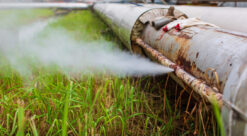
High energy prices highlight the importance of the thousands of kilometres of insulated pipe networks and equipment in industrial plants. However, corrosion under the pipes’ insulation is hard to detect and can have severe consequences. New surveillance technology being developed by SINTEF can help combat this looming threat.