The FINDRISC questionnaire has been used extensively to predict a person’s degree of risk for getting type 2 diabetes, but new findings show that it does not adequately identify the most vulnerable individuals.
The distinctly Norwegian beer-brewing yeast kveik reduces fermentation time drastically. That’s a huge advantage, according to NTNU PhD candidate Christian Schulz.
The world’s transportation network is constantly growing. “Green asphalt” and sustainable bus transportation will ease the environmental impact of future transport routes.
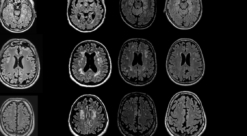
Nearly 40 million people were living with HIV in 2017, the UN says, with just over half taking antiretroviral therapy. These drugs have cut AIDS-related deaths by more than half since the 2004 peak, but the disease cannot be cured. A new mechanism uncovered by a Norwegian research group could improve the chances of developing one.
Several high-profile studies report that ocean acidification will affect coral reef fish behaviour enough to jeopardize their survival. One research team looked more deeply at this assertion — and found it is simply not true.
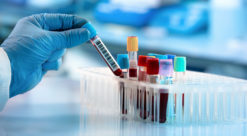
An analysis of 5 000 proteins from a blood sample is providing valuable information on a variety of diseases we might get or be at risk for. “Sensational” is the word from Christian Jonasson at the HUNT Research Centre about the US-British-Norwegian study.
Humankind will need to harness carbon capture and storage technologies to help keep global warming to 2 degrees C or less. New research shows that there’s plenty of room to store captured CO2 — in offshore geologic rock formations.
Lithium from Norwegian electric car batteries isn’t recycled that often. Instead, it ends up as waste when other metals it’s mixed with are recycled. But this may change.
When accidents happen, the difference between life and death may come down to the materials of the car, boat or building that you find yourself in. The best possible protection requires understanding as much as possible about how different materials behave under stress.
Floods are expensive and at times dangerous. But what if a computer disaster simulation game could show politicians and local people what potential floods in their town would look like?
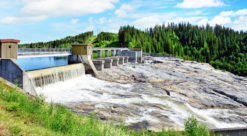
The Norwegian public authorities’ estimates of the potential to expand the country’s power plants are probably too low. A new approach is creating opportunities for increased production while also enhancing environmental aspects.
A newer method of measurement has helped scientists date some stave churches more accurately than in the past. The method shows that several stave churches are older than the dates previously attributed to them.
An analysis of almost 300,000 unsolicited questions written by young Norwegians on the website ung.no, has provided major insights into what they’re really interested in today. Their bodies, health and identity are among the topics heading the list.
Most people think it’s a good thing that public health authorities propose preventive health measures. The greatest resistance is found among individuals who need these measures the most – such as smokers, people with unhealthy diets or who don’t exercise.
How can we protect nature and act on climate change? In the wake of heated debate in Norway over windpower development, energy researchers from Norway’s largest university and Scandinavia’s largest independent research institute offer politicians some thoughts.
The green transition is impossible without a few relatively unknown substances. Find out more about the raw materials we cannot manage without – and why we have to act smart with them.
Nepal ranks high in maternal and child mortality statistics. A study trip to the mountain country inspired several NTNU students to help improve the situation of Nepali women.
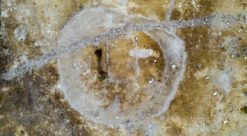
“Vessels like these were imported from the Roman Empire and confirm that this was an area of status and wealth during Roman times,” says archaeologist Merete Moe Henriksen.
The Privacy Statement is about how this website collects and uses visitor information. The statement contains information that you are entitled to when collecting information from our website, and general information about how we treat personal data.The legal owner of the website is the processing officer for the processing of personal data. It is voluntary for those who visit the web sites to provide personal information regarding services such as receiving newsletters and using the sharing and tip services. The treatment basis is the consent of the individual, unless otherwise specified.
1. Web analytics and cookies (cookies)
As an important part of the effort to create a user-friendly website, we look at the user pattern of those who visit the site. To analyze the information, we use the Google Analytics analysis tool.Google Analytics uses cookies (small text files that the site stores on the user's computer), which registers the users' IP address and provides information about the individual user's online movements. Examples of what the statistics give us answers to are; how many people visit different pages, how long the visit lasts, what websites users come from and what browsers are used. None of the cookies allow us to link information about your use of the site to you as an individual.The information collected by Google Analytics is stored on Google servers in the U.S.. The information received is subject to the Google Privacy Policy.An IP address is defined as a personal information because it can be traced back to a particular hardware and thus to an individual. We use Google Analytics's tracking code to anonymize the IP address before the information is stored and processed by Google. Thus, the stored IP address can not be used to identify the individual user.
2. Search
If the webpage has search function, it stores information about what keywords users use in Google Analytics. The purpose of the storage is to improve our information service. The search usage pattern is stored in aggregate form. Only the keyword is saved and they can not be linked to other information about the users, such as the IP addresses.
3. Share / Tips service
The "Share with others" feature can be used to forward links to the site by email, or to share the content of social networking. Tips for tips are not logged with us, but only used to add the tips to the community. However, we can not guarantee that the online community does not log this information. All such services should therefore be used wisely. If you use the email feature, we only use the provided email addresses to resend the message without any form of storage.
4. Newsletter
The website can send out newsletters by email if you have registered to receive this. In order for us to be able to send e-mail, you must register an e-mail address. Mailchimp is the data processor for the newsletter. The e-mail address is stored in a separate database, not shared with others and deleted when you unsubscribe. The e-mail address will also be deleted if we receive feedback that it is not active.
5. Registration, form
The website may have a form for registration, contact form or other form. These forms are available to the public to perform the tasks they are supposed to do.Registration form is for visitors to sign up or register.Contact form is for visitors to easily send a message to the website's contact person.We ask for the name of the sender and contact information for this. Personal information we receive is not used for purposes other than responding to the inquiry.The form is sent as email via Mailgun as a third party solution. The entire submission will be stored at Mailgun for 24 hours. Between 24 hours and 30 days, only mailheader is stored before the submission is deleted after 30 days. The reason for this storage is to confirm whether emails are sent from the website and forwarded to the correct recipient.Once the email is received by the recipient, it is up to the recipient to determine the data processing needs of the email.
6. Page and service functionality
Cookies are used in the operation and presentation of data from websites. Such cookies may contain language code information for languages selected by the user. There may be cookies with information supporting the load balancing of the system, ensuring all users the best possible experience. For services that require login or search, cookies can be used to ensure that the service presents data to the right recipient.