Employees are using ChatGPT for advice, but is this a good thing?
Recent data on people’s habits in the workplace are giving us reason to look into whether the use of artificial intelligence (AI) may be hampering collaboration and knowledge sharing.
Recent data on people’s habits in the workplace are giving us reason to look into whether the use of artificial intelligence (AI) may be hampering collaboration and knowledge sharing.
Plant managers used to be kept awake at night by the fear of unintended incidents. But their new nightmares are much worse.
Norwegian hydrogen research laboratories have recently been celebrating breakthroughs that can help heavy industry to achieve climate neutrality. But current Norwegian government policy means that these findings will most likely only benefit our competitors.
A huge amount of the knowledge we acquire about our work cannot be expressed either digitally or on paper. Children ought to be made aware of this as early as in primary school, because this tacit knowledge is in danger of dying out.
The issue of salmon feed has become a bottleneck, hindering the growth and sustainability of the Norwegian aquaculture sector. In the future, insect meal, bristle worms and bacteria that consume CO2 may become essential components of a farmed salmon’s diet.
Unless we acquire greater knowledge about what happens at the atomic and molecular scale during materials recycling, progress towards a truly circular economy will grind to a halt.
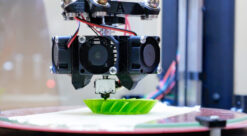
In recent years, 3D printing has exploded in popularity, and may open a new era of faster and more climate-friendly manufacturing. But is it really the manufacturing method of the future?
Soon you may be able to keep your house warm in winter using heat which molecules from food waste have borrowed from yesterday’s sunshine.
The actions that vehicle drivers perform today will be handed over to machines – just as soon as the technology makes it possible and road users demand that such systems be put in place. This is no simple task, but Norway is far ahead of the curve.
In the wake of the shocking revelation from a major Oslo hospital that fear among employees is making corporate whistleblowing difficult, some in the IT sector are promoting the opposite. When something goes wrong, they learn from their mistakes together.
If we are to avoid our cities becoming ‘heat magnets’ one day, and overwhelmed by flooding the next, we have to incorporate wetlands and ditch systems into our urban infrastructure.
Densely-packed housing makes urban areas vulnerable to overheating, pollution and dangerous wind gusts. The effects of climate change can aggravate these problems, but we can also work to prevent them. This can be done by simulating microclimates.
The last dent in your car, two tragic aviation accidents, and the blow out at the Deepwater Horizon platform may all have had the same underlying cause.
Have you ever wondered what the terms digitalisation and digital transformation really mean? Are you unsure about when to use these terms and what they mean to you? And, more to the point, what’s the difference?
When you work from home, you tend to communicate more with the members of your own team. This is good for implementing ideas. On the other hand, you also communicate less with other groups, which does not encourage the creation of new ideas. But all this can be fixed.
Endometriosis: If we utilise all the knowledge we have about cancer, there is reason to hope that effective diagnosis and treatments can be developed to combat the female condition ‘everybody’ is talking about.
During his visit to Norway earlier this year, Bill Gates was keen to emphasise the innovation that will be needed to reduce the costs of mitigating climate change. One place to start is to educate more experts in the field of data processing.
We need the electricity generated by solar panels in order to meet our climate change mitigation targets. But solar power must be integrated rationally and fairly – something that can only be achieved with effective regulation.
Vessel components are being transported all around the world when just a simple datafile would suffice.
We shouldn’t be too worried that conversational agents such as ChatGPT might be making cheats of our pupils. Schools should be empowering them to try out new technologies.
Many Norwegian homes can only be heated using electricity. The authors of this blog argue that in the event of an extended power outage, energy-efficient homes will stay warm for much longer than those built according to the minimum regulatory requirements.
Norwegian oil and gas companies are now plugging and abandoning production wells using an artificial ‘lava’. So far, the results have been excellent. Recent laboratory results indicate that the same method can be used to seal subsurface CO2 storage reservoirs.
Many managers believe that their efforts to promote a healthy psychosocial working environment are succeeding. According to a recent report, however, many employees do not agree. No surprise, perhaps, since it appears that people are defining the concept in different ways.
Blue, also called “low carbon” hydrogen will make for a much more suitable transition towards renewable energy than natural gas.
Machines are currently learning how to identify cancer cells with the help of manipulated light. This approach may help to take the pressure off our hard-pressed health services and reduce waiting times for anxious patients.
The view that natural gas can act as an eco-friendly bridge in the transition from our use of coal to renewable energy has experienced a renaissance in the wake of the European war. Thus, the time is right to review the data behind the politics.
The Norwegian government is committed to reducing greenhouse gas emissions by 55 per cent by 2030. This will involve dramatic changes to the electricity grid system.
A stroke of serendipity, courtesy of the weather gods, will save the Norwegian offshore wind sector from the intermittent moods of windpower. But only if wind farms are distributed across large geographical areas.
Linguistic logic rooted in classical philosophy can help us in our search for future eco-friendly materials.
Artificial intelligence can be of great benefit underwater and SINTEF, in collaboration with the research centre SFI Exposed, is developing systems that will help to boost fish farm safety and security under harsh sea conditions.
Working from home is here to stay. And this makes team building more important than ever. Recent research demonstrates that making employees’ working lives more flexible may also erode their loyalty.
If only the Norwegian building and construction industry would embrace a little more digitalisation, this alone would enable Norway to achieve its 2023 emissions target agreed with the EU.