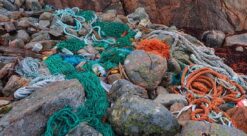
Svalbard: Non-native species are threatening vulnerable plant life
Non-native, invasive species are among the world’s biggest environmental problems. Svalbard has been unaffected – up until now.


Non-native, invasive species are among the world’s biggest environmental problems. Svalbard has been unaffected – up until now.
TOPOCOM is bringing together leading European research institutions to work on a project that could replace today’s electronics.

It’s summer in the Northern Hemisphere and peak season for getting lost in the great outdoors. Learning new ways to find our way back can help us stay safe in the wild.

People who speak a language that has multiple words for different shades of colour perceive the shades more quickly.

Here’s how Norway can limit the loss of an all-important substance, phosphorus.

Some smells are on the verge of extinction, but we may be able to re-create them using artificial intelligence.
Norway’s coastline is littered with plastics from around the world. Plastic pollution is a global problem, but Norway can be a role model in putting an end to it.

Scientists are searching high and low for markers that can reveal the risk of a heart attack before a patient falls ill. Tiny microRNAs and subgroups of cholesterol may be the solution.
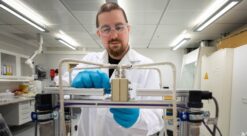
Waste heat from industry can actually heat every house in Norway. A smart solution can harness this energy, while also providing us with clean drinking water.

Using just a single image taken by a capsule endoscopy camera, scientists have succeeded in creating a three-dimensional model of the colon. This new method provides much better images and can help specialists detect disease more rapidly.

When the bacterium detects damage to its genetic material, it sends out an SOS signal that alters the activity inside the cells.

Being young and beautiful can have its risks. The best-looking young people tend to drink and party more – and are more likely to make choices that could lead to problems in adulthood.
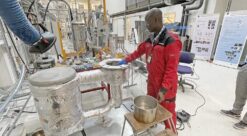
A lot of research has been done to try to come up with ways of cooking food using solar energy, but what works best in practice in sub-Saharan Africa?
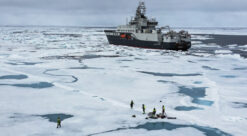
Arctic shipping traffic is on the increase. One day, these ships will be autonomous. New technology that can remove rain, snow and fog from the images produced by the ship’s cameras and sensors will increase safety in extreme conditions.
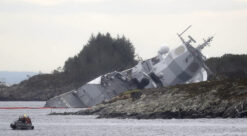
Could the Helge Ingstad maritime accident have been avoided if the Royal Norwegian Navy’s warships had been equipped with artificial intelligence?
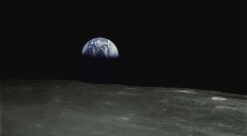
Is it possible to build greenhouses on the moon without transporting any materials from Earth? Researchers at NTNU Social Research and SINTEF believe it is, and are assisting the European Space Agency (ESA).
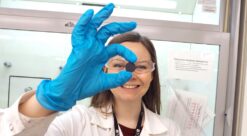
Industry needs a lot of pure oxygen. New materials that are affordable and robust can provide us with cheaper and more sustainable oxygen production.

Magnons, Bose-Einstein condensates and very bright people.
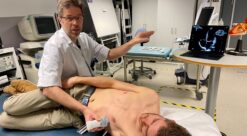
Portable ultrasound devices can bring high technology imaging to your doctor’s office, to emergency vehicles, and to lesser-developed countries. A new AI tool helps make these devices easier for a wider range of health professionals to use.
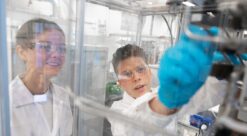
In the future, your apple core may end up fuelling a Boeing. New research could help make the production of aviation fuel from biomass more efficient.

Lonely people are more likely to take medication for depression, psychosis and other mental health disorders.

Is teacher-led play really play? New students don’t necessarily think so. One researcher believes that more free play in school could improve classroom dynamics and strengthen relationships.
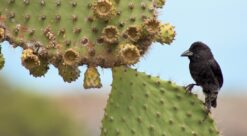
We know that evolution works over many, many millennia, giving rise to everything from hippopotamuses to whales and more. A new study looks at the links between microevolution, or evolution over a shorter period, and macroevolution, or evolution over thousand or millions of generations.
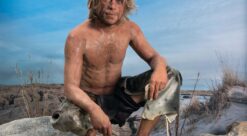
4000 years ago, a 25-year-old man died on the island of Hitra. Now he has been given a new lease of life at NTNU University Museum.