Fighting climate change – with cement
Norway’s first full-scale facility for CO2 capture may be built at Norcem’s cement factory in Brevik. Four technologies are being tested.


Norway’s first full-scale facility for CO2 capture may be built at Norcem’s cement factory in Brevik. Four technologies are being tested.

To you and me, this might look like a disaster. But Norwegian ski star Petter Northug’s car crash was actually pretty ideal. The materials in the car and guard rail acted just the way they were designed to in order to save the lives of passengers in the car.
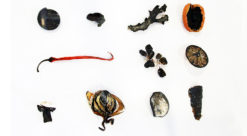
You won’t see any paintings at the exhibition by the first International MFA graduates in Trondheim. But the exhibit offers a lot else, including food and healing.
Researchers with the Kavli Institute for Systems Neuroscience have found a pathway in the brain that the brain uses to plan to get from one place to another.
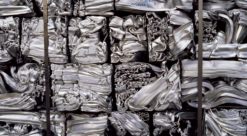
Producing pure aluminium from ore accounts for as much as 1 per cent of all greenhouse gas emissions worldwide. Recycling is the best way to reduce that carbon footprint – but manufacturers and recycling companies will have to plan carefully to avoid problems with impurities that accumulate in recycled aluminium over time.

A new report reveals that 76 percent of children and adolescents who live in Norwegian child welfare institutions have serious psychiatric diagnoses. Only 38 percent report that they receive appropriate psychiatric help. One youngster was moved 25 times under the direction of Norway’s Child Welfare Services.
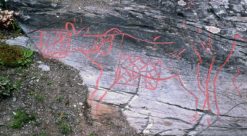
Only a few of the Stone Age rock carvings in Norway depict animals in a naturalistic way. Four of them are located around the Trondheimsfjord.

Computer games can help improve instruction. Pupils learn more. Teachers get a better overview of what and how well their students are learning.

Substantial revenues from natural resources bring opportunities, but also problems, in developing countries. A new research project will look at best practices in resource management.

When negotiators come to Paris this December to discuss a binding and universal agreement on controlling climate change, they have to know how much each country contributes to the greenhouse gas emissions problem. A new method offers the best hope yet for accurately accounting for these emissions by providing the right incentives and assigning fair responsibilities.

People from NTNU travel around the world to do research. Photograph Per Harald Olsen has documented a number of these trips. He also has some advice for photographers who would like to take pictures like his.
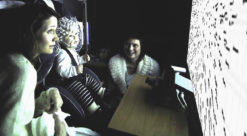
What happens in the brain of an infant during its first year of life? Are premature babies able to keep up with normal development targets?
The Ebola outbreak continues to claim lives in West Africa. Capacare.org, a programme that offers surgical training to community medical officers in Sierra Leone, has lost two of its students to the virus.
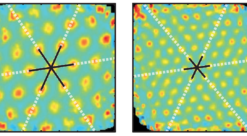
The brain’s GPS would be worthless if it simply contained maps of our surroundings that were not aligned to the real world. But we now know how this is done.
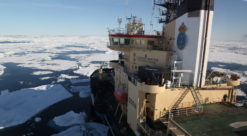
Researchers with NTNU’s Sustainable Arctic Marine and Coastal Technology centre don’t just study health, safety and environment (HSE) issues in their research in the High Arctic – they live HSE first hand. That first-hand experience makes industry safer, and protects the Arctic’s fragile environments.
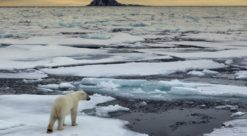
Norway needs its own climate laws, but these laws will only be effective if they are good. Bad climate policies may be worse than none at all, according to NTNU researchers and policy makers.

How would you feel about robots taking over elder care? It may seem odd to you, but most Japanese wouldn’t even think twice about robots caring for their grandparents.
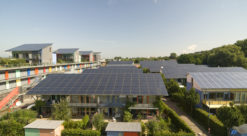
Norway’s wealth and prosperity over the last four decades has been built on oil, but Jeremy Rifkin, a futurist and social and economic thinker, says it’s time for the country to change. The Third Industrial Revolution is coming, and Norway needs to abandon fossil fuels and move towards a greener future that relies on renewable energy, shared transport and ultra-efficient housing.

Women and men misunderstand each other’s signals of friendliness and sexual interest. But these misinterpretations are no surprise to evolutionary psychologists.

A new study shows that periods of high UV radiation can affect a population over several generations.
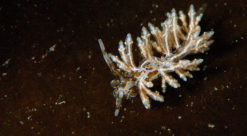
Scientists have recently found a species of sea slug that has apparently made its way north from the Mediterranean Sea. Sometimes called sea slugs or sea butterflies, these mobile nudibranchs are carnivores that eat coral and jellyfish.
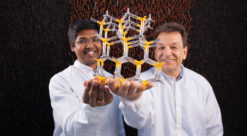
Atomic level changes in nanomaterials are contributing to incredible advances in solar cell and LED technology. NTNU researchers have found a way to design nanowires with a built-in current that will make them even more effective in solar cells.
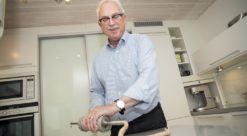
Making sausages is not just a question of good ingredients and skill. There’s a little science involved, too. Professor Trygve Magne Eikevik makes his own sausages, and is willing to share his technique and his recipes, especially for Norwegian Christmas sausage.
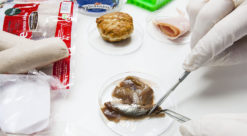
During Christmas you may begin to wonder if the patties really contain pork, the herring in the tomato sauce really is herring, if the sausages contain beef, or if the Christmas anchovies have anchovies in them. No need to fret, DNA barcoding can confirm the identity of what you’re eating this Christmas.