Robot to the rescue when buildings collapse
When disaster strikes, a small robot steps in to save lives. The researchers have dubbed it a “Smurf.” It uses its eyes, ears and nose to find survivors in collapsed buildings.

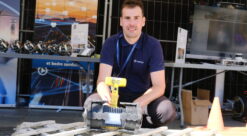
When disaster strikes, a small robot steps in to save lives. The researchers have dubbed it a “Smurf.” It uses its eyes, ears and nose to find survivors in collapsed buildings.
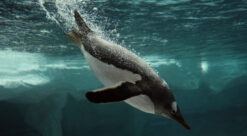
‘Bubbles’ – taste that word – and think soda, soap, play and well-being. But did you know that air bubbles can also reduce fuel consumption and emissions from oceangoing vessels?
Norway can save investment costs of a staggering 25 billion NOK [ca. €2.1 billion] in the power grid by upgrading the quality of insulation paper used in transformers – dramatically increasing their lifespans.
Copepods are the perfect food package for marine fish larvae, such as cod, tuna and halibut. Now research shows that it is possible to drastically increase the production of the fish fry’s superfood.
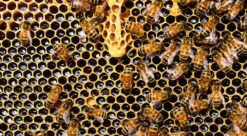
Bees do more than just pollinate plants. They are also nature’s own warning signal. Placing sensors in their hives allows researchers to see when the bees need help doing their job.
Ice formation on wind turbine blades, aircraft and drones can lead to both delays and accidents. But a new material repels cold water droplets that land on the rotor blades before they freeze onto the surface.
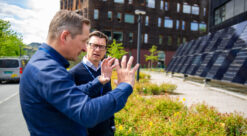
Europe is falling behind in the innovation and technology race. But you can always find some enterprising types who buck the trend.
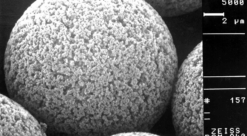
A project that American researchers had given up on. An absent-minded professor who had disliked school as a child. A good portion of curiosity. That is how the story of the Norwegian Ugelstad spheres began. Today they save millions of lives.

Many people feel like they’re invisible, made invisible or hypervisible in a stressful way.
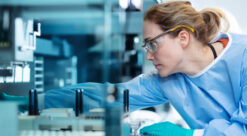
Cancer patients can regain full health with immunotherapy. Now researchers are hunting for the perfect immune cell with the help of a very special robot. No one has done this before.
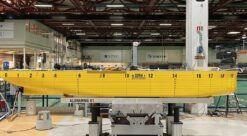
The ship may need over five kilometers to stop. Perhaps not so surprising. The ship measures 62 meters in width and extends 21 meters below the water’s surface. Four models needed to test if the ship withstands launch.
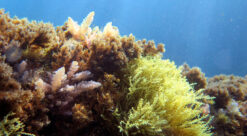
It can take up to 200 years for damaged marine environments to fully recover by just stopping the destruction and leaving the ecosystems to themselves. That is why we must implement active restoration interventions.
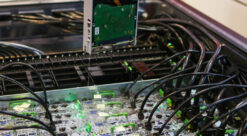
The need to cool down computers eats into the world’s energy consumption. By using liquid instead of air, we can save large amounts of energy and at the same time produce heat.
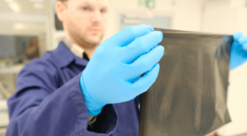
A new membrane technology – so light and thin that it makes an A4 sheet of paper feel like thick cardboard – has been created in the hydrogen laboratory.
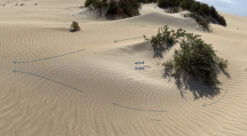
The wind’s sweep across desert sand provides important information in the hunt for methane gas leaking from oil platforms. Researchers have now applied this knowledge in the hunt for the climate change driver methane.
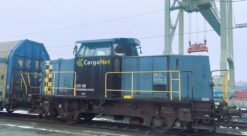
Locomotives that run on diesel can be electrified. This would both cut CO2 emissions and significantly reduce overall energy consumption, according to a new study.
The food industry has to get moved up on the priority queue. Otherwise, it will be impossible to achieve the government’s goal of Norway becoming more self-sufficient in sustainable salmon feed.
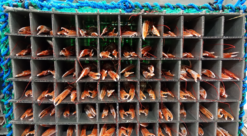
Only five percent of small fishing boats chill their catch on board, despite the fact that temperature plays a crucial role when it comes to quality and shelf life.
AI has become a tool that more and more people are using to create both text and images. But AI can also help a pressured healthcare system.
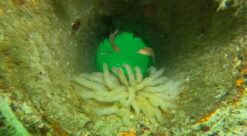
It could take up to 200 years for our degraded ocean habitats to fully recover if we just leave them alone. So, we must intervene. The good news is that it works.
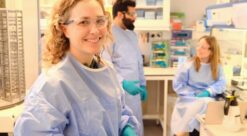
Researchers are growing the food of the future in this laboratory: meat that uses kelp as an alternative to animal-based ingredients.
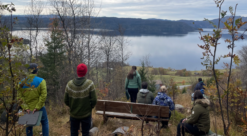
Young adults with reduced work capacity benefited greatly from the four-week interdisciplinary rehabilitation stay. The key: an individually tailored programme and a supportive community.
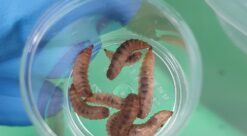
Bristle worms and soldier fly larvae can grow on aquaculture sludge and become protein-rich feed for fish and livestock. But toxic substances can infiltrate the loop. Now scientists have learned more about which substances we need to keep an eye on.
Quantum technology makes it possible to solve far more complex computational challenges than conventional computers can, including in areas such as material development, medicine and optimization.