Write by hand before tablets take over
We learn much better when writing by hand instead of on a keyboard, and using fine motor skills is important for children’s brain development.

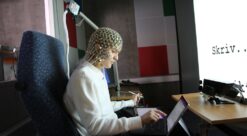
We learn much better when writing by hand instead of on a keyboard, and using fine motor skills is important for children’s brain development.
Shortfalls in crew numbers in the Norwegian ferry system are resulting in numerous cancelled crossings. Onshore control centres and new safety technologies are just some of the initiatives that may enable operations with smaller crews.
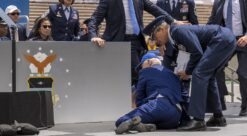
The United States remains a global power unparalleled in history. So what would it take for this situation to change? Four possible developments or events seem to be plausible candidates.

Everyone gets seasick, says researcher Toralf Sundin Hamstad at SINTEF, but there are tricks we can employ to avoid the worst of it.

No one likes sitting in a traffic jam. Research shows that the average Norwegian motorist is willing to fork out almost 100 kroner in order to spend one hour less in traffic. But traffic congestion can also be mitigated.

The Vikings surrounded themselves with textiles that were richly illustrated with stories. 1200-year-old tapestry fragments found in Norway’s Oseberg Ship are now being pieced together – without having to touch them.

The warning couldn’t be clearer. Standard plastic grocery bags are useful when we’re out shopping, but don’t use them to store food. So says research scientist Lisbet Sørensen at SINTEF.

Researcher Hanne Haslene-Hox at SINTEF claims that bacteria are much better than their reputation suggests. Each of us hosts as many as 38 million of them in our bodies.

Too many people die in road traffic accidents. Full-scale driving simulator training can help change that trend. An AI driving instructor can tailor the instruction, and people who need to practice driving around roundabouts can complete 30 attempts in 30 minutes.

He’s been called the father of carbon capture and storage in Norway – but Erik Lindeberg isn’t resting on his laurels. At 76, he’s still crusading to make sure this technology is put to use as quickly and comprehensively as possible, to help the world avoid the worst consequences of global warming.
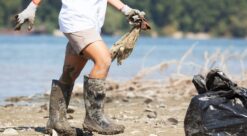
Plastic, and plastic pollution, are a huge problem for both human health and the environment. An interdisciplinary panel of experts suggests that politicians take three concrete steps to better understand and rein in this growing problem.

Trondheim’s Nidaros Cathedral is full of secrets, messages from the past written in stone. One researcher is now decoding these missives, half hidden in a very special spot in and around the most sacred place in the church.

Despite the effect smoking has on cancer, many people continue to smoke after receiving a cancer diagnosis. A simple test can help predict whether smokers are likely to succeed in quitting.

Vipers (Vipera berus) are being observed in areas where no one has seen them ever before.
Youthful creativity is enhanced by artificial intelligence, but students are also asking valid, critical questions about how the technology affects education and learning.

Non-native, invasive species are among the world’s biggest environmental problems. Svalbard has been unaffected – up until now.
TOPOCOM is bringing together leading European research institutions to work on a project that could replace today’s electronics.

It’s summer in the Northern Hemisphere and peak season for getting lost in the great outdoors. Learning new ways to find our way back can help us stay safe in the wild.

People who speak a language that has multiple words for different shades of colour perceive the shades more quickly.

Here’s how Norway can limit the loss of an all-important substance, phosphorus.

Some smells are on the verge of extinction, but we may be able to re-create them using artificial intelligence.
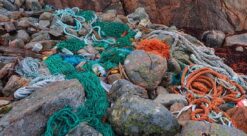
Norway’s coastline is littered with plastics from around the world. Plastic pollution is a global problem, but Norway can be a role model in putting an end to it.

Scientists are searching high and low for markers that can reveal the risk of a heart attack before a patient falls ill. Tiny microRNAs and subgroups of cholesterol may be the solution.
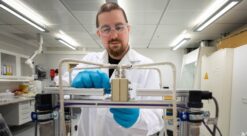
Waste heat from industry can actually heat every house in Norway. A smart solution can harness this energy, while also providing us with clean drinking water.