
Strümke: Seriously, what’s wrong with us?
When Meta glasses can turn individuals into surveillance robots that film and identify unsuspecting individuals, consumer power is not enough.

When Meta glasses can turn individuals into surveillance robots that film and identify unsuspecting individuals, consumer power is not enough.
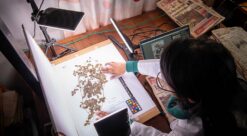
AI and eight million digitized old plant specimens reveal how the climate is changing nature in large parts of the world.

New research shows how the immune system actually behaves throughout pregnancy – cell by cell. In women with lupus, the immunological differences also persist after birth.

A story about honour, war and death – and a cornerstone of Western literature. A new Norwegian adaptation of the famous epic The Iliad is about to be published.
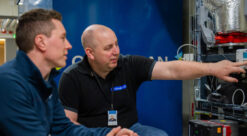
Installing just four percent of Europe’s commercial buildings with a Thermal Box from Norway — about the size of an American industrial refrigerator — would spare Europe the need to build seven nuclear power plants.

Grid cells were supposed to tell the brain only where it was. Now it turns out they also point towards where it wants to go.
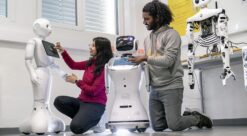
When Pepper the social robot was given the chance to try its hand as a teaching assistant, it showed that it can be even better than a human teacher at motivating pupils and helping them learn.
A cyberattack on local government authorities can result in disruption to critical services such as healthcare, water supply, schools and social services.
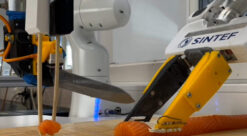
What’s one of the most difficult things for a robot to do that hasn’t already been done? How about a robot that can see, understand, grasp and cut soft, slippery and deformable objects – without destroying them?
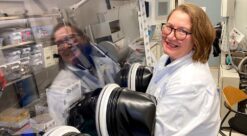
Chinese car manufacturers aren’t the only ones trying to develop new types of batteries. New materials are being tested in Norwegian laboratories to make batteries lighter, cheaper and more environmentally friendly.
Researchers say such a transformation is absolutely doable. A new European research project will no longer treat CO2 as waste, but as a resource in innovative value chains. This has the potential to lead to fewer emissions and completely new products.

The backgrounds of 14-year-olds in Norway have a significant impact on their attitudes and knowledge regarding democracy and citizenship.

Artificial intelligence in the wrong hands can shape people’s political perceptions by spreading a false picture of reality. Lack of transparency in tech platforms has become a threat, according to researcher.
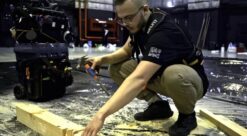
Apprentices in private, independent companies are more likely to fail their final exams, change contracts and not complete their training than apprentices who have contracts through a training agency.

Elderly Norwegians are encouraged to stay in their homes where they can receive home care services. The idea is that living at home will give them the most control over their everyday lives. Research suggests the opposite is true.

Is artificial intelligence displacing young workers at the start of their careers? So far, the answer appears to be no. But that could change in the future.
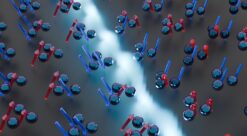
What exactly are antiferroelectric materials, and what does it mean that they can also be polar? The answers may open up new possibilities in technology.
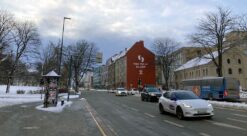
Urban planning is not what it used to be. Researchers now want to use social networks and sensor data to make cities easier to navigate – and preferably on foot.

The turn of the 20th century has been referred to as the homosexual breakthrough in Europe. A recent study has analyzed literary texts in which Norwegian nature plays an important role in conveying this perspective.

Some people are more sensitive to low-frequency noise, such as from ventilation systems, heat pumps, wind turbines and transformers. Why is that?

Spending less time in an office and more time in the great outdoors with animals can benefit patients and therapists alike.
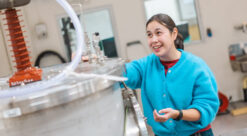
Many large circuit breakers are filled with sulphur hexafluoride (SF₆) – a greenhouse gas that is 24 300 times more powerful than CO₂. But an ingenious Norwegian solution could offer us a climate-friendly alternative.
A small fish and a human, hundreds of millions of years apart, build the sensing brain by the same underlying logic. The finding suggests there may be rules a vertebrate brain follows.
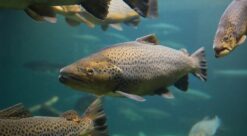
Researchers have taken over 120,000 images of salmon lice larvae in seawater and used them to train AI models. The models were much faster and more accurate than experienced biologists at identifying the parasites that feed on the skin and blood of salmonids.