Young children are not sufficiently listened to and included in their own case decisions in Child Welfare Services. A European development project has been tasked with tackling the issue.
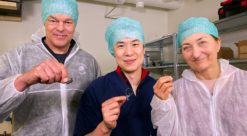
Professor Edgar Hertwich has been named to the EU’s newly constituted European Scientific Advisory Board on Climate Change, while Professor Francesco Cherubini has been asked to serve as a Lead Author for an upcoming assessment by The Intergovernmental Science-Policy Platform on Biodiversity and Ecosystem Services (IPBES).
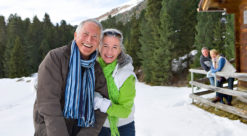
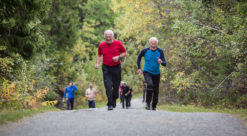
Baby boomers have a big climate footprint. In 2005, people over 60 accounted for 25% of greenhouse gas emissions. In 2015, that number jumped to nearly 33%.
A shortage of phosphorous is driving the price of artificial fertilisers through the roof. But a new and eco-friendly wastewater decontamination process has enabled a company in Hamar in Norway to kill two birds with one stone.
Assigned seats, larger groups of children and scheduled subject classes in first grade are a completely different experience for children than life in kindergarten. Research shows that for many, the transition is too abrupt. Here is one researcher’s advice on how to create a positive transition.
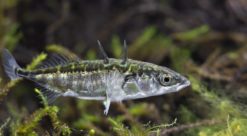
DNA from sticklebacks that is thousands of years old could provide answers to one of the great questions of evolution. The EU is supporting the research with over 600.000 euros.
How the unlikely combination of WWII Germany, a modest English engineer who created a worker’s paradise, an ambitious industrialist prosecuted as a traitor and a hardworking PhD helped build modern Norway, one aluminium ingot at a time.
According to science, women feel the cold more than men. But how do women respond to heat stress compared with men? The answer to this question may help us to make better protective clothing for firefighters of both sexes.
The RS virus more often leads to hospitalizations in children than the coronavirus alone. New research results show that fewer children who get both the rhinovirus and corona appear to get seriously sick than kids who contract corona alone.
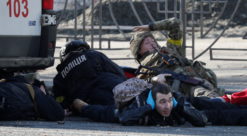
Political power adjustments in the wake of the collapse of the Soviet Union rank among the deepest causes of the war. But balance of power alone does not explain the crisis and war.
The United States received a lot of criticism when NATO Allies withdrew from Afghanistan. But the United States almost never pulls all its military out of a country completely. Maybe not often enough.
The underlying cause of many cardiovascular diseases is inflammation of the artery walls. Now NTNU researchers have found that a specific neurotransmitter in the immune cells is a key factor when cholesterol accumulates in our blood vessels.
Why does Norway always rank among the top countries on the planet when it comes to gender equality? Part of the answer lies in medieval times, when Norwegian women battled the Hanseatic League with pirates and threatened to burn down towns to wield their power.
The war in Ukraine is a disaster foretold. The warnings have come from Russia – and they have been coming for at least 15 years and they have been consistent. But they have been ignored by the outside world. Russia’s invasion of Ukraine represents the loser’s ultimate revenge.
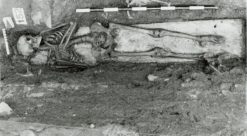
The coronavirus pandemic has made the whole world more aware of what diseases can do to a society. Now, archaeologists and biologists who are studying medieval pandemics, like the Black Death, are learning lessons about the past that may help us in the future.
Researchers at NTNU have managed to restore muscle function in older mice with muscle loss using advanced gene therapy. The hope is that this method might eventually be used on humans to prevent severe loss of muscle mass.
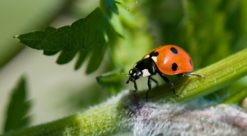
Ladybird beetles are probably among the most popular insects we have. Did you know that Norway has some 50 different species – plus some unwelcome guests?
Covering glass microscope slides in tiny, nano-sized pillars can mimic a cell’s natural environment – and could help biologists understand how cells act inside the human body.
The Privacy Statement is about how this website collects and uses visitor information. The statement contains information that you are entitled to when collecting information from our website, and general information about how we treat personal data.The legal owner of the website is the processing officer for the processing of personal data. It is voluntary for those who visit the web sites to provide personal information regarding services such as receiving newsletters and using the sharing and tip services. The treatment basis is the consent of the individual, unless otherwise specified.
1. Web analytics and cookies (cookies)
As an important part of the effort to create a user-friendly website, we look at the user pattern of those who visit the site. To analyze the information, we use the Google Analytics analysis tool.Google Analytics uses cookies (small text files that the site stores on the user's computer), which registers the users' IP address and provides information about the individual user's online movements. Examples of what the statistics give us answers to are; how many people visit different pages, how long the visit lasts, what websites users come from and what browsers are used. None of the cookies allow us to link information about your use of the site to you as an individual.The information collected by Google Analytics is stored on Google servers in the U.S.. The information received is subject to the Google Privacy Policy.An IP address is defined as a personal information because it can be traced back to a particular hardware and thus to an individual. We use Google Analytics's tracking code to anonymize the IP address before the information is stored and processed by Google. Thus, the stored IP address can not be used to identify the individual user.
2. Search
If the webpage has search function, it stores information about what keywords users use in Google Analytics. The purpose of the storage is to improve our information service. The search usage pattern is stored in aggregate form. Only the keyword is saved and they can not be linked to other information about the users, such as the IP addresses.
3. Share / Tips service
The "Share with others" feature can be used to forward links to the site by email, or to share the content of social networking. Tips for tips are not logged with us, but only used to add the tips to the community. However, we can not guarantee that the online community does not log this information. All such services should therefore be used wisely. If you use the email feature, we only use the provided email addresses to resend the message without any form of storage.
4. Newsletter
The website can send out newsletters by email if you have registered to receive this. In order for us to be able to send e-mail, you must register an e-mail address. Mailchimp is the data processor for the newsletter. The e-mail address is stored in a separate database, not shared with others and deleted when you unsubscribe. The e-mail address will also be deleted if we receive feedback that it is not active.
5. Registration, form
The website may have a form for registration, contact form or other form. These forms are available to the public to perform the tasks they are supposed to do.Registration form is for visitors to sign up or register.Contact form is for visitors to easily send a message to the website's contact person.We ask for the name of the sender and contact information for this. Personal information we receive is not used for purposes other than responding to the inquiry.The form is sent as email via Mailgun as a third party solution. The entire submission will be stored at Mailgun for 24 hours. Between 24 hours and 30 days, only mailheader is stored before the submission is deleted after 30 days. The reason for this storage is to confirm whether emails are sent from the website and forwarded to the correct recipient.Once the email is received by the recipient, it is up to the recipient to determine the data processing needs of the email.
6. Page and service functionality
Cookies are used in the operation and presentation of data from websites. Such cookies may contain language code information for languages selected by the user. There may be cookies with information supporting the load balancing of the system, ensuring all users the best possible experience. For services that require login or search, cookies can be used to ensure that the service presents data to the right recipient.