Are European NATO states freeloading?
Perhaps the US president has a point. Are European NATO countries simply piggybacking on US defence efforts?

Perhaps the US president has a point. Are European NATO countries simply piggybacking on US defence efforts?
The themes of the tenth edition of the Trondheim CCS Conference are technology that is absolutely necessary to combat climate change: CO2 capture, transport and storage.

Moreover, researchers have succeeded in increasing its output dramatically by providing the panel with its own cooling system.
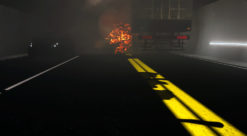
What has to happen to facilitate more effective rescues from tunnel fires? Researchers have been investigating how 80 research subjects wearing VR glasses reacted in a virtual tunnel fire. Their conclusion is that basic measures can save lives.
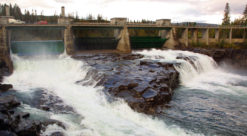
What is the best timing for the various hydroelectric plants to produce power? NTNU and SINTEF have developed an efficient and profitable simulation tool to make the most of hydropower generation.
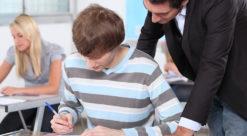
A recent study of upper secondary students shows that strong students experience more support from teachers than do students who have lower grades.
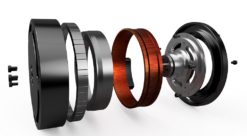
Even electric motors can be made more environmentally friendly. A Norwegian start-up company is on it.

Data from 1.2 million people reveal how tobacco and alcohol use may be linked to your genes and to various diseases.

“Meaningless” little words create nuances and meaning in our language and can make our communication more effective.
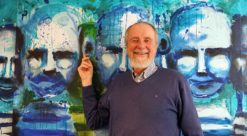
Humans have developed machines that can learn on their own. Machines using artificial intelligence develop “behaviours” based on their interpretation of data. But we know less about how they teach themselves. Professor Harald Martens has created the start-up company Idletechs to develop a technology that will make artificial intelligence more understandable for the rest of us.
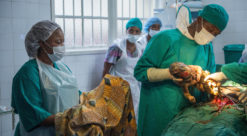
Sierra Leone has few doctors and even fewer surgeons to serve its seven million people. Since 2011, a non-profit group called CapaCare has been training community health officers to perform basic lifesaving surgeries. A new study shows the programme is working well when it comes to the most common surgery in the country — Caesarean sections.

Do we have a dominant brain hemisphere? Do we use our whole brain? Can we train our brains to be smarter? Does our ability to learn depend only on our genetic inheritance?
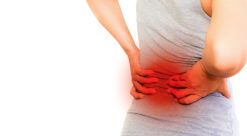
Are you bothered by persistent pain? Here’s a pain physician’s advice on how to change your perceptions of pain and get a grip on it.
Even Norway, which already heats with green energy sources, could contribute more to shrinking Europe’s CO2 emissions. Building zero emission neighbourhoods would also help lower rising electrical transmission fees.

Apparently, everything should have turned to light. Instead, you and I and everything else are here. But physicists don’t know why.
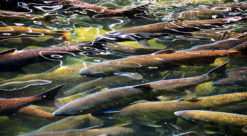
The electronic “sensor” fish measures the physical factors that affect farmed fish during delousing. The results may lead to welfare improvements in salmon farm cages.

Speaking Norwegian is important for many Norwegian jobs, but conventional language classes may not prepare people with the kinds of words and expressions they need. A new app now provides training in specialized expressions.
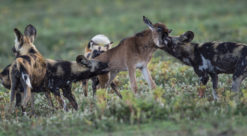
Twenty-five years ago, African wild dogs (Lycaon pictus) disappeared from Serengeti National Park. A firestorm of debate followed when one researcher claimed that handling by scientists was the cause. New research refutes that claim and offers another explanation.
Stavanger is Norway’s oil capital. Trondheim could become the country’s capital for seabed mining. It will be an important contribution to the UN’s climate goals.
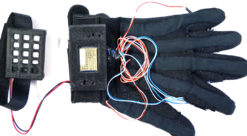
A digital glove crafted by an Icelandic conductor/composer allows composers to combine electronic music with regular instruments.

Finn-Kirsten Iversdatter was the last person to be executed for witchcraft in Central Norway, but her story was mostly forgotten. Until now.

Cooks live less long on average than people in most other occupational groups. Changes in their working environment could result in better health for many.
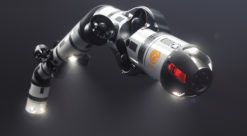
A snake robot will soon be relieving divers and mini-subs in the North Sea. But first researchers have to test its mettle in the Trondheim Fjord.

Sexual violence in war is attracting more attention thanks to the 2018 Nobel Peace Prize. But nothing suggests that the abuse is lessening.