Saving lives in Sierra Leone — one C-section at a time
Sierra Leone used to be the most dangerous place in the world to give birth. Without enough doctors to do C-sections, women and babies were dying. But what if you didn’t need a doctor?

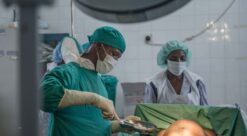
Sierra Leone used to be the most dangerous place in the world to give birth. Without enough doctors to do C-sections, women and babies were dying. But what if you didn’t need a doctor?
We all know that exercise is good for us, but how much, how hard, how long? One exercise physiologist’s research journey and the answers he found.

Apps and games make us exercise more often, play more, run further, learn better and work smarter. Meet the innovators who make you do the things you should be doing but that you maybe don’t want to.

Sepsis, or blood poisoning, occurs more frequently than previously estimated by professionals. At the same, mortality rates have declined sharply. The two are connected.

Exercising can be absolutely awful. However, none of our excuses matter when it comes to the health benefits. The benefits go beyond physical health —exercise also has a major impact on mental health.
“Doctors should look at the length of pregnancy in patients with respiratory problems,” says researcher Kari Risnes. But if you were born before your due date, you can take some measures yourself to prevent lung infections.
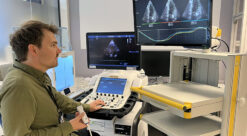
If anything goes wrong with your heart, it is critical to get the right treatment quickly. Artificial intelligence can help with just this – and more lives can be saved.
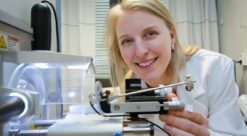
The use of stem cells now makes it possible for us to cultivate so-called organoids, such as tiny versions of a liver, heart or small intestine, in the lab. These micro-organs can then be connected to a microchip that simulates the body’s biological processes. This ‘organ-on-a-chip’ technology opens the door to previously undreamt-of research possibilities.

Online abuse of children has increased considerably in recent years. Technological advances and inadequate legal regulation are driving this development, according to a new Norwegian report.

Municipalities were given more responsibility for specialist health services in 2012. The changes appear to have resulted in better healthcare for the elderly.
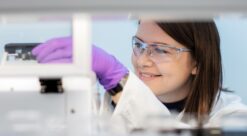
Nanotechnology can provide more effective treatment for patients with peritoneal cancer.

Researchers have now found out how to stop the formation of harmful acrylamides when deep-frying potatoes to make crisps.
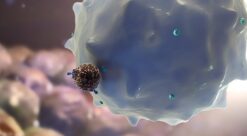
The fact that our immune systems capture and destroy nanoparticles and the drugs they carry has been a problem in the field of nanomedicine for some time. But, in the fight against cancer, researchers are now attempting to exploit this problem to their advantage.
Endometriosis: If we utilise all the knowledge we have about cancer, there is reason to hope that effective diagnosis and treatments can be developed to combat the female condition ‘everybody’ is talking about.

Fossil fuel vehicles gulp down petrol, and electric cars gobble up minerals. The battery industry is so ravenous for lithium as a raw material that researchers believe the demand could threaten climate goals.
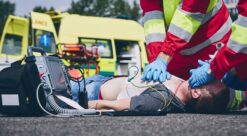
After examining 298 patients with cardiac arrest, researchers found that ECG markers can provide a clue as to how the treatment is working — as much as four to five minutes into the future.

Why are cold temperatures so dangerous if you have an accident? And why is it that cold temperatures enable some patients to survive without permanent harm?

Are remote video consultations appropriate for treating children and young people under the care of the child welfare services? Therapists recognise a number of benefits, but most young people are critical of webcam-based therapy.
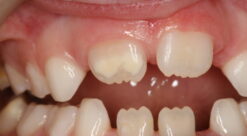
Many children have teeth that are practically falling apart due to weak enamel. Now researchers have studied whether a lack of vitamin D during pregnancy could be the culprit.
A radioactive tracer is being tested for the first time in Norway at St. Olavs Hospital and NTNU. The goal is to improve the detection of dementia diseases.

Many infant formulas purport to be healthy in several ways. But the evidence is often razor thin. The companies usually manage the research themselves.

For some children with obsessive-compulsive disorder, therapy via the internet and apps can be more effective than physically attending treatment sessions.
It has taken 18 years, but Professor Marit Otterlei has now created a completely new type of cancer medicine. No similar medication has progressed this far in development worldwide.

A simple test saves lives. Three out of four women who died of cervical cancer in the screening age of 25-69 years had not had a Pap smear in the past three and a half years.