Rare Stone Age discovery in mid-Norway
When archaeologists recently carried out an excavation at Vinjeøra in southern Trøndelag County, they made a surprising discovery that they had only dreamed of finding.

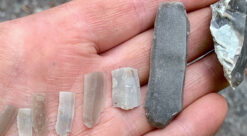
When archaeologists recently carried out an excavation at Vinjeøra in southern Trøndelag County, they made a surprising discovery that they had only dreamed of finding.

Solid-state batteries may be the perfect solution for electric cars of the future. Researchers in Norway are making these batteries better.
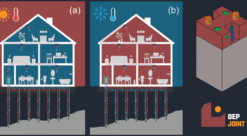
Using a completely new piling joint, geothermal heat can be extracted directly via the piles used to anchor buildings in the ground. The invention makes it easier, quicker, cheaper and safer to use environmentally friendly energy.

“A sense of community between generations will be key to ensuring sustainable coastal communities. The importance of children’s learning through work is underestimated,” says Professor Anne Trine Kjørholt.

The number of lemmings varies greatly from year to year. Other species also have similar fluctuations. Why is it like this, and what happens if lemming years happen less often?

A physical suggestion box doesn’t work in 2023. So why not just create a Facebook group or set up an e-mail address? Because there’s another option, which we’ll tell you more about now.
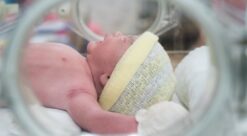
“Doctors should look at the length of pregnancy in patients with respiratory problems,” says researcher Kari Risnes. But if you were born before your due date, you can take some measures yourself to prevent lung infections.
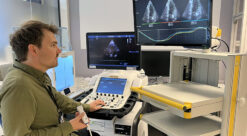
If anything goes wrong with your heart, it is critical to get the right treatment quickly. Artificial intelligence can help with just this – and more lives can be saved.

Tonnes of reusable polystyrene ends up as plastic waste when buildings are demolished. Researchers want to see more recycling and reuse.

Hypertension affects one billion people and is considered the number one cause of death worldwide. Mass testing of genetic variants can now shed light on the cause of high blood pressure.

In Norway, girls are much better at reading than boys. But girls and boys perform equally well when using a new teaching method.

The Norwegian government has proposed opening an area of the continental shelf to deep sea mining. NTNU researchers have worked for more than a decade on this issue. They say we have much to learn before Norway can decide if this can become a viable industry.
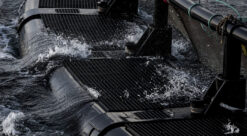
There is enormous potential in the aquaculture sector to generate circular economy initiatives when it comes to its use of plastics. But can these be made commercially viable? Researchers believe that they can.

We were through the roof with excitement when the first ship rivet was found, says archaeologist Geir Grønnesby at the NTNU University Museum

Do we discriminate against people with foreign-sounding names? A clever experiment with fictional girls who wanted to play football yields some answers that might surprise you.
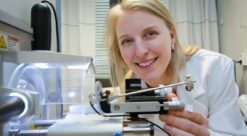
The use of stem cells now makes it possible for us to cultivate so-called organoids, such as tiny versions of a liver, heart or small intestine, in the lab. These micro-organs can then be connected to a microchip that simulates the body’s biological processes. This ‘organ-on-a-chip’ technology opens the door to previously undreamt-of research possibilities.
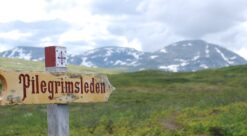
Hundreds of thousands of pilgrims make use of Europe’s many pilgrimage walks every year. However, travellers tend to visit only a few of the attractions along the routes. The EU project “rurAllure” aims to attract travellers to lesser-known sites of interest.

In Palma de Mallorca in Spain, researchers are planning to use VR headsets to encourage resident participation in a community project.

Online abuse of children has increased considerably in recent years. Technological advances and inadequate legal regulation are driving this development, according to a new Norwegian report.

Municipalities were given more responsibility for specialist health services in 2012. The changes appear to have resulted in better healthcare for the elderly.
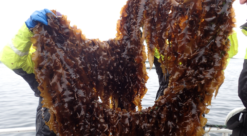
Seaweeds cultivated in the sea off the coast of Trøndelag, Norway will be converted into biocoal and used to improve agricultural land. A new method for carbon capture and storage is now being trialled by Norwegian researchers.

Some people are very anxious. Others are enthusiastic. But how intelligent is AI, really?
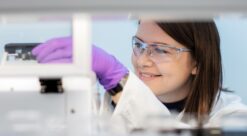
Nanotechnology can provide more effective treatment for patients with peritoneal cancer.

Everlasting concrete is here! It requires no maintenance, and its manufacture emits 80 per cent less CO2 than current products. And just recently, its inventors have been awarded a research prize for their achievement.