Nutrient-rich fertiliser from toxic ammonia
Researchers have recently found out how to use algae to convert ammonia and nitrates into a nutrient-rich fertiliser or fish feed ingredients.

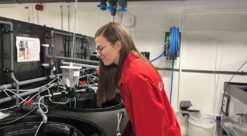
Researchers have recently found out how to use algae to convert ammonia and nitrates into a nutrient-rich fertiliser or fish feed ingredients.
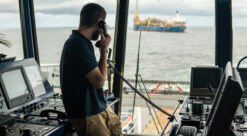
Despite their great trust in on-board autopilots, bridge officers do not believe that autonomous ships will make shipping safer. Moreover, the greater the professional commitment and pride of the bridge officers, the less confidence they have in automation increasing safety at sea.
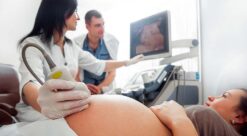
Health care providers who provide prenatal care need to know more about the underlying causes of obesity, says researcher Heidi Sandsæter. She has interviewed 14 pregnant women with obesity about their childhood, body and weight.
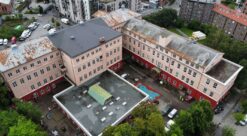
Researchers are testing and protecting old brickwork as their contribution to the renovation of the heritage building Sophies Minde in Oslo. Results indicate that much of this material can be reused.
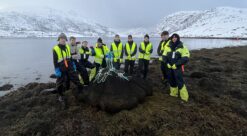
Seaweed and kelp, or macroalgae, are used in many products, and may become an even more important resource in the future. Artificial intelligence can help us avoid overusing this valuable resource.

How do you spread a message about climate change? According to an international study involving 59,000 participants, some tactics may actually reduce support.
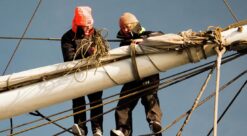
Life on board a tall ship can be cramped, cold and demanding, but according to one researcher, it also sheds light on what gives life purpose and meaning.
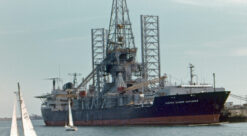
The American eccentric billionaire, Howard Hughes, wasn’t afraid to make expensive investments in new technologies. So when he announced in 1972 that he was going to build a giant ship to mine manganese nodules from the depths of the Pacific Ocean, few were surprised. But the ship had a very different – and top secret – mission.
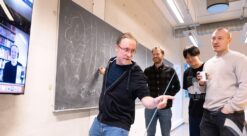
Calculations that previously took a year can now be performed in just 10 days by computers connected in a special way.
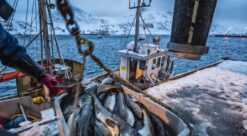
Friday 1 March another Norwegian fisherman was drowned while working. He became the 156th Norwegian working in the industry to lose his life since the new millennium. A safety researcher at SINTEF says that this only goes to underline the message delivered in a report recently published by her team.
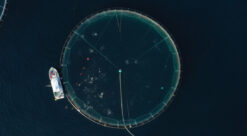
Norway leads the world when it comes to the use of robots in the aquaculture sector. But how do these robots actually impact on the fish? Cyberneticist Eleni Kelasidi is surprised by just how much.

When it came to the Sámi people, a persistent fight continued against what was termed the art of witchcraft, and missionaries took over from the judicial system.
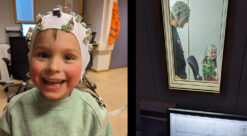
A test that shows how good or bad we are at perceiving the rhythm of language can predict the ability to acquire language. The test results may also help us understand individual differences in brain biology.
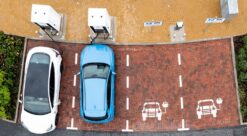
High metal prices can drive up the costs of electric car batteries, which will reduce their adoption. Car manufacturers are already responding to this by shifting to different technologies.
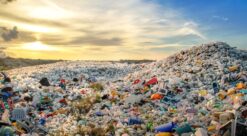
Researchers have found more than 16,000 different chemicals in plastics. A new report shows that about a quarter of these chemicals can be hazardous to health and the environment.
A new method that aims to help people develop grit looks promising.
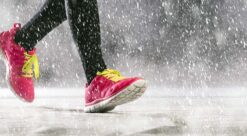
It’s okay to exercise when you are breastfeeding. High-intensity exercise releases a hormone that is good for your child’s metabolism

Far more female infants than male infants died in Europe from 1700–1950. Researchers have been investigating why.
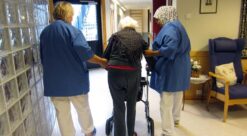
Elderly people living in rural areas in Norway have higher mortality rates if they are discharged to a municipality that has too many patients and not enough caregivers to provide services.
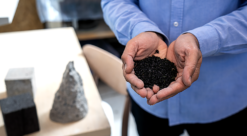
Rubber granules from artificial grass pitches will be phased out, but what do we do with the thousands of tonnes of microplastics that are left? NTNU research shows that they can be used in the production of concrete.
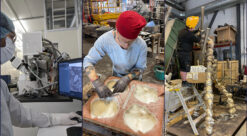
A playful artist duo invited scientists to take part in a collaboration, and they were more than willing to oblige. This is how an intestinal bacterium from Bergen and a 1200-year-old wooden splinter became public art.
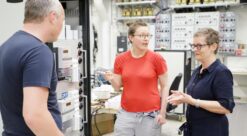
Power cuts can be caused by heavy snow and icing, as well as lightning strikes and strong winds bringing down power lines. Together with more extreme weather events, Norway is also facing a major power supply deficit. So, what can we do to avoid a total electricity crisis?
Certain genes associated with hypertension affect blood pressure from early in life, and they increase the risk of cardiovascular disease as you get older. But you can do something about it.
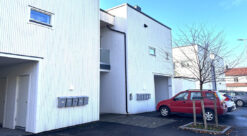
Families who obtained help to purchase their homes improved their lives in many ways. But outcomes were not so positive for those renting as part of affordable housing allocation schemes.