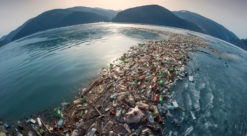
Using non-recyclable plastic waste as an alternative to coal may prevent huge volumes of plastic from being discarded into the oceans – and will also reduce CO2 emissions. This is the conclusion of a recently completed pilot project headed by SINTEF in Vietnam.
Did you ever want to get really good at something when you were younger? Over the years, you tend to lose some of the spark and the belief in yourself that you’ll succeed. But – there’s hope.
Detecting colon cancer early is the key to survival and quality of life. Researchers at NTNU are working to make it easy for people to check their intestines from home.
High-temperature heat pumps are no longer simply for idealists. They’re contributing to more than just climate accounting, and industrial companies are standing in line to learn more.
An animal’s ability to adapt to its environment is clearly key to its survival, but does that ability come at a physiological cost? A clever experiment with laboratory zebrafish and their wild relatives suggests it does.
Drug dealers have tricked shipping cargo tracking systems to think drugs are “bananas” and unknown actors have jammed GPS signals in northern Norwegian waters. Fixing these problems requires understanding how seafarers themselves perceive cyber risks — so they can do a better job protecting themselves and their vessels.
The idea behind batteries is to make the planet greener, but they all start their lives as energy-demanding environmental liabilities. Research scientists at SINTEF have succeeded in making batteries cheaper and simpler using a process that requires much less energy consumption.
Norwegian mountains are full of time capsules. Thousands of years of human and ecological history are preserved in remnant patches of ice. Now this treasure trove of information threatens to melt away, unless we take action.
A lot of young people have depressive symptoms. Ruminative thinking, and even thinking about how much you ruminate, reinforces the symptoms. But there is hope.
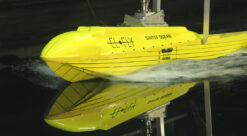
With this seaplane you will be able to take off from Trondheim Fjord or Flesland Airport in Bergen, Norway, and land in the Geiranger Fjord one hour later.
Electrification of the Norwegian continental shelf is a long-standing political issue. Now research scientists believe this can be done using fuel cells installed on the platforms. This will reduce CO2 emissions and remove the need to lay new subsea cables.
Many major sporting events experience large cost overruns and lower revenues than expected. The reasons are complex, but several misjudgements seem to recur from one event to the next. Researchers in sports economics offer a solution to avoid making the same mistakes over and over again.
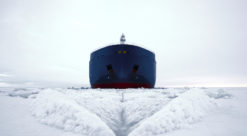
More than 600 fishing vessels sail the icy waters of the Arctic. But just over two dozen big tankers are the worst offenders when it comes to air pollution in this vulnerable region.
Some people succeed at flirting more often than others. Plenty of people are obviously more attractive than the rest of us, but it also seems that a lot of them know what works. Now researchers do, too.
Capping production of new plastics will help cut their release to the environment — and brings other benefits, from boosting the value of plastics to helping tackle climate change.
Driving range is often a deciding factor when consumers choose an electric car. Lithium-ion batteries are reaching their ability to store energy, which has researchers exploring new alternatives — including solid-state batteries.
The Privacy Statement is about how this website collects and uses visitor information. The statement contains information that you are entitled to when collecting information from our website, and general information about how we treat personal data.The legal owner of the website is the processing officer for the processing of personal data. It is voluntary for those who visit the web sites to provide personal information regarding services such as receiving newsletters and using the sharing and tip services. The treatment basis is the consent of the individual, unless otherwise specified.
1. Web analytics and cookies (cookies)
As an important part of the effort to create a user-friendly website, we look at the user pattern of those who visit the site. To analyze the information, we use the Google Analytics analysis tool.Google Analytics uses cookies (small text files that the site stores on the user's computer), which registers the users' IP address and provides information about the individual user's online movements. Examples of what the statistics give us answers to are; how many people visit different pages, how long the visit lasts, what websites users come from and what browsers are used. None of the cookies allow us to link information about your use of the site to you as an individual.The information collected by Google Analytics is stored on Google servers in the U.S.. The information received is subject to the Google Privacy Policy.An IP address is defined as a personal information because it can be traced back to a particular hardware and thus to an individual. We use Google Analytics's tracking code to anonymize the IP address before the information is stored and processed by Google. Thus, the stored IP address can not be used to identify the individual user.
2. Search
If the webpage has search function, it stores information about what keywords users use in Google Analytics. The purpose of the storage is to improve our information service. The search usage pattern is stored in aggregate form. Only the keyword is saved and they can not be linked to other information about the users, such as the IP addresses.
3. Share / Tips service
The "Share with others" feature can be used to forward links to the site by email, or to share the content of social networking. Tips for tips are not logged with us, but only used to add the tips to the community. However, we can not guarantee that the online community does not log this information. All such services should therefore be used wisely. If you use the email feature, we only use the provided email addresses to resend the message without any form of storage.
4. Newsletter
The website can send out newsletters by email if you have registered to receive this. In order for us to be able to send e-mail, you must register an e-mail address. Mailchimp is the data processor for the newsletter. The e-mail address is stored in a separate database, not shared with others and deleted when you unsubscribe. The e-mail address will also be deleted if we receive feedback that it is not active.
5. Registration, form
The website may have a form for registration, contact form or other form. These forms are available to the public to perform the tasks they are supposed to do.Registration form is for visitors to sign up or register.Contact form is for visitors to easily send a message to the website's contact person.We ask for the name of the sender and contact information for this. Personal information we receive is not used for purposes other than responding to the inquiry.The form is sent as email via Mailgun as a third party solution. The entire submission will be stored at Mailgun for 24 hours. Between 24 hours and 30 days, only mailheader is stored before the submission is deleted after 30 days. The reason for this storage is to confirm whether emails are sent from the website and forwarded to the correct recipient.Once the email is received by the recipient, it is up to the recipient to determine the data processing needs of the email.
6. Page and service functionality
Cookies are used in the operation and presentation of data from websites. Such cookies may contain language code information for languages selected by the user. There may be cookies with information supporting the load balancing of the system, ensuring all users the best possible experience. For services that require login or search, cookies can be used to ensure that the service presents data to the right recipient.