Top cross-country skiers go wicked fast – but they mostly train at low intensity
Cross-country skiers push themselves to their performance limits in competition. Yet most of their training takes place at low intensity. How does that work?

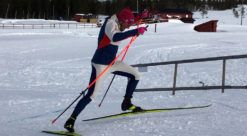
Cross-country skiers push themselves to their performance limits in competition. Yet most of their training takes place at low intensity. How does that work?

Depression is one of the most common mental disorders in adolescence and is found in children as young as kindergarten age. Unfortunately, the disorder often lasts into adulthood, but an NTNU study gives cause for optimism.

Patients with morbid obesity experienced improvement in their quality of life and distinctly fewer episodes of overeating after ten weeks with a new treatment method developed at NTNU.

Researchers at NTNU have surveyed how a mother’s immune system changes during the course of pregnancy. This knowledge can help detect disease and complications, and give the foetus a better start in life.

Universities want to recruit more women into technology fields. More men complete their studies then, too. The measures are working but need to be sustained over the long-term.

Neutron stars are the little siblings of black holes and show some of the most extreme phenomena in the universe. The European Research Council (ERC) is giving Professor Manuel Linares EUR 2 million to hunt them down.

The OceanLab will contribute to research on underwater robotics, aquaculture, autonomous shipping and environmental research.

Researchers are on the trail of a new method to protect against heart damage after cancer treatment.

The Nobel Prize in Physics is going to three individuals who found that the world isn’t always as chaotic as we think.

Ocean-dwelling dolphins have repeatedly adapted to life in coastal areas throughout history.
Income differences in small Norwegian towns have increased since 2004, when several former Eastern Bloc countries joined the EU.

The threshold for admitting patients to the hospital varies greatly between emergency physicians. The doctors most willing to admit patients refer almost twice as many elderly patients as the most restrictive physicians.

The Norwegian wolf died out in the wild a long time ago. The wolves in Norwegian forests today are Finnish. Inbreeding is making them prone to extinction as well.

Climate change is not the greatest threat to the diversity of species on Earth. The main problem is that animal and plant habitats are disappearing.
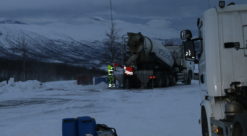
Keeping concrete warm during transport between the mixing plant and construction site results in a better, cheaper and more eco-friendly product. A new type of concrete mixer truck can result in less wastage and better quality of this important building material.

Researchers in Norway are among those at the forefront in the field of nanoelectronics. Their goal is to create electronic components at the atomic level, which would open vast possibilities for electronic gadgets.

Countless potentially useful enzymes are hidden all around us. NTNU researchers have developed a new method that could help us find them.

In the new Norwegian-produced disaster film North Sea, the snake robot Eelume plays a crucial role. Norwegian researchers and a Norwegian company are behind the newly released film.

You may think that they’re random movements, but they’re not: The way you use your eyes when perceiving the world around you reveals something significant about you and how you engage with the world. It can even be a diagnostic of brain disease.

Flu season might be much worse than usual because we have lost a lot of herd immunity. Pandemic measures are part of the reason. Hand washing and vaccination are still important.
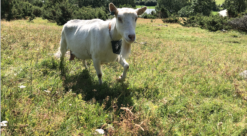
Goats are smart animals. A new technology takes advantage of their intelligence — so they longer need physical fences. More than 2400 Norwegian farmers are already using the technology to herd their animals.

World leaders have gathered in Glasgow to discuss climate change. But the most likely outcome is that actions won’t extend beyond the talk.

What did people make clothes from in the Neolithic? Çatalhöyük, the world’s largest known Stone Age settlement, gives us answers after 60 years of debate.

A new method using nanowires can make solar panels much more efficient and much cheaper than today.