Social media’s echo chambers not such a big problem
Most people obtain their information from multiple sources. Social media’s dreaded “echo chambers” have little significance for most of us, a new study shows.


Most people obtain their information from multiple sources. Social media’s dreaded “echo chambers” have little significance for most of us, a new study shows.

Billions could be saved and earned by digitalizing the mining and metals industry. China and Norway are working together to make it happen.
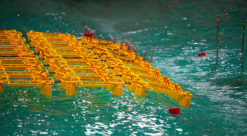
The sun shines just as much out at sea as it does on land. There are also no restrictions on area use and seawater even helps to cool the solar panel technology. It’s only a matter of time before the first floating solar energy farms are installed at sea.
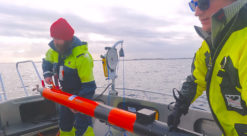
The microscopic, free-floating algae called phytoplankton — and the tiny zooplankton that eat them — are notoriously difficult to count. Researchers need to know how a warming climate will affect them both. A new kind of smart, lightweight autonomous underwater vehicle (LAUV) can help.

Researchers have studied the energy consumption of 140 hotels in Norway and Sweden. The use of CO2 heat pumps could cut energy consumption in these hotels by about 60 per cent.
The Covid-19 pandemic has forced companies to change the way they organise their day-to-day activities. Many people find working from home no problem at all. According to researchers, there is little to suggest that these changes will be reversed once the pandemic is over.
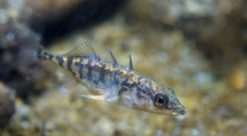
A 12 000-year-old stickleback shows how species adapt.
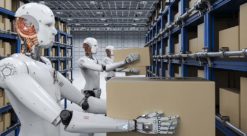
Robots are becoming more and more omnipresent in our lives, even though we may not notice. New research shows that when a boxy motorized hospital robot can talk, people find it funny and engaging. And that may help people be more willing to accept new technologies, like robots, in their everyday lives.
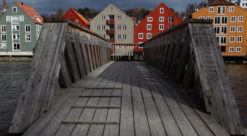
NTNU has been selected by the European Commission to become partner to the New European Bauhaus initiative. “This will be an important and exciting partnership for us,” says Tor Grande, Pro-Rector for Research.

“Finding embroidered textiles from the Viking Age is so unusual that you almost can’t believe it’s true,” says archaeologist Ruth Iren Øien at the NTNU University Museum.

Movies of micromagnets created by researchers at NTNU could further our understanding of materials for the next generation of computers.

Disposable products are bad. But durable goods account for two-thirds of the global household’s energy footprint.

Women and men are often jealous for completely different reasons. This gender difference occurs so early that it surprised the researchers.
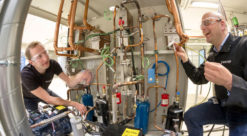
Researchers working with industrial partners have developed the world’s first heat pump producing temperatures of up to 180 degrees celcius. Such record high temperatures will enable one fifth of European industry to reduce its energy consumption by up to 70 percent, and become entirely climate neutral.
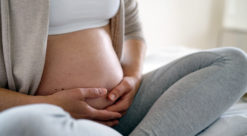
Researchers at NTNU have contributed to the discovery of gene variants in mothers that increase their risk of both preeclampsia and heart disease.
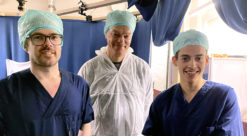
Nobel laureate and Kavli Institute for Systems Neuroscience founding director and professor Edvard Moser says a new technology “opens doors to experiments we could only dream about 5 years ago.” The technology in question is called Neuropixels 2.0, a new favourite in the neuroscientists’ toolbox.

Exercising enough can prevent weight gain. Researchers have found a simple measurement method that helps to maintain or reduce weight– and it’s free.
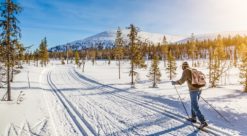
The toxic pollutants in your ski wax basically never disappear. A Norwegian lake and the area around several Norwegian airports are full of them, and so is your body.
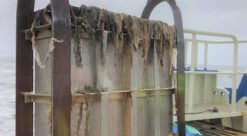
Research scientists in Norway recently set out on a scientific cruise in the Trondheim fjord to collect water samples and specimens of marine species. What they stumbled over was quite different from what they were looking for.
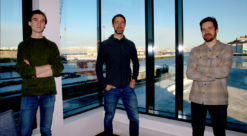
What’s needed to be able to safely send a vessel to sea with no crew? How will these vessels detect a kayaker or a recreational boat that drifts into the course of the unmanned vessel? A new Centre for Research-Based Innovation, SFI AutoShip, will look for answers to these questions – and more.
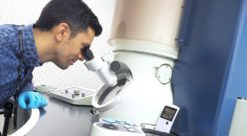
For more than 100 years, we’ve known that some metal alloys become stronger by being kept at room temperature. But we haven’t understood all the details – until now.

Big things might be happening soon with cruise traffic in the Geiranger fjord. Smaller vessels and adapted green quay facilities could make for a green fjord and offer a solution for preserving the World Heritage site.

A lot of young people struggle with depression, a fact that is especially true for girls. But youth who are physically active are less vulnerable.
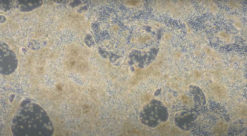
NTNU master’s student Vanessa Solvang cultivates tiny little beating hearts in the lab. She takes good care of them, weekends included.