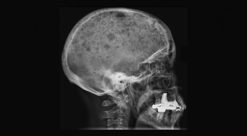
Bone marrow cancer is currently an incurable disease that affects about 400 people in Norway every year. Professor Therese Standal at NTNU has now found an important reason for bone destruction in people with this disease.
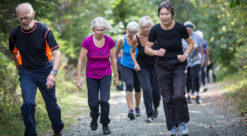
Five years of high-intensity interval training increased quality of life, improved fitness and might very well have extended the lives of participants in the Generation 100 study.
We often associate innovation with someone who invents something completely new. But innovation is also about improving and expanding on existing technology. One hundred and ten years of Norwegian engineering history provides plenty of examples.
New brain research shows that writing by hand helps children learn more and remember better. At the same time, schools are becoming more and more digital, and a European survey shows that Norwegian children spend the most time online of 19 countries in the EU.
The larvae of cotton bollworm attack our food. But the adults pollinate plants. So how can we stop them from destroying crops without using poison? Researchers in Trondheim are on the case.
The Norwegian University of Science and Technology (NTNU) has signed agreements to deliver as many as one million COVID-19 test kits to DTU, the Technical University of Denmark, and APS LABS, an Indian biotech company. “It is very positive that this technology can now also be useful internationally,” says Bent Høie, Norway’s Minister of Health and Care Services.
Every third child in the world has too much lead in their body, according to a report from UNICEF and Pure Earth. Norwegian children are also affected.
Currently, ultrasound machines are operated primarily by specialists because it requires extensive experience to interpret the images. Norwegian researchers are aiming to tackle this issue.
Children who show signs of addiction-like gaming are not more susceptible to mental health problems than their non-gaming peers. Some even experience less anxiety than others.
The coming wave of ageing Westerners could turn into a tsunami, but new technology is available to help. What kind of technology is needed? And do urban and rural areas need the same solutions?
Between 250 and 270 people die each year from heroin or opioid overdoses in Norway. In the EU, thousands die. European users now have a better option available for helping each other.
The rest raw materials left after a salmon has been filleted are equivalent to more than 60 percent of its slaughtered weight. It will soon be possible to convert these into a high-quality fish oil, taste-neutral fish proteins, fish gelatin and flame-retardant materials. Ensuring that not a single gramme goes to waste.
A study that asked children to assess three different robots showed that they responded most positively to simple robots shaped like flower pots, and were most sceptical of Pepper the robot, which looks more human.
A lot of people struggle with poor memory and impaired attention after a concussion, but how they experience their symptoms differs from their test results.
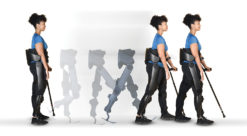
Robot technology is being used more and more in health rehabilitation and in working life. Exoskeletons are one technology with great potential. But this technology is often developed for the average person. So what about people who are small and thin, or tall and overweight?
Researchers at NTNU have managed to show exactly how the tuberculosis bacterium kills its host cell by filming the process in detail for the first time. Every year, 1.5 million people die of TB. Watch the clips below.
Sea trout numbers are declining in Norway and scientists don’t know why. They have studied the trout in two rivers in northern Norway’s Nordland county. Soon, sea trout along the entire Norwegian coast will be investigated.
Men and women react differently to different types of infidelity. But new findings about how we forgive cheating by our partners surprised researchers.
The Privacy Statement is about how this website collects and uses visitor information. The statement contains information that you are entitled to when collecting information from our website, and general information about how we treat personal data.The legal owner of the website is the processing officer for the processing of personal data. It is voluntary for those who visit the web sites to provide personal information regarding services such as receiving newsletters and using the sharing and tip services. The treatment basis is the consent of the individual, unless otherwise specified.
1. Web analytics and cookies (cookies)
As an important part of the effort to create a user-friendly website, we look at the user pattern of those who visit the site. To analyze the information, we use the Google Analytics analysis tool.Google Analytics uses cookies (small text files that the site stores on the user's computer), which registers the users' IP address and provides information about the individual user's online movements. Examples of what the statistics give us answers to are; how many people visit different pages, how long the visit lasts, what websites users come from and what browsers are used. None of the cookies allow us to link information about your use of the site to you as an individual.The information collected by Google Analytics is stored on Google servers in the U.S.. The information received is subject to the Google Privacy Policy.An IP address is defined as a personal information because it can be traced back to a particular hardware and thus to an individual. We use Google Analytics's tracking code to anonymize the IP address before the information is stored and processed by Google. Thus, the stored IP address can not be used to identify the individual user.
2. Search
If the webpage has search function, it stores information about what keywords users use in Google Analytics. The purpose of the storage is to improve our information service. The search usage pattern is stored in aggregate form. Only the keyword is saved and they can not be linked to other information about the users, such as the IP addresses.
3. Share / Tips service
The "Share with others" feature can be used to forward links to the site by email, or to share the content of social networking. Tips for tips are not logged with us, but only used to add the tips to the community. However, we can not guarantee that the online community does not log this information. All such services should therefore be used wisely. If you use the email feature, we only use the provided email addresses to resend the message without any form of storage.
4. Newsletter
The website can send out newsletters by email if you have registered to receive this. In order for us to be able to send e-mail, you must register an e-mail address. Mailchimp is the data processor for the newsletter. The e-mail address is stored in a separate database, not shared with others and deleted when you unsubscribe. The e-mail address will also be deleted if we receive feedback that it is not active.
5. Registration, form
The website may have a form for registration, contact form or other form. These forms are available to the public to perform the tasks they are supposed to do.Registration form is for visitors to sign up or register.Contact form is for visitors to easily send a message to the website's contact person.We ask for the name of the sender and contact information for this. Personal information we receive is not used for purposes other than responding to the inquiry.The form is sent as email via Mailgun as a third party solution. The entire submission will be stored at Mailgun for 24 hours. Between 24 hours and 30 days, only mailheader is stored before the submission is deleted after 30 days. The reason for this storage is to confirm whether emails are sent from the website and forwarded to the correct recipient.Once the email is received by the recipient, it is up to the recipient to determine the data processing needs of the email.
6. Page and service functionality
Cookies are used in the operation and presentation of data from websites. Such cookies may contain language code information for languages selected by the user. There may be cookies with information supporting the load balancing of the system, ensuring all users the best possible experience. For services that require login or search, cookies can be used to ensure that the service presents data to the right recipient.