Norwegian metal strengthens Europe’s security
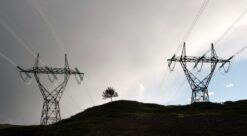
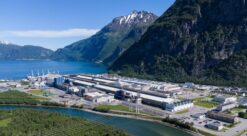
Metals from Norway are often praised for their low carbon footprint. But right now, it matters even more that they are produced in a European democracy.

Metals from Norway are often praised for their low carbon footprint. But right now, it matters even more that they are produced in a European democracy.
If a worn propeller requires repair, the CO2 footprint will be a full 40 percent lower if the job is done in Norway than if the repair is done in China, the researchers write in this article.
Norway can save investment costs of a staggering 25 billion NOK [ca. €2.1 billion] in the power grid by upgrading the quality of insulation paper used in transformers – dramatically increasing their lifespans.
Reoffending after serving time in prison is a common problem. A new study identifies what it takes to break the cycle and create lasting change.
Stress is a global epidemic that can be caused by a sedentary lifestyle. One solution is obvious.
Digital failure is more than just inconsiderate distraction – it can affect your child’s emotional safety and social skills.
The food industry has to get moved up on the priority queue. Otherwise, it will be impossible to achieve the government’s goal of Norway becoming more self-sufficient in sustainable salmon feed.
Autonomous robots that organize themselves are the next step in working in and studying the ocean.
Norwegian hydropower provides stability in the power market, but a more even power consumption in Norwegian building stock could have an impact on the electricity production of hydropower, a new SINTEF study shows.
Insidious bacteria could cause trouble for the sprinkler wave that is now rolling in across Norway if the tiny organisms are not taken seriously.
It’s easy to oppose solar parks when you hear that 60 solar plants are equivalent in area to over 5000 football pitches, as recently reported by NRK. This analogy draws attention away from other important aspects of the debate.
An ineffective negotiation system was the main impression people left with from the climate summit in Baku. Restoring trust in this system must be the top priority for the next conference.
Greenhouse gas (GHG) accounting for buildings is an effective tool for achieving climate targets. The requirements must now be followed up with policy in Norway as well.
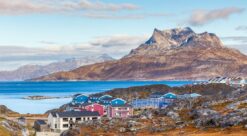
Donald Trump used a 2018 survey on Greenlandic preferences for national independence to bolster his argument for annexing the autonomous territory.
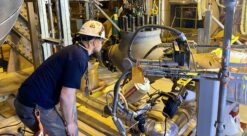
It’s been a mystery for many years: Every day, tonnes of ferromanganese – an important additive in steel – are “locked” in slag on their way out of the furnaces. We are now getting close to solving this problem.
Norway’s support for scholars at risk is a lifeline for displaced academics. As displaced scholars, however, we see that challenges remain.
Learning from nuclear construction successes and failures can help reduce the cost of building nuclear energy in Europe. But even if these power plants turn out to be more costly than we would like, putting them to work can reduce overall energy costs.
Almost everyone agrees that having the same GP (general practitioner) over a long period of time is beneficial, but are you at risk if your GP relocates or retires?
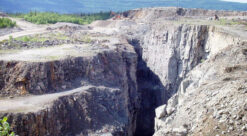
Mineral recovery by mining generates large volumes of surplus crushed rock that end up polluting natural environments. If we succeed in generating new knowledge, such surpluses can instead be used to manufacture concrete or improve agricultural soils.
If only techno-optimists get to test AI tools, the results simply aren’t good enough. This is where Tesla made a big mistake – a lesson that the health sector will do well to learn.
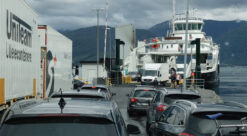
Shortfalls in crew numbers in the Norwegian ferry system are resulting in numerous cancelled crossings. Onshore control centres and new safety technologies are just some of the initiatives that may enable operations with smaller crews.
The United States remains a global power unparalleled in history. So what would it take for this situation to change? Four possible developments or events seem to be plausible candidates.
Youthful creativity is enhanced by artificial intelligence, but students are also asking valid, critical questions about how the technology affects education and learning.
Norway’s coastline is littered with plastics from around the world. Plastic pollution is a global problem, but Norway can be a role model in putting an end to it.