Grades shouldn’t be introduced too early
Assigning marks in Grade 7 can have negative effects. A new study shows that the practice can affect pupils’ academic performance and how they experience the transition to secondary school.


Assigning marks in Grade 7 can have negative effects. A new study shows that the practice can affect pupils’ academic performance and how they experience the transition to secondary school.
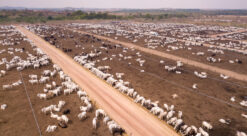
A new study provides the most detailed dataset yet on the biodiversity footprint of food. The results can lead to more sustainable diets.
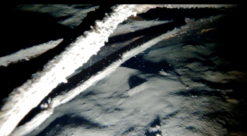
The discovery of what may be Mjøsa’s oldest known shipwreck to date drew international attention just before last Christmas. The researchers have now secured a video of “Storfjorden I.”
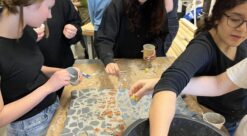
Recycling is the guiding principle behind the new Voldsløkka school and Culture Centre. Pupils are taking part in an art project as their contribution to the research project called ARV.
During his visit to Norway earlier this year, Bill Gates was keen to emphasise the innovation that will be needed to reduce the costs of mitigating climate change. One place to start is to educate more experts in the field of data processing.
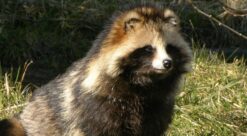
Approximately 47 000 different species have been identified in Norway – and there are probably many more. A new tool can help us gain a better overview.
Speciality steels made the headlines in 2021 following a serious car accident. Normally, alloys of this type corrode very slowly, but they must not be used to construct barriers along roads that are salted in winter. At other places on the road network, the same steels offer long lifetimes and cost savings.
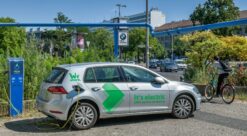
Fossil fuel vehicles gulp down petrol, and electric cars gobble up minerals. The battery industry is so ravenous for lithium as a raw material that researchers believe the demand could threaten climate goals.

It’s not true that women are subjected to sexual double standards, researchers say. Most people tend to be more liberal than they think other people are. But not all behaviour is OK.
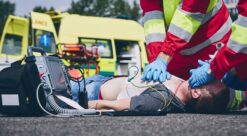
After examining 298 patients with cardiac arrest, researchers found that ECG markers can provide a clue as to how the treatment is working — as much as four to five minutes into the future.
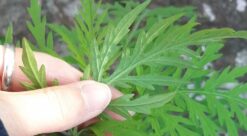
The plant is called common ragweed, and if you are allergic to pollen, you should probably pay extra close attention. This is one of the invasive plants that supergenes have brought to Norway.
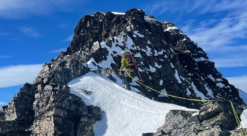
Why are cold temperatures so dangerous if you have an accident? And why is it that cold temperatures enable some patients to survive without permanent harm?
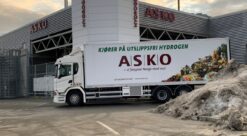
Haulage truck and fuel manufacturers have joined forces with researchers to make heavy transport across Europe more climate-friendly. And all thanks to having SINTEF ‘behind the wheel’.
We need the electricity generated by solar panels in order to meet our climate change mitigation targets. But solar power must be integrated rationally and fairly – something that can only be achieved with effective regulation.
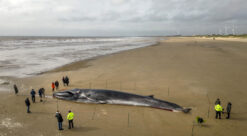
For the first time ever, researchers have been able to track eight fin whales in near real time for five hours, as they swam along a stretch of fibre-optic cable line in the Arctic. The breakthrough suggests that fibre-optic cable networks could be harnessed to help prevent whale deaths by ship strikes.
Medieval times may seem dusty and distant, but we are surrounded by the Middle Ages in many different ways in our daily lives.
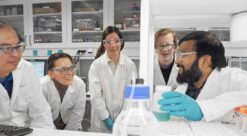
Electric cars are a growing market, and so are the large batteries they use. Often these batteries are difficult to recycle. But help is on its way.
Managing hydropower production is complicated. Artificial intelligence can help ensure that we don’t run out of power.
Direct Air Capture (DAC) technologies offer new opportunities for getting closer to our climate change mitigation targets. However, we still have a long way to go before DAC can be fully rolled out as a mitigation measure.
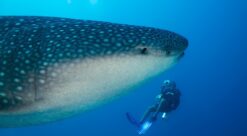
Most of our planet is underwater – and steadily more will be underwater in the years to come. What do we really know about the underwater world?
Vessel components are being transported all around the world when just a simple datafile would suffice.

Security holes in our smart devices are difficult to detect. Is it possible to automate the search for vulnerabilities? Researchers at NTNU in Gjøvik are on the case.
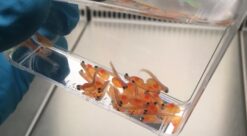
Bacteria-free fish fry put researchers on the track of how they could make fish more disease resistant.
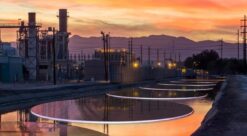
Researchers are planning a solar energy plant that will capture ‘concentrated sunlight’ using mirrors. The plant will also be distinctive because it will generate both electricity and heat, which can be used to capture carbon dioxide.