Clay can be used for carbon capture
Ordinary clay can be as good as more advanced materials for capturing carbon dioxide.

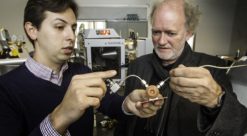
Ordinary clay can be as good as more advanced materials for capturing carbon dioxide.

When negotiators come to Paris this December to discuss a binding and universal agreement on controlling climate change, they have to know how much each country contributes to the greenhouse gas emissions problem. A new method offers the best hope yet for accurately accounting for these emissions by providing the right incentives and assigning fair responsibilities.
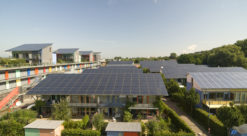
Norway’s wealth and prosperity over the last four decades has been built on oil, but Jeremy Rifkin, a futurist and social and economic thinker, says it’s time for the country to change. The Third Industrial Revolution is coming, and Norway needs to abandon fossil fuels and move towards a greener future that relies on renewable energy, shared transport and ultra-efficient housing.
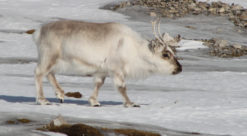
The last week of January 2012 brought wild weather to the Norwegian arctic island archipelago of Svalbard and its largest town, Longyearbyen. A new cross-disciplinary study provides a comprehensive look at the effects of this extreme weather event on everything from town infrastructure to the natural environment.
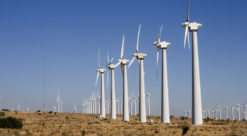
The countries of the world wrapped up preliminary climate talks in Lima, Peru this weekend with an agreement on how the UN’s 194 countries will tackle climate change. The agreement comes in advance of major negotiations scheduled for Paris next year to designed to curb the world’s production of greenhouse gases. In a publication from earlier this year, researchers at NTNU’s Industrial Ecology Programme report that the low-carbon future that would result from curbing greenhouse gas emissions is both feasible from a practical standpoint, and will also substantially reduce air pollution.
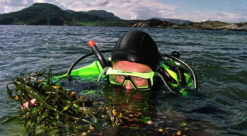
A Norwegian research group has been able to achieve bio-oil yields of 79% from a common kelp. Other researchers working with the same species have yields closer to 20%. The secret is to heat the kelp very quickly and bring it to the right temperature within seconds.
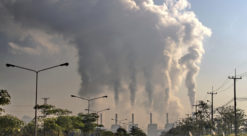
Climate talks in New York this week have offered a glimmer of hope that the world’s political leaders finally understand the need to act to curb global warming. An NTNU researcher says that these actions will have a beneficial side effect: cleaner air in some of the most polluted places on the planet.

Norwegian houses can no longer have the same design in western as in eastern Norway. Building designs must adapt to local climate variations, say researchers.
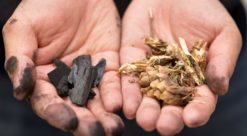
When the forestry machines have finished extracting timber, what is left are tops and branches – waste which cannot be used. However, according to researchers, it is possible to turn these heaps of lopwood into high-quality charcoal.

Many people are concerned that electric cars produce dangerous magnetic fields. New research shows that this is not the case.
Three climate researchers talk about the latest report from Intergovernmental panel on climate change (IPCC). In English, French and Italian.
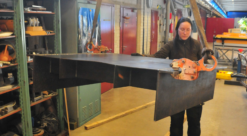
As the Arctic Ocean’s summer ice cap melts away, new trans-Arctic shipping routes will open and see a growing amount of shipping traffic. But what’s the best way to protect ships and other ocean structures if they crash into icebergs?
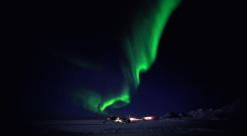
The Norwegian arctic island archipelago of Svalbard offers scientists the chance to investigate some of the most intriguing – and perplexing – puzzles facing the high north.
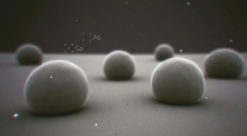
Mobile phones that bend, self-powered nanodevices, new and improved solar cell technology and windows that generate electricity are but a few of the potential products from the union of semiconductors and graphene.

The population of the world’s cities is growing by 60 million people a year. What can urban planners do?
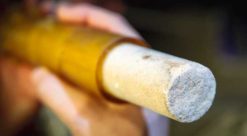
A spongy sandstone deposit can help cool the Earth’s fever.
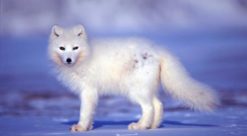
What happens when animals in harsh environments are exposed to extreme weather? Scientists found that extreme icing caused widespread die-offs in one arctic animal community. Climate change may cause more such extremes.
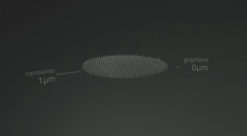
Researchers at NTNU have patented and are commercializing GaAs nanowires grown on graphene, a hybrid material with competitive properties.

Predicting risks from invasive species – before it happens.
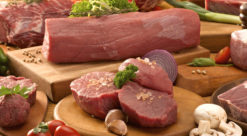
Growing and producing food make agriculture and food consumption among the most important drivers of environmental pressures, including climate change and habitat loss.

How much carbon does your country emit – and where does it come from?