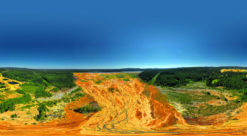
Gaining a better overview of life on earth
Approximately 47 000 different species have been identified in Norway – and there are probably many more. A new tool can help us gain a better overview.


Approximately 47 000 different species have been identified in Norway – and there are probably many more. A new tool can help us gain a better overview.

Fossil fuel vehicles gulp down petrol, and electric cars gobble up minerals. The battery industry is so ravenous for lithium as a raw material that researchers believe the demand could threaten climate goals.
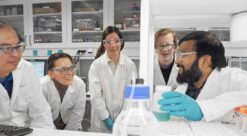
Electric cars are a growing market, and so are the large batteries they use. Often these batteries are difficult to recycle. But help is on its way.
Managing hydropower production is complicated. Artificial intelligence can help ensure that we don’t run out of power.

Norway has seen an increase in solar power capacity in recent years, but in winter solar panels face a big problem: snow. Researchers modelled how much extra electricity could be generated if solar panel surfaces were designed to repel snow and ice.
Producing hydrogen will become an important part of decarbonising Europe’s energy system and is one of the opportunities Norway has to maintain value creation along the lines of what the country has experienced with oil and gas.
A comprehensive analysis of 870 power plants worldwide shows that nuclear power is a clear winner in protecting ecosystems. Bioenergy is a sure loser.

Researchers calculated the total carbon footprint of a bed. Then they discovered it was possible to halve it.

The ZEB Laboratory has been utilised both as an office building and a sustainable construction laboratory for about two years. It was designed to be the world’s most ambitious ‘climate-adapted building’ and up to now it has been a great success.

Climate researchers have long known that large animals, like moose, could play a role in how much the Earth will warm due to climate change. But the question is, how much? New research shows the answer can be a lot.
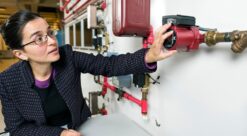
NTNU has tested a system to predict the heating needs on the Gløshaugen campus. The results show that we can save even more where surplus heat is already in use.
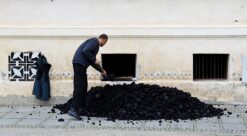
Can Europe use the energy crisis to help accelerate its efforts to achieve net zero greenhouse gas emissions by 2050? The EU’s Scientific Advisory Board on Climate Change says yes.
Blue, also called “low carbon” hydrogen will make for a much more suitable transition towards renewable energy than natural gas.

Don’t tell me that you haven’t noticed them. Empty snuff boxes littered all over our streets and parks. But instead of being just rubbish, they can now be recycled to make new products.
The view that natural gas can act as an eco-friendly bridge in the transition from our use of coal to renewable energy has experienced a renaissance in the wake of the European war. Thus, the time is right to review the data behind the politics.
The Norwegian government is committed to reducing greenhouse gas emissions by 55 per cent by 2030. This will involve dramatic changes to the electricity grid system.
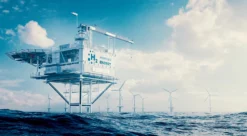
A stroke of serendipity, courtesy of the weather gods, will save the Norwegian offshore wind sector from the intermittent moods of windpower. But only if wind farms are distributed across large geographical areas.
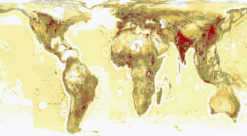
Cattle farming has often been portrayed as having the most detrimental environmental impact because it takes the most grazing land, uses a lot of water and has large methane emissions. But it’s not the worst. And is locally produced food always best for the environment?
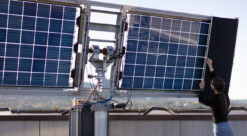
Solar energy is good news for planet Earth – but solar panels are not as climate-friendly as they should be. Researcher Martin Bellmann is using what he calls the ‘black gold’ waste materials from solar panel manufacture to make new panels.
Waste slags from the metallurgy industries often contain valuable materials, but in very small concentrations. This means that large areas of valuable land are used to accommodate reservoirs filled with what is sometimes toxic waste. We now want to use hydrogen to convert this waste into a resource.

Tremendous floods in Pakistan earlier this year forced 600,000 pregnant women to leave their homes for safer ground. It was just one in a series of nearly unthinkable happenings caused by climate change — and a clear message that humankind has to do more to stop it.

We know very little about very many species. Unfortunately, that’s often not a good sign.
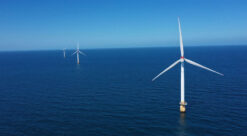
Norway needs to take proactive steps to retain its lead in developing floating offshore wind, says NTNU professor.
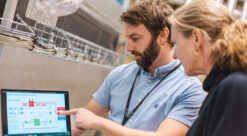
Up until now it has been a challenge to store the energy we generate when the sun is shining and the wind is blowing. But researchers at a laboratory in Trondheim in Norway have succeeded in doing just this – and entirely without any form of advanced battery technology.