Teaching the next generation of fish farmers for the aquaculture industry
We need to know more, and teach more people, about aquaculture so we can use the ocean’s resources to the greatest extent possible while protecting the environment.

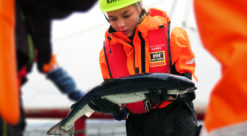
We need to know more, and teach more people, about aquaculture so we can use the ocean’s resources to the greatest extent possible while protecting the environment.
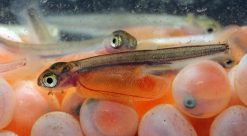
The aquaculture industry typically selects salmon with the right genes for breeding to provide the freshest and biggest fish. A new method has the potential to produce better results.
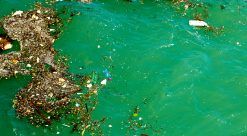
Picking up a plastic bag from the beach makes a bigger difference than you might imagine.
In the innovative EU project GoJelly, researchers are working to solve the microplastic challenge by using products from nature itself.
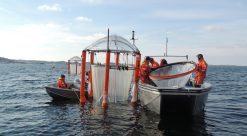
Excess CO2 in the atmosphere is making the oceans more acidic. Some studies show that’s bad news for fish, including commercially important species. But not all fish respond the same way.
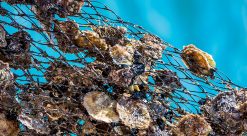
Aquaculture used to be a secondary income source for Norwegians. Now it’s become big business. Occupational safety has made steady advances, but some areas clearly still need to improve.
According to a new research report, most plastic fragments end up on the ocean floor.
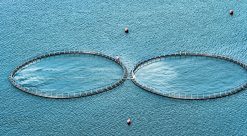
Currents in the ocean and fjords spread viruses that are killing large numbers of farmed salmon. Where should fish farms be built? And should they all be in use at the same time? Researchers now know more about how to limit the virus problem.
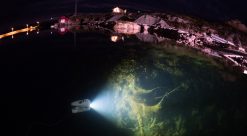
The mysteries below the ocean’s surface have triggered human exploration and imagination for centuries. New marine robotics now make it possible to explore what goes on in the ocean depths.

We know that tiny marine creatures in the Arctic respond to weak light from the Moon or the northern lights during the polar night. Now researchers have learned that artificial light from research vessels can also have a negative effect.
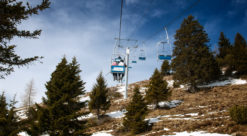
Trondheim: Norwegian researchers believe that it will be possible to make environmentally-friendly snow at above-zero temperatures. Now they have the backing of Europe and the skiing industry in their bid to save the sport from climate change.
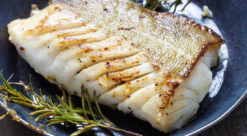
Yes. As long as it is handled properly, new research reveals.
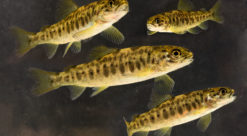
The condition of the water in salmon hatcheries can tell us a great deal about when and why outbreaks of disease occur. Now, SINTEF researchers are about to expose the water’s secrets, both to prevent suffering in fish and to save the aquaculture industry a great deal of money.
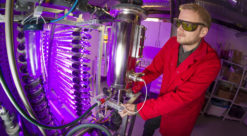
Establishment of the Norwegian Centre for Plankton Technology has yet to be completed, but there has nevertheless been high levels of interest from both industry and research.
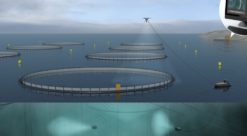
Robotics technology is making inroads into the aquaculture sector, making it possible to regulate facilities from onshore.
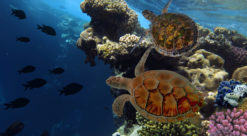
Science has made great strides since Svante Arrhenius, the Swedish Nobel Laureate who in 1896 first determined that carbon dioxide from human activity could warm the planet. The same progress hasn’t been made in increasing the number of women in the sciences.
The close relationship between SINTEF and NTNU has catapulted the university to a number one ranking among the world’s universities when it comes to publishing in partnership with a single industry collaborator.
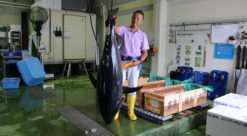
The Japanese eat one in ten of the world’s fish, and 80 per cent of the planet’s prized —and critically threatened — Bluefin tuna. Tuna aquaculture pioneered at Kindai University in Japan offers hope for both fish lovers and the fish.
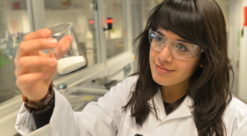
Every year 340,000 tonnes of usable whitefish by-product are discarded into the sea. But the fisheries industry has now identified ways of halting this practice.
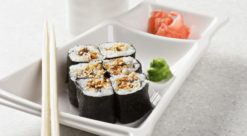
First time cultivation of red Porphyra algae in a Norwegian lab.
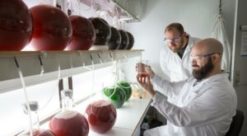
Minute particles of plastic, called microplastics, are everywhere. An international research team is now about to investigate how toxic microplastics are to marine animals such as plankton, crabs and fish, and to find out if such plastics accumulate in the food chain.
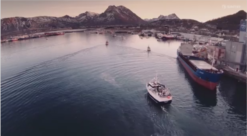
Big Data means that professional fishermen will soon be getting their own decision-making tool. It will tell them where fish shoals are located, and how their vessels can be operated as economically as possible.
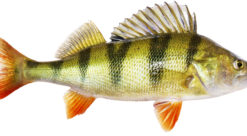
Fish can adapt their metabolisms to cope with warmer ocean temperatures, but not necessarily with extreme heat.
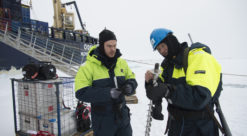
Representatives from Japanese and Norwegian universities, research institutions, government agencies and industries interested in polar issues will gather in Tokyo in early June to present research results and build partnerships.