Toss it if it’s 481 years old – but not if it’s a year older
Norway conserves archaeological finds from 1537, but not when they’re from 1538 or later. That means we know less about people’s everyday lives during the last 481 years.

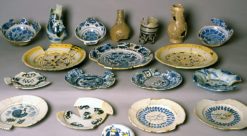
Norway conserves archaeological finds from 1537, but not when they’re from 1538 or later. That means we know less about people’s everyday lives during the last 481 years.
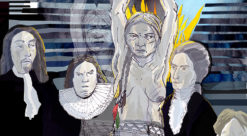
Finn-Kirsten Iversdatter was the last person to be executed for witchcraft in Central Norway, but her story was mostly forgotten. Until now.
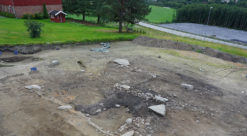
Archaeologists at NTNU have discovered the remains of a Viking house from the early Middle Ages. It is a “very rare find,” says project manager Merete Moe Henriksen.
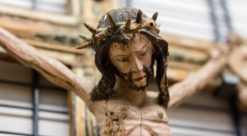
Church art from the Middle Ages reflects the dramatic societal changes that were underway during this period. Artists changed the way they depicted Christ from a regal figure with a crown of gold to a suffering Christ with a crown of thorns.
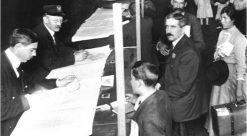
Many immigrants changed their names when they came to the United States at the turn of the last century. People who changed their first names often landed better-paying jobs.
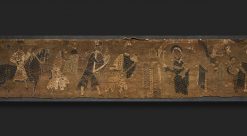
Norwegian churches in the Middle Ages were decorated with embroidered tapestries that told Bible stories almost like a comic series. The Høylandet tapestry is the only one of its kind that has survived the march of time.
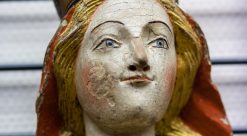
A Madonna figure from Grong municipality is one of the best preserved and special church sculptures in Norway from the Middle Ages. She looks like a sweet, friendly girl who’s been asked to model for the sculpture.
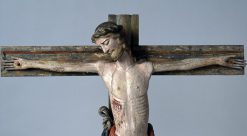
One of Scandinavia’s finest collections of church art from the Middle Ages lay hidden and forgotten in Norwegian churches for centuries. Indeed, this long forgetting is precisely what preserved the unique church art.
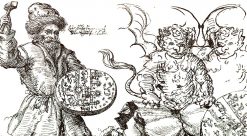
Some people may have heard about the magical phenomenon of gand. When life seems to be against you or you’re plagued by one misfortune after another, you might jokingly say that you’ve been ‘ganda’ if you’re Norwegian. But what did gand really look like and why do we associate it with the Sami people?

For centuries, perhaps millennia, people and birds have interacted with each other. The tradition of eiderdown harvesting from this northern duck is still practised.

Not too many people are able to identify birds by examining a single feather. But a number of folks need to know that sort of thing, and it can actually save lives.
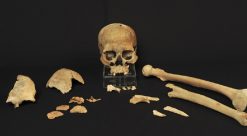
So you think people in present-day Sweden and Norway are different from each other? It turns out that would have been closer to the truth some 9500 years ago.
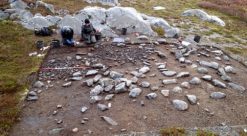
We’ve always heard that Stone Age people lived in caves. It turns out that’s not the case. They often lived in earthen huts, which they reused and kept up rather than building new ones.
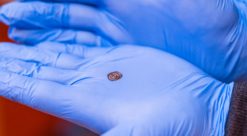
Norway minted its own coins during much of the Middle Ages. But the coins didn’t always impress outsiders or even the Norwegians themselves.
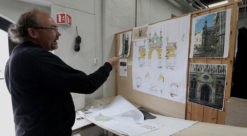
The secrets of St Olav’s shrine and Nidaros Cathedral have drawn pilgrims for nearly a thousand years. Curious researchers have also made the journey, eager to solve the mysteries locked up in the cathedral’s stones.
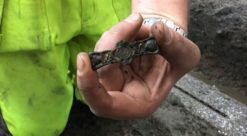
What was supposed to be a simple excavation to allow for the expansion of a church cemetery turned into a treasure trove of historic artefacts, including a decorative fitting from a book “imported” by Vikings from Ireland.
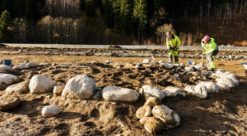
Archaeologists from NTNU have unearthed Bronze Age graves ahead of planned road construction in Melhus municipality.
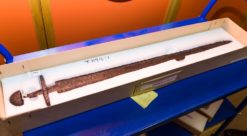
Disney World wants to showcase archaeological artefacts from the NTNU University Museum for millions of Florida visitors.

What is money exactly, and what’s the connection between modern-day mobile money transfers and the larger-than-life Viking Halldórr?
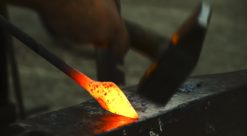
Ancient Norwegians made top-quality iron. But where did the knowledge to make this iron come from? An NTNU professor emeritus may have solved this riddle.

The Birken ski festival, the Great Trial of Strength cycling event and the Norseman Xtreme Triathlon are considered to be real tests of manhood today. But a few hundred years ago, the minuet was how men displayed their skills and strength.
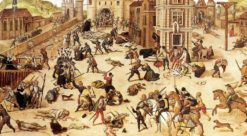
A series of bloody religious wars were fought after a Church divide that Martin Luther did not originally want. How did it all go so wrong?
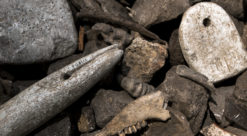
When archaeologist Geir Grønnesby dug test pits at 24 different farms in central Norway, he nearly always found thick layers of fire-cracked stones dating from the Viking Age and earlier. Long ago, Norwegians brewed beer using stones.

Just 12 Americans have set foot on the lunar surface, and of those, only six are still alive. Three—Buzz Aldrin, Charlie Duke and Harrison “Jack” Schmitt — will be in Trondheim at the Starmus Science Festival to talk about the future of humankind in space.