Impossible to prevent children from ingesting microplastics
Little research has been done on how nano- and microplastics affect children. Researchers are surveying what we actually know and offer some useful tips to parents.

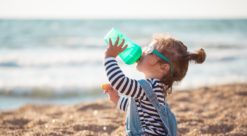
Little research has been done on how nano- and microplastics affect children. Researchers are surveying what we actually know and offer some useful tips to parents.
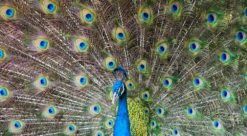
Dye pigments are often toxic, so researchers around the world have long been looking for effective ways to make non-toxic, recyclable and sustainable colours instead. The answer lies in nanotechnology and nature’s own methods.
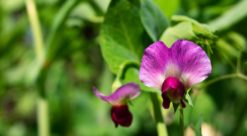
When temperatures rise, it affects the plants that agriculture and we depend on. Now we know more about how plants resist drought.

Plastic consumer products contain chemicals that may promote the development of overweight and obesity.

The world is crying out for rare minerals for the manufacture of electric cars, wind turbines and other technologies that we simply need more of. But how can we guarantee access to these resources without threatening the natural world and mankind as we know it?

Neutron stars are the little siblings of black holes and show some of the most extreme phenomena in the universe. The European Research Council (ERC) is giving Professor Manuel Linares EUR 2 million to hunt them down.
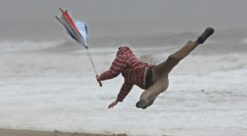
The Nobel Prize in Physics is going to three individuals who found that the world isn’t always as chaotic as we think.
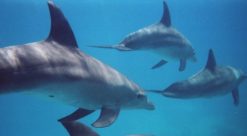
Ocean-dwelling dolphins have repeatedly adapted to life in coastal areas throughout history.
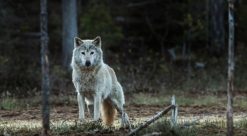
The Norwegian wolf died out in the wild a long time ago. The wolves in Norwegian forests today are Finnish. Inbreeding is making them prone to extinction as well.
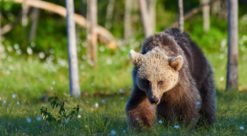
Climate change is not the greatest threat to the diversity of species on Earth. The main problem is that animal and plant habitats are disappearing.

A new method using nanowires can make solar panels much more efficient and much cheaper than today.
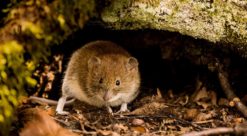
New research confirms that fluorinated compounds in ski waxes affect organs in mice.
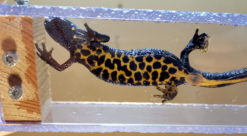
The stomach patterns of salamanders are as unique as human fingerprints. This feature will be used in an app to record salamander numbers.
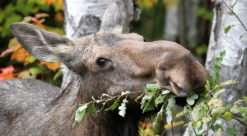
With the warming climate, forests are growing faster than before, and deciduous species are growing the fastest. Recent research illustrates just how much moose foraging limits this growth.
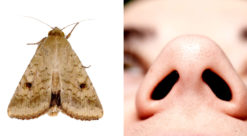
Scientists find remarkable similarities in the olfactory pathways of such diverse creatures as humans and insects.
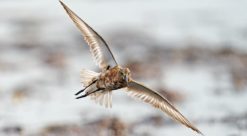
Shorebirds burn a lot of fat during their long migrations. This can release toxic chemicals that accumulate in fat cells.
All over the world, people are moving out of rural areas, and cities are growing. What will be the impact on resident species that live in these cities? Which will be our new plant and animal neighbours, which will have to leave town, and what does that mean for us humans?
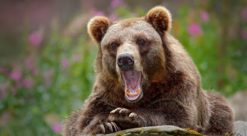
Bacteria in wild bears become more resistant to antibiotics when human antibiotic use is high.
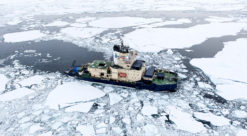
A new app under development is using deep learning and artificial intelligence to classify different kinds of sea ice. People snapping photos during Arctic cruises and uploading them to the new app could someday help prevent Titanic -scale disasters.
The Gunnerus Sustainability Prize for 2021 has been awarded to Professor Jianguo (Jack) Liu at Michigan State University.
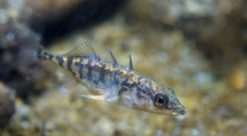
A 12 000-year-old stickleback shows how species adapt.

Women and men are often jealous for completely different reasons. This gender difference occurs so early that it surprised the researchers.
Two professors at NTNU have been awarded prestigious ERC Advanced Grants by the European Research Council.
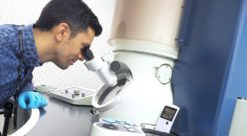
For more than 100 years, we’ve known that some metal alloys become stronger by being kept at room temperature. But we haven’t understood all the details – until now.