Red fox displaces Arctic fox thanks to littering
Red foxes are moving to the mountains to feed on trash along roadsides. This is bad news for the endangered Arctic fox.

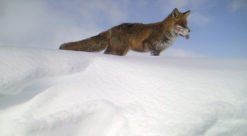
Red foxes are moving to the mountains to feed on trash along roadsides. This is bad news for the endangered Arctic fox.
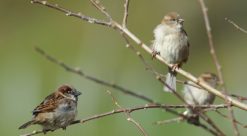
Inbred birds don’t live as long and have fewer offspring than non-inbred birds. Inbreeding is equally harmful regardless of where the birds live.
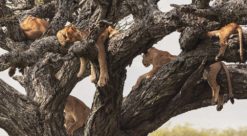
Once upon a time, lions were the world’s most widespread mammals. Now we know more about their genealogy – and that could make it easier to help the species survive.

Why do some organisms evolve and others don’t? The answer could help in the fight against both cancer and corona.
From 1 July, scientists from 14 institutions in six countries will be examining the opportunities and risks of ocean-based technologies for negative emissions.
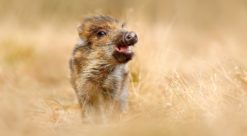
Maturing and reproducing early hardly has any downsides. If you’re a wild boar, that is.
Bats have received a lot of negative attention, but the chances are slim that the virus that causes COVID-19 was transmitted from bats to humans. The world needs bats – in ecosystems, for pollination and for seed dispersal. On top of that, they keep harmful insects in check around our homes, on farms and in cities.
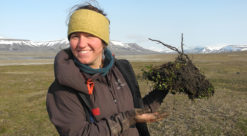
It’s not easy being a tiny willow on the wind-and snow-blasted islands of the Norwegian territory of Svalbard. It turns out that Salix polaris, the polar willow, handles these tough conditions by growing as best it can in response to July temperatures — a response that researchers recorded all over the archipelago.
Low oil prices have fueled the debate about which industries Norway should develop and live on in the future. In the government’s revised national budget, the extraction of seabed minerals emerges as a clear investment area.
NTNU researchers are playing a leading role in a new IPCC report. One way they’re helping is collecting data on a website created and operated by the university.

We all know what friction is — but it turns out to be very difficult to describe. Researchers have simplified a commonly used, century-old model for use at the nanoscale — by making it more complicated.
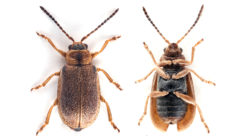
It took seven years, countless beetle penis field investigations, and hours upon hours on hands and knees in coastal wetlands. This is the story of all the research that has to happen before a new species can finally get its official name.
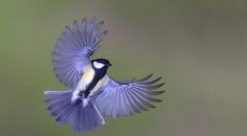
With some practice, you can learn to recognize some of the most common birds in northern Europe by their songs.
Norway’s Ministry of Health and Care Services confirmed Friday that it will roll out coronavirus test kits developed by researchers from NTNU and St Olavs Hospital by the last week of April/early May. The kits will more than triple Norway’s testing capacity during the rollout.

Droplets and bubbles are formed nearly everywhere, from boiling our morning coffee, to complex industrial processes and even volcanic eruptions. New research from SINTEF and NTNU in Norway, improves our understanding of how these bubbles and droplets form. This could improve our ability to model climate change.
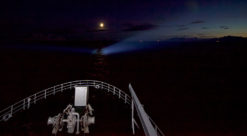
If artificial light shines into the Arctic Ocean during the polar night, does it matter? A new paper in Communications Biology says the answer to this is a strong yes.
During the time of Darwin, anthropogeny was the study of human origins. Its sub-discipline paleoanthropology has since taken over, which focuses on fossils found in dry parts of Africa. These fossils don’t tell us much about why or where humans actually evolved.

As nations prepare to mitigate climate change, decision makers need to understand how land use fits into the climate equation. A new study looked at land use changes over two decades and found a major shift from cropland to forests. That change made western Europe cooler.
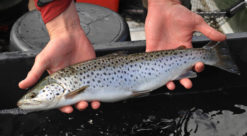
Sea trout populations have declined sharply. Researchers have studied the life of sea trout by means of acoustic telemetry tags and listening stations. Now they know more about what we need to do to protect the sea trout population.
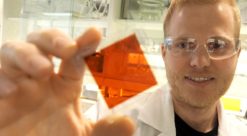
Organic solar cells are usually less effective than silicon solar cells. But there is still a market for them – and they’re beautiful and exciting.
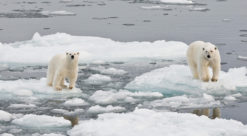
A group of polar bear researchers wants you to do more than worry about the fate of these beautiful animals. They’ve calculated how much summer sea ice is melted per metric tonne of CO2 emissions. Then you can decide if the flight you’re planning to take is worth destroying polar bear habitat.
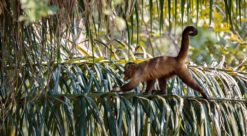
As forest areas shrink and become fragmented, many tree species face problems. They often rely on animals that can no longer disperse their seeds effectively.
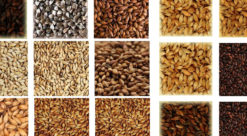
The distinctly Norwegian beer-brewing yeast kveik reduces fermentation time drastically. That’s a huge advantage, according to NTNU PhD candidate Christian Schulz.
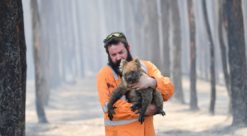
Bushfires are a normal part of the cycle of nature in Australia. But not like this. And it is going to get worse.