Have we seen the last of the traditional classroom?
Researchers are on the lookout for the perfect learning environment. Perhaps the traditional classroom should be giving way to new approaches?

Researchers are on the lookout for the perfect learning environment. Perhaps the traditional classroom should be giving way to new approaches?
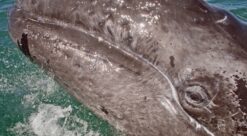
Several whale species disappeared from Europe long before whaling became a major industry. Two of the most common species are no longer found here, and one of them is almost extinct.
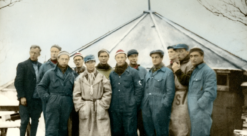
More than 80 years ago, Norwegian teachers refused to teach Nazi ideology to their students. They were tortured, imprisoned and starved. But they prevailed. The story of how they won — and why it still matters.
Recent data on people’s habits in the workplace are giving us reason to look into whether the use of artificial intelligence (AI) may be hampering collaboration and knowledge sharing.
Plant managers used to be kept awake at night by the fear of unintended incidents. But their new nightmares are much worse.
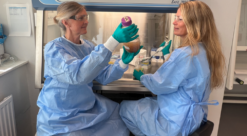
Yes, say researchers – who suspect that disinfectants used in food production may in fact be exacerbating a global public health problem.
A huge amount of the knowledge we acquire about our work cannot be expressed either digitally or on paper. Children ought to be made aware of this as early as in primary school, because this tacit knowledge is in danger of dying out.
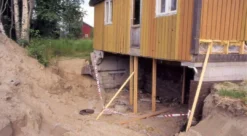
Was your house damaged following the recent ‘Hans’ extreme weather event? SINTEF can advise you about what you can do to limit the extent of the damage.
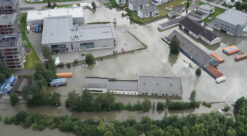
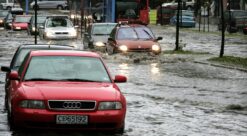
An extreme storm in Norway called Hans has accelerated the debate about how we should build and where we can live. Adapting to wilder and wetter weather also means that engineers are exposed to greater ethical pressure.
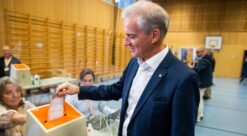
More people are taking advantage of early voting than before. But the impact on the elections is not exactly what politicians had hoped for.

Teachers should encourage more debate in the classroom. Practicing discussions can help pupils to master situations where they disagree.

Many children and young adults spend a lot of time on social media, much to the concern of their parents and guardians. Researchers at NTNU have now taken a closer look at the impact of using social media such as Instagram, Snapchat and TikTok on young people’s mental health.
Increased cooperation between Norwegian industry and universities on quantum physics sensors is a win-win situation for society. Such sensors can provide new opportunities in areas as diverse as mineral extraction and agriculture.

“A sense of community between generations will be key to ensuring sustainable coastal communities. The importance of children’s learning through work is underestimated,” says Professor Anne Trine Kjørholt.
Data-driven public administration changes the public sector in a fundamental way. But what does this mean for you as a citizen?
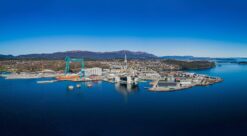
A physical suggestion box doesn’t work in 2023. So why not just create a Facebook group or set up an e-mail address? Because there’s another option, which we’ll tell you more about now.
It sounds like a simple question: How many countries are there in Europe? However, the answer is more complicated than you might think.
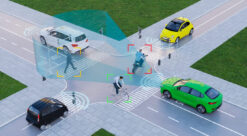
The actions that vehicle drivers perform today will be handed over to machines – just as soon as the technology makes it possible and road users demand that such systems be put in place. This is no simple task, but Norway is far ahead of the curve.

In Norway, girls are much better at reading than boys. But girls and boys perform equally well when using a new teaching method.
In the wake of the shocking revelation from a major Oslo hospital that fear among employees is making corporate whistleblowing difficult, some in the IT sector are promoting the opposite. When something goes wrong, they learn from their mistakes together.

Do we discriminate against people with foreign-sounding names? A clever experiment with fictional girls who wanted to play football yields some answers that might surprise you.
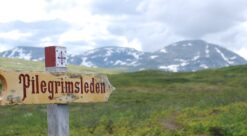
Hundreds of thousands of pilgrims make use of Europe’s many pilgrimage walks every year. However, travellers tend to visit only a few of the attractions along the routes. The EU project “rurAllure” aims to attract travellers to lesser-known sites of interest.
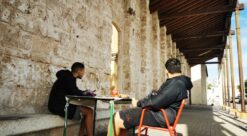
In Palma de Mallorca in Spain, researchers are planning to use VR headsets to encourage resident participation in a community project.
If we are to avoid our cities becoming ‘heat magnets’ one day, and overwhelmed by flooding the next, we have to incorporate wetlands and ditch systems into our urban infrastructure.