Ambulance drones on the horizon
Would you hop into a driverless drone and let it fly off with you? In a few years you may have the chance to do just that.

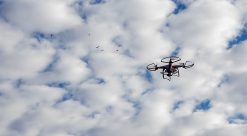
Would you hop into a driverless drone and let it fly off with you? In a few years you may have the chance to do just that.
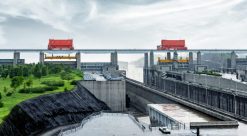
When China wants to exploit its hydropower resources, they can ask Norwegian researchers for advice. It is now possible for hydropower companies in China to read the handbook for environmental design of regulated rivers in their own language.
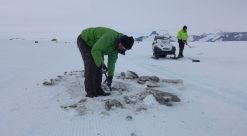
When your airport runway is located at 72 degrees south latitude and more than 4000 kilometres from the nearest major city, it better be in tiptop shape. But in Antarctica, where most runways are made of snow or ice, holes can be a big problem.

Norwegian research scientists are contributing to the development of the world’s hottest geothermal well in a non-volcanic area. The goal is to exploit the inexhaustible supply of heat from the interior of the Earth, and this calls for equipment that can withstand the most extreme conditions.
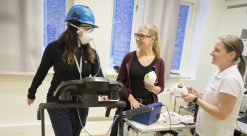
The smelting industry needs to promote the availability of dust masks of more than one size, according to the research scientists behind a recent working environment study at Norwegian smelting plants.

Many people have tried to find ways of preventing hurricanes before they make landfall, resulting in the loss of human lives. Norwegian researchers believe that the answer lies in cold bubbles.
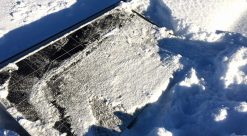
Experiments in SINTEF’s climate lab demonstrate that solar cells work very effectively in Norway in spite of the rain and cold. But there is one thing that owners should be aware of if they want to get the most from the sun’s energy.
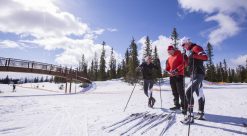
Norwegian cross-country skiing is applying science to analyse how its elite athletes exploit their strengths during training and competition. The aims of this sensor-based research are to give skiers valuable advice about training and help them find the perfect pair of skis.

For children who need help from so-called welfare technology in order to manage their day-to-day lives, it is important that the assistance they get is invisible to others. Many obtain effective help from an app installed on their phones.
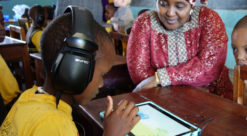
A headset and a little electronics might be all it takes to enable nine-year-old Sharleen, who has hearing difficulties, to get an education and a life free of poverty. She is now getting help from Norwegian researchers.
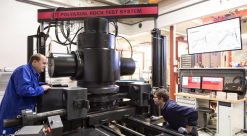
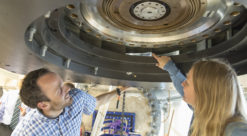
This ten-tonne test rig has been custom-designed by Norwegian researchers and built under contract by American engineers. It has finally been installed at SINTEF after eight years of planning and construction. This mammoth of a device, nicknamed the “Polyax Rocker” is now set to re-create with ultra-high precision the geological stresses acting on oil reservoirs.

Waste heat and locally-produced renewable energy can be generated by compact, “urban power plants” that are efficient enough to supply heat to entire housing estates.
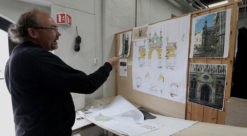
The secrets of St Olav’s shrine and Nidaros Cathedral have drawn pilgrims for nearly a thousand years. Curious researchers have also made the journey, eager to solve the mysteries locked up in the cathedral’s stones.
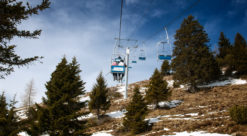
Trondheim: Norwegian researchers believe that it will be possible to make environmentally-friendly snow at above-zero temperatures. Now they have the backing of Europe and the skiing industry in their bid to save the sport from climate change.
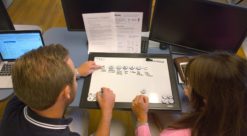
“Customer journeys” have become a popular method to increase customer focus and improve service quality in many branches of industry. But research shows that the method doesn’t always work as expected – and confusion surrounds the meaning of the concept itself.
The 1969 discovery of oil at the Ekofisk field in the North Sea transformed Norway into an internationally important energy nation. But long before black gold was being pumped from the Norwegian Continental Shelf, Norway’s economy was fuelled by a different kind of energy: hydropower.

How energy efficient your home is means nothing on the day you sell it.
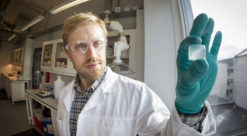
A Norwegian-Swiss research team has succeeded in growing cartilage tissue cells using algae. Moreover, the new cells can reduce joint inflammation. This news gives hope for people suffering from arthrosis, also known as osteoarthritis.
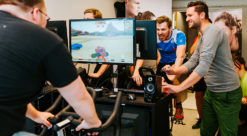
Games are fun. Exercise can be boring. But what if you could play and train at the same time?
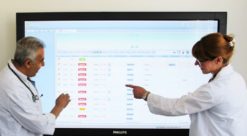
Millions are saved and job satisfaction boosted when doctors and nurses are actively involved in selecting the IT systems they need to rationalise their day-to-day routines.

Small satellites are used mainly to monitor Norwegian territorial waters. However, the scope of applications will widen in the future, and researchers believe that Norway has the expertise to exploit the commercial opportunities these provide.
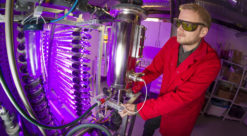
Establishment of the Norwegian Centre for Plankton Technology has yet to be completed, but there has nevertheless been high levels of interest from both industry and research.
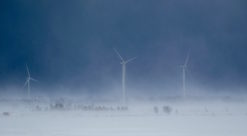
Most efforts to control ice build-up on structures like wind turbines and solar cells involve creating a surface that repels water. But Norwegian researchers have engineered a different approach that allows ice to form on a surface, but then causes it to crack off.

SINTEF’s climate change ambassador Nils Røkke is on his way to Brussels looking forward to a new job and new assignments. He has been appointed as Chair of the European Energy Research Alliance (EERA). This in a world in which the threats posed by climate change are increasingly being portrayed as “fake news”.