Making ultrasound universally accessible
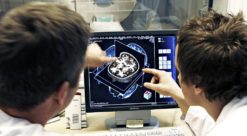
Currently, ultrasound machines are operated primarily by specialists because it requires extensive experience to interpret the images. Norwegian researchers are aiming to tackle this issue.


Currently, ultrasound machines are operated primarily by specialists because it requires extensive experience to interpret the images. Norwegian researchers are aiming to tackle this issue.

The new species of nudibranch, Dendronotus yrjargul, is named after the municipality where it was found.

Children who show signs of addiction-like gaming are not more susceptible to mental health problems than their non-gaming peers. Some even experience less anxiety than others.
A new discovery is an important step towards smaller, more advanced electronics. And maybe more environmentally friendly gadgets, too.
Researchers hope to help with more efficient energy storage to increase the use of renewable energy.

Between 250 and 270 people die each year from heroin or opioid overdoses in Norway. In the EU, thousands die. European users now have a better option available for helping each other.

Red foxes are moving to the mountains to feed on trash along roadsides. This is bad news for the endangered Arctic fox.

It has been more than a thousand years since anyone held this sword. But why was it placed on the left side of the grave?

The rest raw materials left after a salmon has been filleted are equivalent to more than 60 percent of its slaughtered weight. It will soon be possible to convert these into a high-quality fish oil, taste-neutral fish proteins, fish gelatin and flame-retardant materials. Ensuring that not a single gramme goes to waste.

Digital sleep therapy could offer help to people with sleep problems and enable many of them to reduce their sleep medication after treatment.
A new study shows that people who have had concussions sometimes develop long-term after effects, including sleep disturbances. The findings could also be of use to other patient groups.

A study that asked children to assess three different robots showed that they responded most positively to simple robots shaped like flower pots, and were most sceptical of Pepper the robot, which looks more human.

A lot of people struggle with poor memory and impaired attention after a concussion, but how they experience their symptoms differs from their test results.

Robot technology is being used more and more in health rehabilitation and in working life. Exoskeletons are one technology with great potential. But this technology is often developed for the average person. So what about people who are small and thin, or tall and overweight?
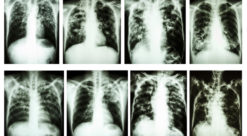
Researchers at NTNU have managed to show exactly how the tuberculosis bacterium kills its host cell by filming the process in detail for the first time. Every year, 1.5 million people die of TB. Watch the clips below.

Sea trout numbers are declining in Norway and scientists don’t know why. They have studied the trout in two rivers in northern Norway’s Nordland county. Soon, sea trout along the entire Norwegian coast will be investigated.

Men and women react differently to different types of infidelity. But new findings about how we forgive cheating by our partners surprised researchers.

Sogndal football teams from Vestland county in Norway have now been studied by specialists. Football coaches often consider the players with the greatest passion and grit to be the best.

Researchers in Norway may be on the cusp of a solution to make tech gadgets even smaller and more powerful.

The story of the cooking pits of yore has made one archaeologist feel – at least a litte bit – like Indiana Jones.

The search for the perfect solar cell is not yet over. Norwegian researchers are now adopting a new approach to the cells’ raw material, crystalline silicon, with the aim of making the electricity-generating cells even more efficient.

Do you hesitate to speak up when you disagree with the rest of the group? Are the others not saying anything either? Then you’re probably not maximizing your collaboration. But you can learn how to disagree more effectively.

Chronic intestinal inflammation requires special individualized treatment. Finding the right treatment for each person may soon become easier.

Cancer researcher Marit Otterlei made a chance discovery of a brand new antibiotic that has proven effective after several experiments.