Seeing the difference between roads and forests
Colour blindness can make reading maps incredibly hard, with red roads passing through green forested areas. But help is on the way.


Colour blindness can make reading maps incredibly hard, with red roads passing through green forested areas. But help is on the way.
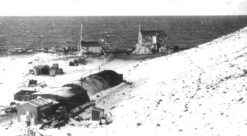
Norwegian researchers are working on mapping the geology of Jan Mayen Island, Norway’s most northwesterly territory. In the process, they also found ruins from Atlantic City, an American base from the Second World War.
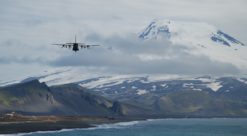
The isolated Norwegian island of Jan Mayen is located at the junction of two currents. Here, scientists can gain valuable insight into climate change. Take a coffee table tour by scrolling through the picture carousel.

Are you doing your back exercises correctly? Are you following the plan that your doctor or physiotherapist set up for you? New technology could help you follow up on their advice and adapt the exercises to your needs.
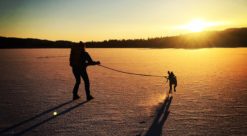
Recent winters almost free of snow have encouraged Norwegians to get their skates on and venture out onto the frozen lakes. But what happens to your body if you fall through the ice, and what should you do if an accident occurs?
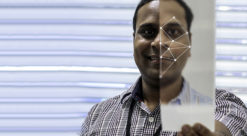
New technology detects and tracks you from the second you arrive at the airport until you’re out of the arrivals hall at your destination.
Poorly educated immigrant women qualify rapidly for a life in work as part of a Norwegian pilot project involving an “all-in-one” language tuition and vocational training programme.
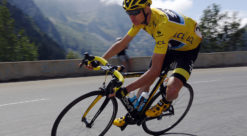
The professional cycling team will work with the university to improve their aerodynamic suits.
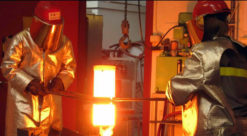
A Norwegian interdisciplinary project is aiming to ensure that workplace exposure to microscopic dust particles is kept to a minimum for smelter personnel.
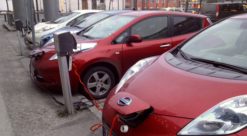
NTNU and Norway’s technological capital—Trondheim—hosted a Climathon to give the city the tools it needs to make ambitious greenhouse gas cuts. The results might be helpful to other cities around the globe that face the same problem.
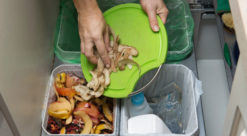
With Norway as a case study, a first-ever effort to quantify the benefits of recycling food waste versus preventing it shows prevention is the best policy. But Norway continues to invest significant funds in biogas facilities for food waste recycling.

Most teens say that classroom noise, tiredness, and poor ventilation are the reason for their problems. Girls are most affected.
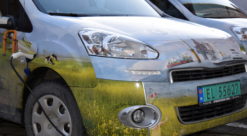
If every other passenger car in Norway is plugged into the electric network by 2020, Europe will have to produce more electricity – mainly from coal-fired power plants – to meet the demand. But it will be a plus for the climate nonetheless.
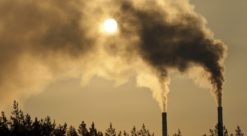
CO2 is the great scapegoat of our age. Is there a way to get rid of it by burying it in the ground or beneath the sea bed?
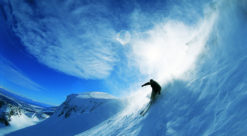
Do you often take chances and yet still land on your feet? Then you probably have a well-developed brain.
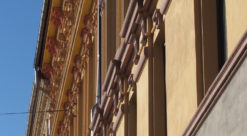
Using an old 19th century apartment block in Oslo as a case study, researchers are looking for conservation measures for heritage buildings. How can we make them watertight, insulated and protected against future climate change?
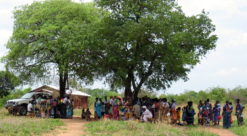
Tuberculosis seems to have fallen between the cracks in poverty-stricken Malawi’s sponsor-dependent health sector. The dominating focus on HIV may have left parts of Africa with a skewed health service, say researchers.
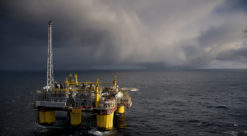
Thousands of old offshore oil wells will have to be plugged to prevent them leaking. The process may cost several hundred million Norwegian kroner, and you and I will have to find most of the money. Researchers are now proposing a solution that may offer some relief for what is a major headache for the Norwegian state.

The traditional way of running a project with a beginning and an end will soon be history. The scientists have a smarter solution.
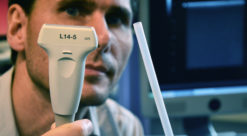
Ultrasound technology will soon be helping doctors to anaesthetise patients more accurately. And the technology is being developed in Trondheim.
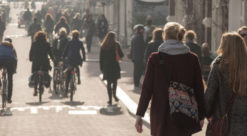
Ducky will help you find out how much your car trip or yesterday’s dinner has affected the environment. The app creators hope that competing against yourself and your friends will contribute to reducing CO2 emissions.
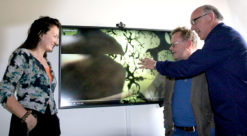
Composer Bertil Palmar Johansen calls the rats Gjertrud and Hjørdis “rock-and-roll rats” because they’re so cool. They also star in a new art video about neurological research. The music to the video is built on the sound of brain cell signals from May-Britt Moser’s rats.
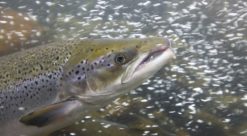
Fish farming is the largest source of phosphorus emissions in Norway, generating about 9,000 tonnes a year. Finding ways to reuse the waste from the fish farming industry could cut consumption of this important and increasingly scarce resource.
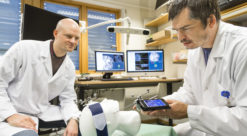
Researchers are using a high-precision instrument to inject toxins that alleviate migraine attacks. This means even better needle guidance and user-friendliness.