Scientists say 55,000 Norwegians suffer after-effects of trauma
The number of adults in Norway who suffer from PTSD is equivalent to practically an entire year class of Norwegians, claims a new study.

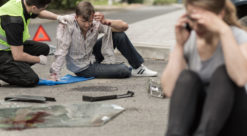
The number of adults in Norway who suffer from PTSD is equivalent to practically an entire year class of Norwegians, claims a new study.

Storing compressed air in sealed tunnels and mines could be a way of storing energy in the future – if an EU project in which Norway is a partner is successful.

Adolescents who are open to casual sex are more often involved in sexual harassment – both as victims and as perpetrators.
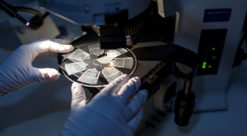
Allergies to antibiotics are the commonest form of medication allergies and, in the worst cases, can result in anaphylaxis and death. SINTEF is participating in the development of a new allergy test that will make it easier to provide patients with safe and correct treatments.
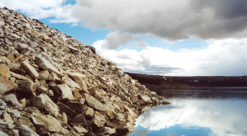
An international team of researchers has concluded that operational funding should continue to be provided for the production of renewable energy in Europe, provided that such support is progressively reduced over time.

Rafting, paintball and go-karting on company outings do not improve interactions at work. Strangely enough, these activities can make things worse.

You’ve heard it a thousand times, that little catchphrase with the magic number encouraging you to eat “five a day” of fruits and vegetables for better health. But it turns out that the real magic number is eight, according to a new comprehensive study just published in the International Journal of Epidemiology.
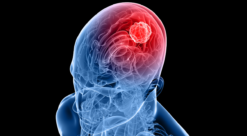
The fluid, which resembles brain tissue, makes ultrasound images easier to interpret during an operation. This will make it easier for surgeons to remove brain tumours more accurately.

The way to shorten one’s time in purgatory was to obtain indulgences. But they had to be purchased, so only people who were well off could afford them.
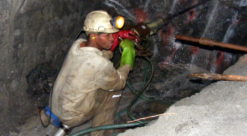
A wireless network of sensors aimed at preventing explosions in mines is an innovation of worldwide significance that is being developed by a Norwegian-African cooperative project.

When the unthinkable happens and the unpredictable takes over, crises cannot be handled by the book. What should the police have actually done during the 2011 attack on the Norwegian island of Utøya?

Longyearbyen, the world’s most northerly city, could save more than 100 million kroner (11.5 million US dollars) a year in the cost of electricity, if a completely green hydrogen-fuelled power station is built in preference to laying a cable from the mainland, according to calculations made by SINTEF scientists.
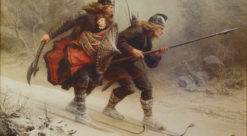
As the world struggles to make progress to limit climate change, researchers are finding ways to adapt to warmer winter temperatures — by developing environmentally friendly ways of producing artificial snow.

Children benefit from physical activity. And it can even help children cope with depression.

Women regret saying yes to casual sex much more often than men do. Men – almost exclusively – regret saying no. Why?
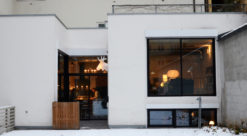
Combining old and new to achieve reduced energy consumption, a better living environment and architectural success. It’s definitely possible and researchers will show you how.
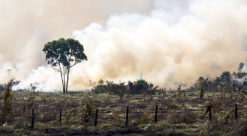
We don’t have to snuff out species when we eat a hamburger or buy a tee-shirt— if we know how our consumption affects endangered and threatened species.
The pursuit by elite sports of media — and the public’s — attention generates hardcore competition that even highly trained bodies can barely handle. Some athletes find doping to be their only recourse.

Norwegian researchers are looking into how a snake robot might carry out maintenance work on the International Space Station (ISS), study comets, and explore the possibility of living and working in lava tunnels on the Moon.

Using a smartphone is not easy for older people who have problems with fine motor skills or mild disabilities. So a resourceful engineer enlisted the help of some researchers and took things into his own hands. Now a completely different type of phone will soon be on the market.

Universal adoption of the ISA speed warning system in Norway could reduce both the average speed of vehicles and their emissions, concludes a recent SINTEF report. Lower speeds also lead to fewer fatalities and serious injuries on the roads.
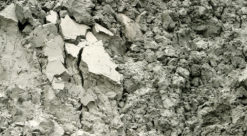
By controlling a mix of clay, water and salt, Norwegian and Brazilian researchers have created nanostructures that might help boost oil production, expand the lifespan of certain foods or that could be used in cosmetics or drugs.

Why has ragweed – a highly allergenic plant – been spreading so quickly?

Hospitals typically provide excellent end-of-life care for their patients. But when GPs assume responsibility for terminal patients, things don’t always go so well.