Collected climate data from Nigeria that researchers need
Climate scientists often lack the information they need for their climate models. A master’s student helped to find important figures from Africa’s most populous country – Nigeria.


Climate scientists often lack the information they need for their climate models. A master’s student helped to find important figures from Africa’s most populous country – Nigeria.
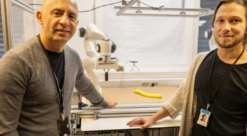
Say hello to the robot called Bifrost. With the help of AI technology, it uses its tactile capabilities to manipulate soft and pliable objects to order. Bifrost is in fact a world-beater.
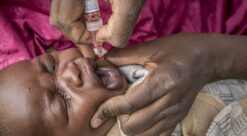
It wasn’t that long ago that we knew very little about the state of people’s health around the world. NTNU’s new honorary doctors have used 300,000 sources to provide us with an overview.
It might seem like the world is being bombarded by one crisis after another. But what’s really happening is an increase in media coverage.
Learning from nuclear construction successes and failures can help reduce the cost of building nuclear energy in Europe. But even if these power plants turn out to be more costly than we would like, putting them to work can reduce overall energy costs.
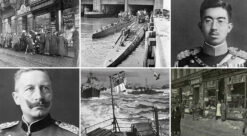
Trade blockades are an old tool that is still used in wars. The ERC has awarded an EUR 9.9 million grant to see how significant they really are.
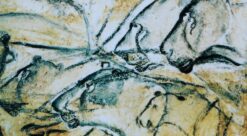
Objects and shapes influence language and how we see the world. The European Research Council is supporting research on this topic with a NOK 123 million Synergy Grant.

Obesity combined with the hormone disorder PCOS in mothers can cause health problems for her children both at birth and later in life.

The presidential race appears to be a dead heat ahead of the United States election on 5 November, but wokeness is ‘an unexploded bomb’.

A new test can determine if you have the right attitude to achieve your goals.
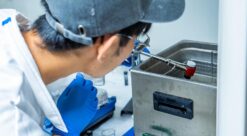
This nose has already proven capable of detecting food that has gone off. Now it’s on the trail of diseases. Best of all, this new technology is based on something you already have in your living room.
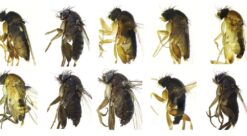
There are millions of species on Earth that we still know nothing about. Researchers call these species ‘biological dark matter’, but new methods can provide us with a better overview more quickly.

The number of Norwegian pupils who refuse to go to school is increasing. New research shows that school refusal may be linked to educational policy guidelines and the way the Norwegian school system is organized.
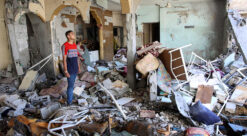
“Put very simply, conflicts end in one of three different ways,” says peace researcher Karin Dyrstad.

Many people can manage very well by using their cars less. But for this to happen, housing developments must be planned to make it easier. Astrid Bjørgen has been studying how this can be achieved.

A new study shows clear differences between the sexes: close family is important for girls with suicidal thoughts, whereas activities such as sports, leisure activities or other hobbies provide particularly good protection for boys.
A drug being tested for cancer treatment can probably also be used to kill bacteria that are resistant to antibiotics.
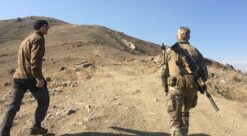
Most Afghanistan veterans manage well, but not all. Anger, not PTSD, is the main problem.
Almost everyone agrees that having the same GP (general practitioner) over a long period of time is beneficial, but are you at risk if your GP relocates or retires?

Inga Strümke does not believe artificial intelligence will take over the world with killer robots, but it might kill your spark. This is an area that needs rules, and Europe is about to get them.
Imagine if everyone were to agree to do everything they can to help the planet. Right now. What sort of state would we and the planet be in in 2050? And what would we have to do?
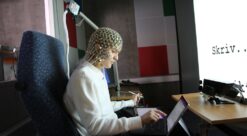
We learn much better when writing by hand instead of on a keyboard, and using fine motor skills is important for children’s brain development.
The United States remains a global power unparalleled in history. So what would it take for this situation to change? Four possible developments or events seem to be plausible candidates.
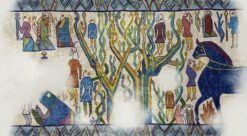
The Vikings surrounded themselves with textiles that were richly illustrated with stories. 1200-year-old tapestry fragments found in Norway’s Oseberg Ship are now being pieced together – without having to touch them.