The secret life of the sea trout
Armed with special acoustic tags, a team of researchers is following 50 individual fish for as long as seven months to learn more about their life – and death — in Norwegian fjords.
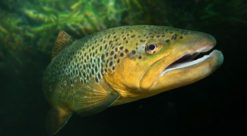
Armed with special acoustic tags, a team of researchers is following 50 individual fish for as long as seven months to learn more about their life – and death — in Norwegian fjords.
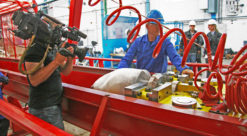
Not since the Titanic has a block of ice been quite so famous. In early June, Discovery Channel Canada came to NTNU’s Structural Impact Laboratory (SIMLab) to watch ice researchers from NTNU’s Sustainable Arctic Marine and Coastal Technology programme use a giant machine to simulate what happens when a ship slams into an iceberg.
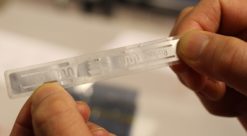
From Finnish hockey players to London double-decker buses to rhino horns, the humble RFID chip is hard at work. New software can help companies harness the power of this tiny technology.

Ever-rising greenhouse gas emissions and the potential need to deploy untested and expensive climate engineering technologies are just two of the many bits of bad news in the Intergovernmental Panel on Climate Change’s new report on “Mitigation of Climate Change”, released on 13 April.
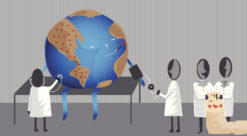
Professors from NTNU present key findings from IPPC on how we can mitigate climate change.
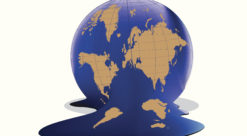
Three climate researchers talk about the latest report from Intergovernmental panel on climate change (IPCC). In English, French and Italian.
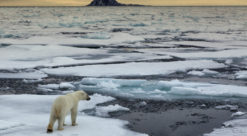
When the Intergovernmental Panel on Climate Change releases its new report on “Mitigation of Climate Change” on 13 April, NTNU Professor Edgar Hertwich’s contribution as one of the lead authors of the Energy Systems chapter will amount to exactly 5 pages.
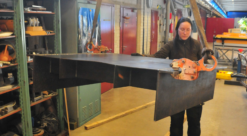
As the Arctic Ocean’s summer ice cap melts away, new trans-Arctic shipping routes will open and see a growing amount of shipping traffic. But what’s the best way to protect ships and other ocean structures if they crash into icebergs?
Reducing the aerodynamic load on wind turbines.
New technology makes mines safer.
Is it the coach, the player, the training – or everything?
Semiconductors nanowires grown on graphene
Why is chronic pain so prevalent?
Experts have long warned that rapid weight loss is bad, but new research suggests otherwise.
International studies have shown that younger children are more stressed […]
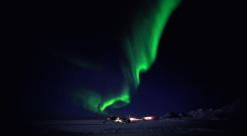
The Norwegian arctic island archipelago of Svalbard offers scientists the chance to investigate some of the most intriguing – and perplexing – puzzles facing the high north.

Today’s cities are the urban mines of tomorrow.
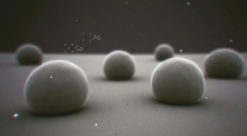
Mobile phones that bend, self-powered nanodevices, new and improved solar cell technology and windows that generate electricity are but a few of the potential products from the union of semiconductors and graphene.
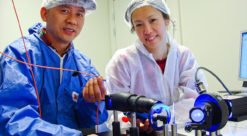
Researchers from NTNU’s Kavli Institute of Systems Neuroscience are now able to see which cells communicate with each other in the brain by flipping a neural light switch. The results of their efforts are presented in an article in the 5 April 2013issue of Science magazine.

Exercise is good for you. But can it help you live longer and better?
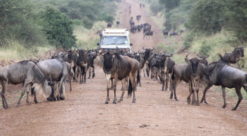
Will a road across the northern tier of Serengeti National Park ruin it?
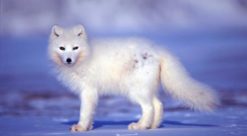
What happens when animals in harsh environments are exposed to extreme weather? Scientists found that extreme icing caused widespread die-offs in one arctic animal community. Climate change may cause more such extremes.
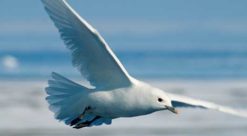
High levels of contaminants are linked with thinner eggshells in the ivory gull, a red-listed high Arctic seabird.
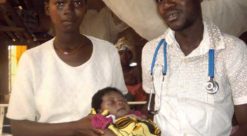
Training community medical officers to do acute surgery is saving lives in the small west African country of Sierra Leone.
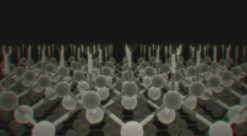
Norwegian researchers are the world’s first to develop a method for producing semiconductors from graphene. This finding may revolutionise the technology industry.
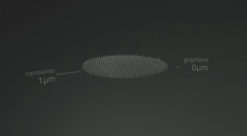
Researchers at NTNU have patented and are commercializing GaAs nanowires grown on graphene, a hybrid material with competitive properties.

Growing and producing food make agriculture and food consumption among the most important drivers of environmental pressures, including climate change and habitat loss.

How much carbon does your country emit – and where does it come from?

The science of spintronics, where the spin of an electron is used to create new technologies, may hold the key to making ever faster and lighter consumer products.
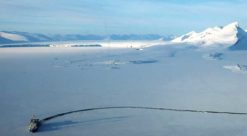
Environmental pollution from three continents finds its way to the Arctic – and into the animals that live there.