Ocean acidification bad for cod
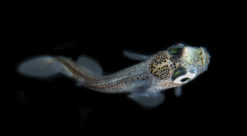
Increasing ocean acidification could double the mortality of newly-hatched cod larvae, a study just published in the American online journal PLOS ONE reports.
Increasing ocean acidification could double the mortality of newly-hatched cod larvae, a study just published in the American online journal PLOS ONE reports.

Five Gemini stories that detail the secrets of Norway’s bird populations.
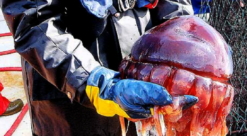
Jarle Mork has spent the last 40 years of his career studying Trondheim Fjord and its finned inhabitants. Warmer waters and the arrival of new creatures are bad news for the fjord’s cod population, he says. But other fishing practices are problematic, too.
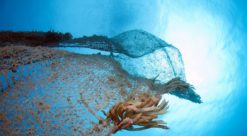
Marine debris has become a big problem. But plastic and old fishing nets can be turned into a resource rather than being an environmental hazard.
The Nordic Five Tech, an alliance of the leading technical universities in the Nordic countries, celebrated its tenth anniversary this June with a high level summit to plot a strategy for its next decade. There was talk of horses, cars, and swimming robot snakes.
Wind and solar power are variable sources of energy that require storage and transmission capacity. But the benefits outweigh the disadvantages.

Low birth weight babies are at higher risk of osteoporosis later in life, especially if they are born prematurely. Targeting these children with the appropriate diet and weight-bearing exercise can help improve the problem.
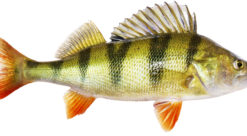
Fish can adapt their metabolisms to cope with warmer ocean temperatures, but not necessarily with extreme heat.
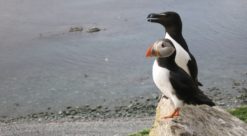
Seabirds nest by the hundreds of thousands in colonies along the Norwegian coast. By combining an ocean current model with fish larvae transport modeling and bird population numbers, Norwegian researchers have uncovered the factors that help determine the location of seabird nesting colonies.
Ocean dumping of munitions from WWII was common in Norway and along the European coast. Some of these bomb dumps offer a natural living laboratory where biologists can study cold-water coral reefs.

An American mother’s hunch might result in new treatments for patients who can’t tolerate conventional cholesterol-lowering drugs.
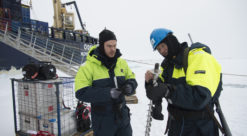
Representatives from Japanese and Norwegian universities, research institutions, government agencies and industries interested in polar issues will gather in Tokyo in early June to present research results and build partnerships.
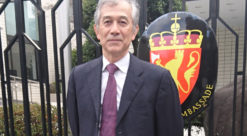
Starting today, Hiroshito Matsumoto will work from a base in Toyko on behalf of NTNU and the University of Bergen to build new research partnerships between Japan and Norway.
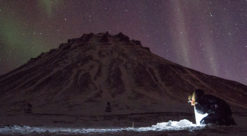
Global warming means much warmer winters in the Arctic, with more rain and icing. Researchers are working to understand what that will do to plants that have evolved to overwinter under a thick blanket of snow.
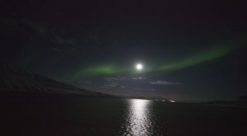
The polar night descends on the arctic archipelago of Svalbard for more than 100 days a year. But even in the depths of this darkness, the oceans are churning with activity.
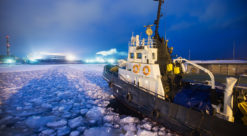
The Arctic is set to be a 21st century boomtown, as summer sea ice melts away, opening the area to increased trans-Arctic shipping and oil and gas development. A new understanding of Arctic coastal erosion offers clues to how to best protect the docks and other infrastructure this development will bring.

You won’t make big cuts in your environmental impact by taking shorter showers or turning out the lights. The real environmental problem, a new analysis has shown, is embodied in the things you buy.
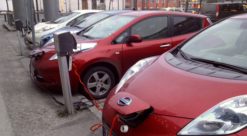
NTNU and Norway’s technological capital—Trondheim—hosted a Climathon to give the city the tools it needs to make ambitious greenhouse gas cuts. The results might be helpful to other cities around the globe that face the same problem.
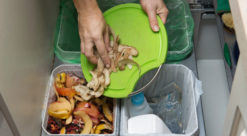
With Norway as a case study, a first-ever effort to quantify the benefits of recycling food waste versus preventing it shows prevention is the best policy. But Norway continues to invest significant funds in biogas facilities for food waste recycling.
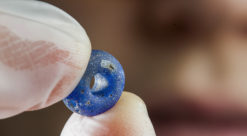
Norway’s Main Air Station at Ørland will be expanded to house the country’s new F-35 fighter jets. Archaeologists called in to examine the expansion site before construction have found evidence of Iron Age longhouses, complete with glass shards, beads and lots of garbage.
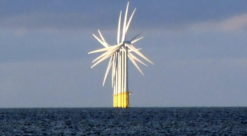
Policymakers, industry and government officials will have to invest US $2.5 trillion for electricity generation over the next 20 years. A new report presents the environmental costs and benefits linked to different renewable energy sources, and makes one thing abundantly clear: anything is better than coal.
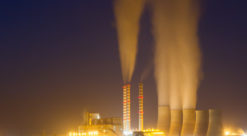
NTNU was given only two admission tickets to the UN climate talks in Paris later this month. The tickets will be used in part by two researchers from the university’s Industrial Ecology Programme to give a workshop about carbon accounting.

There’s no time to waste in shifting to renewable energy sources if we are to avoid dangerous climate change. That’s especially true when it comes to bioenergy, which causes a temporary increase in CO2 levels that is later removed as replacement biostocks grow.

Methane hydrates can be seen as a potential energy source or as a dangerous source of methane – a greenhouse gas that is 20 times more potent than CO2. With the help of a supercomputer and an interdisciplinary team, scientists have uncovered important details about their stability if they are disturbed by human-induced or natural forces.
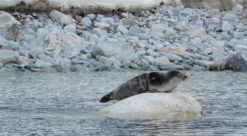
Every year, an estimated 8 million metric tons of plastic waste blows, falls or flows into the world’s oceans. Earlier this autumn, participants in the annual Svalbard Course plucked up 512 kg of the stuff from just one beach in two hours.
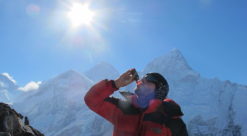
The human body isn’t made to operate at high altitude, but drinking beet juice may help the body acclimatize.
NTNU launched its partnership on 24 September with the EU’s premier programme to address climate change.

Beginning on 30 November, the nations of the world will gather in Paris to discuss a new global agreement on climate change. But what will it take to transform international political will into real action to curb global warming?
Researcher Markus Steen says research alone isn’t enough to make Norway’s economy greener. Industry needs to be more deeply involved with the research community at an early stage.
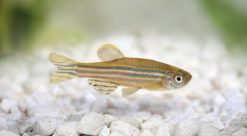
Transparent fish and an ability to work in the dark are key to the research of the newest group at the Kavli Institute for Systems Neuroscience.

An EU-funded research programme coordinated out of NTNU called LanPercept looks at language and perception in autism as just one of 15 projects.
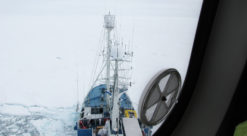
Global warming is upending virtually everything that scientists know about the Arctic ice cap. During the first half of 2015, a multinational team of researchers froze the RV Lance into the Arctic ice to learn more about how this ice has changed. NTNU researchers were among the scientists seeking to learn more about this changing environment.