Working with the EU on climate change
NTNU is the first Norwegian partner involved in Climate-KIC, the EU’s main climate innovation initiative.
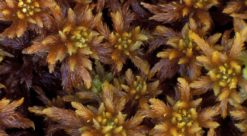
Where peat moss takes over in a northern lawn, it strangles almost all of its grassy neighbours. Nevertheless, there are good reasons to take care of peat moss.
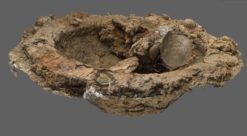
See a Viking’s grave or travel to the ocean floor. New technology allows archaeologists to easily map excavation sites in 3D.
Ordinary clay can be as good as more advanced materials for capturing carbon dioxide.
Space elevators, more effective solar cells, super-fast computers. All of these technologies are dependent on new information about the characteristics of nanoparticles. Researchers in Norway are giving us this insight.
This gouge may be the result of a successful parry, says archaeologist Ingrid Ystgaard, referring to the deep notch in the shield’s protective metal boss.
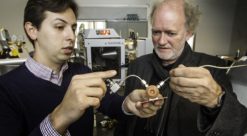
Earlier this year, students and employees at NTNU’s Nanolab cut a 100-nanometre thick platinum wire. That’s a thickness of just one ten-thousandth of a millimetre.
Computer games can help improve instruction. Pupils learn more. Teachers get a better overview of what and how well their students are learning.
Substantial revenues from natural resources bring opportunities, but also problems, in developing countries. A new research project will look at best practices in resource management.
The health of people all over the world is dependent on a slew of different variables, so interdisciplinary work is vital to professionals in global health. Twenty-two European countries, the USA and South Africa are all taking part in a comprehensive Norwegian global health survey.
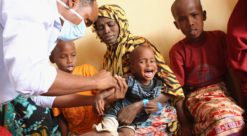
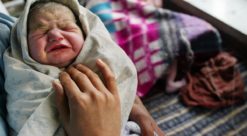
Mortality among childbearing mothers is still high in many countries. Simple methods can save both mother and child.
People from NTNU travel around the world to do research. Photograph Per Harald Olsen has documented a number of these trips. He also has some advice for photographers who would like to take pictures like his.
Norway needs its own climate laws, but these laws will only be effective if they are good. Bad climate policies may be worse than none at all, according to NTNU researchers and policy makers.
How would you feel about robots taking over elder care? It may seem odd to you, but most Japanese wouldn’t even think twice about robots caring for their grandparents.
Making sausages is not just a question of good ingredients and skill. There’s a little science involved, too. Professor Trygve Magne Eikevik makes his own sausages, and is willing to share his technique and his recipes, especially for Norwegian Christmas sausage.
2014 NOBEL PRIZE: Animal welfare is important for Nobel laureates May-Britt and Edvard Moser. Not just because that is how it should be, but also because the researchers get the best results that way.
It’s been this way for 127 years— the V-shaped wake pattern behind a ship moving in a straight line always has the same central angle. But a Norwegian armed with a pen and a piece of paper has discovered that in certain situations, a boat’s wake can actually be found in front of the boat.
NTNU researchers have made a discovery that can be key to the development of faster computers that use less energy.
Could human tissue samples be dried for storage, instead of being frozen? Researchers are looking at the salt cod industry for a potential tissue sample drying technology that could save money without sacrificing tissue quality.
The reindeer is a species that has done well for itself. There are nearly 3 million animals across large areas of the northernmost parts of the world. But where did Scandinavian reindeer actually come from?
They are the companies you’ve never heard of, but they help grease the wheels of international trade.
Have you ever used a water boiler to make yourself a cup of tea, but boiled enough water for two cups? Then you wasted energy. But good design can help.
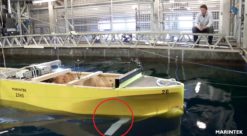
Are older, classical boat designs really better? High-tech testing in the Ship Towing Tank at the Norwegian Marine Technology Research Institute in Trondheim pits a 16th century classical rowboat against its newer, easier-to-build cousin.
The endangered African wild dog is increasingly coming into conflict with humans, partly because it is difficult to fence them out. But an unusual approach may offer hope.
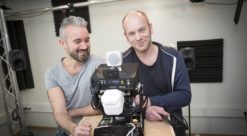
A conversation between two physicists in a Paris café led to the invention of a novel form of capsules that could be used in medicine, food, household products, cosmetics and paints. Their find has just been published in the latest issue of Nature Communications.
Researchers who study the prevalence of headaches and their causes worldwide need survey results that are comparable across nations and cultures. A new questionnaire should help solve the problem.
Greenhouse gas emissions from today will greatly affect our descendants for at least 1000 years.
Carbon capture and storage (CCS) is essential if the EU’s climate target is to be reached in a cost effective way. Extensive governmental support in the form of subsidies is necessary to support early implementation of this technology.