Muffins that could be good for your health
Imagine sinking your teeth into a tender muffin that tastes good and is chock full of vitamins, antioxidants and other natural ingredients that is also good for your health, too.

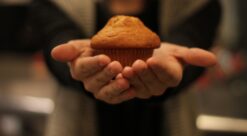
Imagine sinking your teeth into a tender muffin that tastes good and is chock full of vitamins, antioxidants and other natural ingredients that is also good for your health, too.
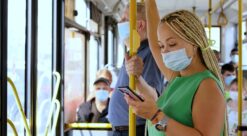
When countries shut down during the pandemic, many people stayed home. Some replaced their old habits with new ones, either temporarily until society opened up again or continuing post-pandemic. What do these changes in habit mean for our travel patterns?
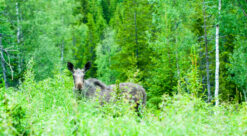
Climate researchers have long known that large animals, like moose, could play a role in how much the Earth will warm due to climate change. But the question is, how much? New research shows the answer can be a lot.
It is difficult to understand how conspiracy theories can create hatred directed at individuals and an entire people, but we are witnessing the same thing today.
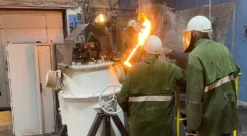
“We see no technical obstacles to being able to produce silicon without CO2 emissions within the next two to three years,” says Maria Wallin at NTNU.

It looked like the COVID-19 pandemic might be a good time to be an introvert. Now a large study shows that extroverts handled the situation better.
You don’t get to discover a new insects and arachnids numbering in the hundreds every day. Most of the new discoveries were of the biting midge variety.
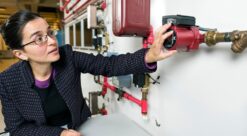
NTNU has tested a system to predict the heating needs on the Gløshaugen campus. The results show that we can save even more where surplus heat is already in use.
At least six million people have died from COVID-19 to date. But who dies is often not random. The same pattern is found around the world.
Some people feel worse than others after a stroke. Stroke patients with cognitive and emotional problems tend to experience fatigue more often and sleep more during the day, according to recent research.

By using a cutting edge technique to observe what’s happening at the atomic level inside their material, researchers at NTNU have discovered a surprising new method to make aluminium alloys stronger.
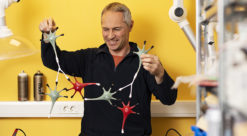
How can we explain to school students how our nervous system works? An NTNU researcher has created a building kit designed to make our brain’s activity easier to understand.
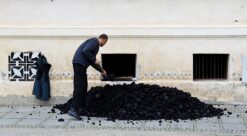
Can Europe use the energy crisis to help accelerate its efforts to achieve net zero greenhouse gas emissions by 2050? The EU’s Scientific Advisory Board on Climate Change says yes.
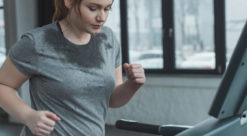
A combination of interval training and eating only within fixed times of the day could be the key to getting rid of dangerous belly fat.
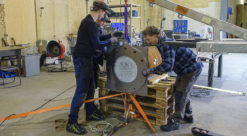
An explosion can hurtle fragments and debris at enormous velocities so they strike the surroundings. Then comes the shock wave. It’s a scary combination.
A recent large study suggests that being divorced or single increases the risk of dementia. But the researchers also discovered some surprising results.
The Kavli Institute for Systems Neuroscience has won a grant to share its groundbreaking miniature brain microscope with researchers across the globe.

Women often participate in non-violent demonstrations, and they can be of crucial importance. But what is now happening in Iran stands out from other popular uprisings.

Many children struggle with reading. A new method offers hope. The focus is on giving children the right challenges.
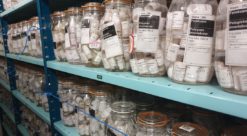
Even seemingly small changes in the climate can change the number of animals and plants in an area and how species behave, new research shows. Natural history collections provide valuable insights.
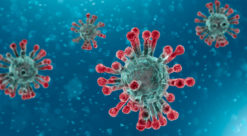
The ability of gold particles to reflect light in different colours is used in applications from stained glass to pregnancy tests. Now researchers are set to exploit the same properties in an ultra-fast sensor for the coronavirus.
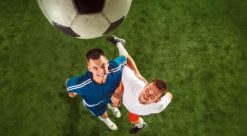
Big football clubs in the UK often have their own sports psychologists for the players. But can the players trust that their confidential conversations won’t be shared with management?
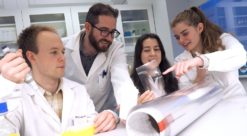
Plastic is useful but also poses an environmental problem. Scientists are now using enzymes from bacteria and fungi to break down plastic.

This summer, a coalition of researchers led by the Norwegian University of Science and Technology reported the first-ever use of a fibre-optic cable network to eavesdrop on whales in the Arctic. Now they suggest these networks be used to establish a low-cost global ocean-earth observatory.