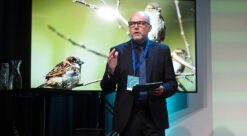
Prestigious EU support to save species
An NTNU professor has been awarded an ERC Advanced Grant to investigate how species can survive a changing environment.

An NTNU professor has been awarded an ERC Advanced Grant to investigate how species can survive a changing environment.

Sometimes you become so absorbed in a task that you forget everything else. We call it finding the flow. A new test can measure it.
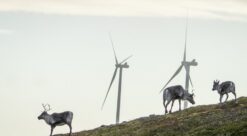
Wind turbines are contributing to the Southern Sámi losing grazing land for their reindeer husbandry. This livelihood is central to the identity of the Southern Sámi culture and thus to their language, researchers say.
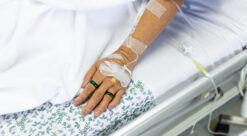
It has taken 18 years, but Professor Marit Otterlei has now created a completely new type of cancer medicine. No similar medication has progressed this far in development worldwide.
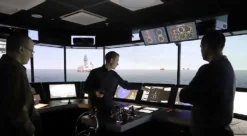
The risk of cyber attacks against a ship is real. The working crew on board must be allowed to practice handling these risks in a realistic way. Now they can.
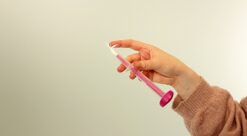
A simple test saves lives. Three out of four women who died of cervical cancer in the screening age of 25-69 years had not had a Pap smear in the past three and a half years.
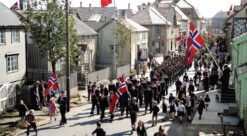
The conventional view has been that after the Second World War, Norway was impoverished and plundered, but the recovery actually went quite quickly. All the infrastructure that the occupying power built during the war played a significant role.

The more comfortable students feel at school, the better they feel they are mastering the subject matter.
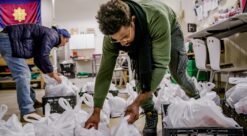
We might imagine that the differences between people in Norway are small, but this is not true. On the contrary, inequities have increased in recent years. And it matters who your parents are.
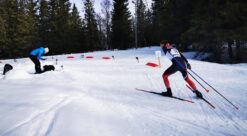
Skiers can gain on their competitors by having a detailed plan of what to do on the uphills. Timing their push at exactly the right moment is key to avoid expending too much effort.
The situation of family carers has recently been the national news in Norway. Hidden helpers – caregiving relatives – must become visible in order to prevent becoming patients themselves, and health policy rhetoric needs to be translated into action.
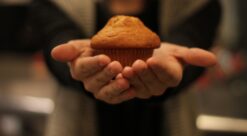
Imagine sinking your teeth into a tender muffin that tastes good and is chock full of vitamins, antioxidants and other natural ingredients that is also good for your health, too.
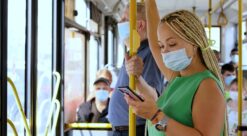
When countries shut down during the pandemic, many people stayed home. Some replaced their old habits with new ones, either temporarily until society opened up again or continuing post-pandemic. What do these changes in habit mean for our travel patterns?
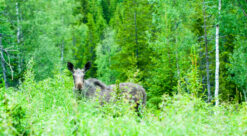
Climate researchers have long known that large animals, like moose, could play a role in how much the Earth will warm due to climate change. But the question is, how much? New research shows the answer can be a lot.
It is difficult to understand how conspiracy theories can create hatred directed at individuals and an entire people, but we are witnessing the same thing today.
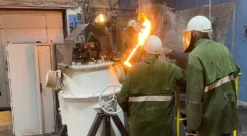
“We see no technical obstacles to being able to produce silicon without CO2 emissions within the next two to three years,” says Maria Wallin at NTNU.
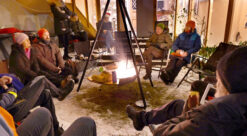
It looked like the COVID-19 pandemic might be a good time to be an introvert. Now a large study shows that extroverts handled the situation better.
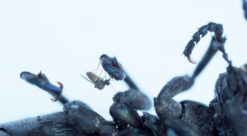
You don’t get to discover a new insects and arachnids numbering in the hundreds every day. Most of the new discoveries were of the biting midge variety.
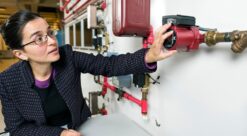
NTNU has tested a system to predict the heating needs on the Gløshaugen campus. The results show that we can save even more where surplus heat is already in use.
At least six million people have died from COVID-19 to date. But who dies is often not random. The same pattern is found around the world.
Some people feel worse than others after a stroke. Stroke patients with cognitive and emotional problems tend to experience fatigue more often and sleep more during the day, according to recent research.
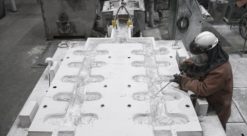
By using a cutting edge technique to observe what’s happening at the atomic level inside their material, researchers at NTNU have discovered a surprising new method to make aluminium alloys stronger.
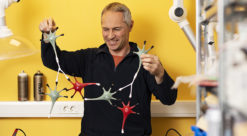
How can we explain to school students how our nervous system works? An NTNU researcher has created a building kit designed to make our brain’s activity easier to understand.
Can Europe use the energy crisis to help accelerate its efforts to achieve net zero greenhouse gas emissions by 2050? The EU’s Scientific Advisory Board on Climate Change says yes.