Infidelity can be forgiven – but at a cost
Most people who have been unfaithful do not believe it when their partner says they forgive them. And the fact that men often don’t realize that emotional infidelity is a problem just feeds the conflict.


Most people who have been unfaithful do not believe it when their partner says they forgive them. And the fact that men often don’t realize that emotional infidelity is a problem just feeds the conflict.
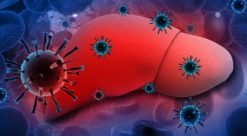
How hepatitis C converts innocent cells into virus factories.

What really happens in meeting rooms? Why does communication sometimes just flow and other times get totally stuck?

Most people think that detecting and treating illness as early as possible is a good thing and gives you the greatest chance of getting well again. That isn’t necessarily the case.

Being overweight, little physical activity and smoking increase our vulnerability for severe bloodstream infections. These factors also increase mortality.

The tuberculosis vaccine only works for children. BCG (bacille Calmette-Guerin) doesn’t protect you as an adult. Now we know more about how the bacterium avoids being detected.

Predators and people have lived side by side since time immemorial in the Serengeti National Park region in Tanzania. But strong population growth is leading to greater conflicts.

Most efforts to control ice build-up on structures like wind turbines and solar cells involve creating a surface that repels water. But Norwegian researchers have engineered a different approach that allows ice to form on a surface, but then causes it to crack off.

New study results may help shorten queues to see the physiotherapist by reducing excessive treatment.

A group of researchers spent twelve seasons making some house sparrows bigger and others smaller. Their experiment yielded some important answers.
Many patients are treated for prostate cancer unnecessarily. Norwegian researchers are working to reduce overtreatment, while at the same time detecting the sickest patients. Now they’re receiving EU support.

Boys are much worse at reading than girls. The disparities have been quite consistent over 15 years. New insights may give hope – if they’re put to use.

Ancient Norwegians made top-quality iron. But where did the knowledge to make this iron come from? An NTNU professor emeritus may have solved this riddle.

High cultural and ethnic diversity can contribute to more democratic societies with better economic management.

A mother’s risk of getting preeclampsia, a potentially life-threatening illness associated with pregnancy, can be linked in some cases to genes from her foetus.

Carl Folke, a groundbreaking researcher in his field, has been awarded the Gunnerus Sustainability Science Award for 2017.

Robotics technology is making inroads into the aquaculture sector, making it possible to regulate facilities from onshore.
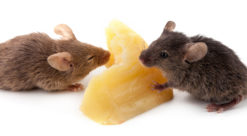
A new approach to cancer treatment combines ultrasound, bubbles and nanoparticles with chemotherapy. In an experiment, the treatment has cured cancer in mice.

Trying to reduce your brooding by running away from your thoughts or distracting yourself isn’t helpful, but you can overcome negative thoughts by letting them be.

Omega-3 supplements may help slow the development of diseases like cancer, Alzheimer’s and multiple sclerosis.

Now we know more about how to get really good at something. This is especially useful for people who are engaged in helping others to develop skills and knowledge — and for parents.

The relationship children have with their parents can sometimes influence the relationship they have with their teachers. Now we know more about why.

It most resembles a giant snake undulating through the water. But this snake-like robot can work in the vast ocean depths. And perhaps one of its relatives will be able to travel to outer space.

More and more people are heading to coffee shops to do work. And at the same time they’re changing cafe culture.