Predicting how CPR will work minutes ahead
After examining 298 patients with cardiac arrest, researchers found that ECG markers can provide a clue as to how the treatment is working — as much as four to five minutes into the future.

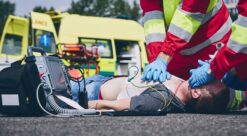
After examining 298 patients with cardiac arrest, researchers found that ECG markers can provide a clue as to how the treatment is working — as much as four to five minutes into the future.
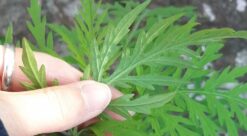
The plant is called common ragweed, and if you are allergic to pollen, you should probably pay extra close attention. This is one of the invasive plants that supergenes have brought to Norway.
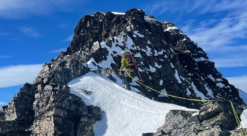
Why are cold temperatures so dangerous if you have an accident? And why is it that cold temperatures enable some patients to survive without permanent harm?
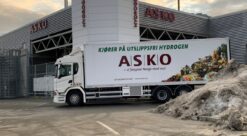
Haulage truck and fuel manufacturers have joined forces with researchers to make heavy transport across Europe more climate-friendly. And all thanks to having SINTEF ‘behind the wheel’.
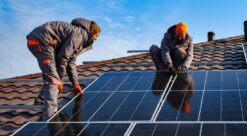
We need the electricity generated by solar panels in order to meet our climate change mitigation targets. But solar power must be integrated rationally and fairly – something that can only be achieved with effective regulation.
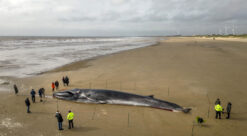
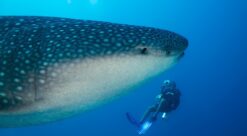
For the first time ever, researchers have been able to track eight fin whales in near real time for five hours, as they swam along a stretch of fibre-optic cable line in the Arctic. The breakthrough suggests that fibre-optic cable networks could be harnessed to help prevent whale deaths by ship strikes.
Medieval times may seem dusty and distant, but we are surrounded by the Middle Ages in many different ways in our daily lives.
Electric cars are a growing market, and so are the large batteries they use. Often these batteries are difficult to recycle. But help is on its way.
Managing hydropower production is complicated. Artificial intelligence can help ensure that we don’t run out of power.
Direct Air Capture (DAC) technologies offer new opportunities for getting closer to our climate change mitigation targets. However, we still have a long way to go before DAC can be fully rolled out as a mitigation measure.
Most of our planet is underwater – and steadily more will be underwater in the years to come. What do we really know about the underwater world?
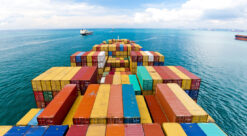
Vessel components are being transported all around the world when just a simple datafile would suffice.
Security holes in our smart devices are difficult to detect. Is it possible to automate the search for vulnerabilities? Researchers at NTNU in Gjøvik are on the case.
Bacteria-free fish fry put researchers on the track of how they could make fish more disease resistant.
Researchers are planning a solar energy plant that will capture ‘concentrated sunlight’ using mirrors. The plant will also be distinctive because it will generate both electricity and heat, which can be used to capture carbon dioxide.
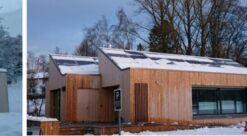
Norway has seen an increase in solar power capacity in recent years, but in winter solar panels face a big problem: snow. Researchers modelled how much extra electricity could be generated if solar panel surfaces were designed to repel snow and ice.

Are remote video consultations appropriate for treating children and young people under the care of the child welfare services? Therapists recognise a number of benefits, but most young people are critical of webcam-based therapy.

The magnets in wind turbines come from China, and the materials in our electric car batteries are for the most part sourced from Congo. Today, key minerals and metals are being transported to Europe from politically unstable countries far away. Is it possible to safeguard access to these raw materials here in Norway? In this article, we present three research-based strategies for addressing the problem.
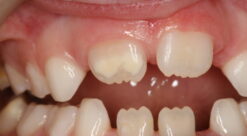
Many children have teeth that are practically falling apart due to weak enamel. Now researchers have studied whether a lack of vitamin D during pregnancy could be the culprit.
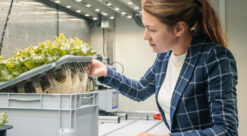
NASA has finished its planning and is ready to go. Humans will soon be returning to the Moon – this time in a manned base. But, if this project is to succeed, astronauts must be able to grow their own food. Norwegian researchers are in the process of making this possible.
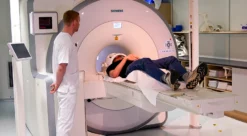
A radioactive tracer is being tested for the first time in Norway at St. Olavs Hospital and NTNU. The goal is to improve the detection of dementia diseases.
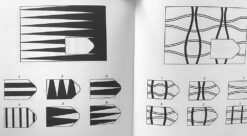
Seeing the similarity between graphic patterns or concepts can indicate whether a child has language difficulties.
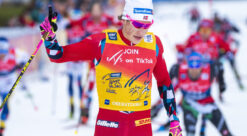
What we are seeing on our TV screens has now been confirmed by science. Johannes Høsflot Klæbo ticks all the boxes defined by researchers looking for the most important factors needed for success in mass start cross-country ski racing.
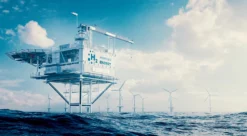
Producing hydrogen will become an important part of decarbonising Europe’s energy system and is one of the opportunities Norway has to maintain value creation along the lines of what the country has experienced with oil and gas.