Second-hand clothing is good, but less is best
Norway will reap major environmental benefits if residents stop sending wearable clothes out of the country, according to a recent study on clothing consumption in Norwegian households.


Norway will reap major environmental benefits if residents stop sending wearable clothes out of the country, according to a recent study on clothing consumption in Norwegian households.
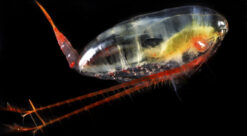
In the sea, fish feed on species lower in the food chain. Can these same species form the basis of a new feed industry supplying the fish farming sector?
Norway’s law on mining seabed minerals is too unclear, the knowledge base too flimsy, and the Storting’s White Paper on seabed mining does not hold water.
New lubricants, combined with new knowledge about how they should be applied to train wheels and rails, have the potential to reduce rail sector costs in Norway by hundreds of millions of kroner during the next decade.

Lectures continue to dominate university teaching, but especially when it comes to big introductory courses, more group work and alternative assignments, such as making podcasts, can have a positive effect.

The vast majority of us cradle babies in the crook of our left arm. Researchers think they know why.
The electricity grid in Norway needs more balancing power. Neighbourhood communities can help by participating in a new market where intelligent consumer planning enables them to save money.
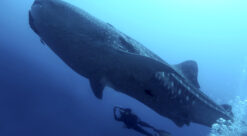
The transition to a greener, renewable economy will require large amounts of minerals, and society has to get them from somewhere. Norwegian politicians have reached an agreement approving deep sea mining, in a proposal that has reaped both cheers and frustration from scientists and activists alike. Here’s what our scientists think.

Researchers in Trondheim are developing a new medicine for diabetics who have to have daily injections of insulin. The key is a hormone that causes the smallest blood vessels to relax on the inside.
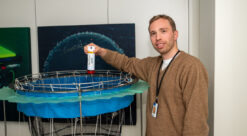
Farmed fish suffer if there is too little oxygen in the water. A system that can display oxygen concentrations may make it easier to supply this essential gas if the water becomes oxygen-poor.
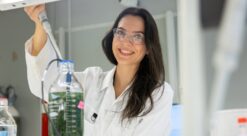
Norway already exports large amounts of valuable alginate, but new research findings can make this industry even larger and more sustainable.

Almost four out of ten people affected by sepsis are not back at work after two years.

Children in severe pain do not receive enough help. Nasal spray painkillers could be a solution for children who are scared of needles. National guidelines may be changed as a result.
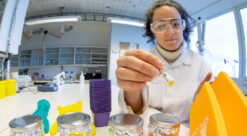
Tonnes of waste from standard plastic products have been uncontrollably released into the world’s oceans, where they gradually break down. But how harmful is this plastic to living organisms, and what is it in these plastics that is so damaging?

Norway has one of the highest prevalences of intestinal cancer in Europe, and this year sees the national screening programme being rolled out in full. But where do the capsule cameras go?
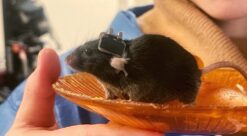
Scientists at NTNU’s Kavli Institute for Systems Neuroscience in Norway have discovered a pattern of activity in the brain that serves as a template for building sequential experiences.

Greener data processing requires systems that work smarter, faster, and are more energy efficient. Researchers from NTNU have developed a tiny piece of super-smart hardware that enables all of the above.

Road pricing may soon be replacing toll charges on Norwegian roads. But researchers still don’t know if this will help to reduce and regulate road traffic.
Energy efficiency measures in buildings can offer Norway a three-fold benefit – by contributing to avoiding an energy deficit and high electricity prices, and to achieving its stated climate change mitigation targets for 2030 and 2050.
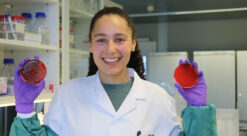
NTNU has developed a promising antibiotic candidate against MRSA. Behind the discovery lies a methodology that may be important in the fight against antimicrobial resistance.
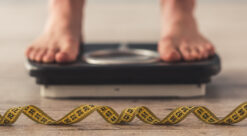
Norwegians are gaining weight. People who are “just” overweight cost the health system much more than people who are obese.
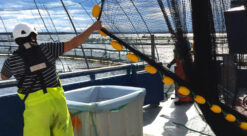
The 1,283 workers in the aquaculture sector who have responded to a recent HSE survey are not anxious without good reason. Sixty-two percent have experienced ‘near misses’ in the last two years. However, there is another threat that is making them even more worried.

When children first learn to read, a number of factors affect their success. Some of these factors benefit girls more than boys.

Recent research indicates that the best environmental solution is in fact to install less insulation in our homes and consume more electricity for heating. But first, some preconditions have to be met.