Arctic light pollution affects fish, zooplankton up to 200 metres deep
If artificial light shines into the Arctic Ocean during the polar night, does it matter? A new paper in Communications Biology says the answer to this is a strong yes.

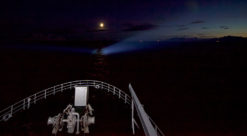
If artificial light shines into the Arctic Ocean during the polar night, does it matter? A new paper in Communications Biology says the answer to this is a strong yes.
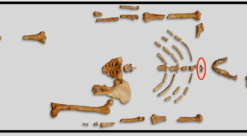
During the time of Darwin, anthropogeny was the study of human origins. Its sub-discipline paleoanthropology has since taken over, which focuses on fossils found in dry parts of Africa. These fossils don’t tell us much about why or where humans actually evolved.

As nations prepare to mitigate climate change, decision makers need to understand how land use fits into the climate equation. A new study looked at land use changes over two decades and found a major shift from cropland to forests. That change made western Europe cooler.
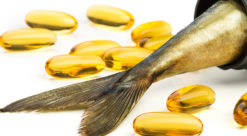
Omega-3 fatty acids are essential components of healthy diets for both humans and fish. The dramatic increase in fish farming worldwide has boosted the demand for omega-3 fatty acids so much that today’s supply can’t meet demand. Reducing waste and finding new sources can help.
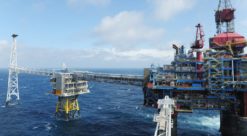
Humankind will need to harness carbon capture and storage technologies to help keep global warming to 2 degrees C or less. New research shows that there’s plenty of room to store captured CO2 — in offshore geologic rock formations.

You may feel like you can’t do anything to stop climate change. But climate activists who joined in grassroots movements managed to cut their carbon footprints and were still happier than their non-activist peers, new research shows.
Hydrogen as an energy carrier can help us move away from fossil fuels, but only if it is created efficiently. One way to improve efficiency is to use waste heat that’s left over from other industrial processes.
Materials scientists who work with nano-sized components have developed ways of working with their vanishingly small materials. But what if you could get your components to assemble themselves into different structures without actually handling them at all?
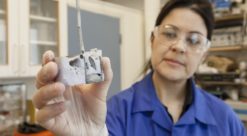
The green transition is impossible without a few relatively unknown substances. Find out more about the raw materials we cannot manage without – and why we have to act smart with them.

One way to reduce flight shame may lie in a ring of flames. And in the gas that’s generated in an outhouse.
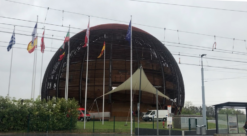
CERN’s two Large Hadron Colliders detectors to get a climate-friendly cooling system upgrade.
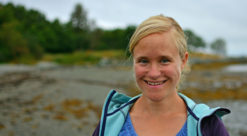
Francesca Verones has been awarded a prestigious grant by the European Research Council of EUR 1 million to study how people affect the oceans.
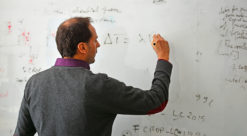
He solved a 127-year-old physics problem on paper and proved that off-centred boat wakes could exist. Five years later, practical experiments proved him right.

Combatting global warming will require major changes in land use, a new climate change report says. One important change could be decreasing the amount of land used to produce livestock — which means that people would have to eat less meat.
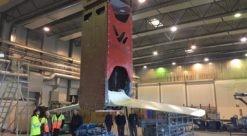
The boat wings started as an unfinished idea in Eirik Bøckmann’s head. Now they’re being mounted on a ferry in the Faroe Islands.

Lifestyle changes can reduce our greenhouse gas emissions and help protect nature. While some actions offer great potential, some aren’t as effective as we think and may even require more land and water, such as shifting to renewable energy.

Some Norwegian companies have moved industrial production home from low-cost countries. Could reshoring become a trend?
We can do a lot to save the climate by switching from coal to natural gas. And we can shelve concerns about the negative climate impact of methane emissions from gas production, say researchers.

Inspecting ship tanks and storage spaces underwater is a challenging task for humans. A start-up company that originated at NTNU is manufacturing autonomous drones that can take over the job – and do it more cheaply.
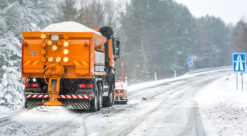
It’s springtime in much of the northern hemisphere, although spring snowstorms are still possible. When that happens, salt trucks and ploughs help make roads safe. But road salt can be bad for the environment, and can rust cars, bicycles and other metal. New research shows that salt use can be safely — and substantially — cut in certain circumstances.
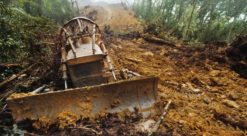
A sixth of all emissions resulting from the typical diet of an EU citizen can be directly linked to deforestation of tropical forests. Two new studies shed light on this impact, by combining satellite imagery of the rainforest, global land use statistics and data of international trade patterns.

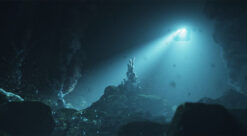
For the first time ever, researchers have been able to peek deep into the mantle of the Earth under an ultraslow mid-ocean ridge, where they have been able to observe mantle melting and growth of the Earth’s crust.
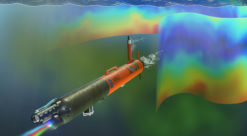
Phytoplankton form the base of the marine food chain but are notoriously difficult for scientists to account for — a little like trying to identify and count motes of dust in the air. A truly independent underwater vehicle shows it can do the job.
Stavanger is Norway’s oil capital. Trondheim could become the country’s capital for seabed mining. It will be an important contribution to the UN’s climate goals.