Nanomedicines save lives, but they don’t reach the market or the patient’s body fast enough. Researchers have now come up with a recipe to accelerate and improve the process.
Digital technologies are creating many opportunities for the industry, but how can you ensure that you take advantage of these opportunities in practice? Researchers examine how and why in the new book “Digitalization and Sustainable Manufacturing – Twin Transition in Norway”.
It’s been a mystery for many years: Every day, tonnes of ferromanganese – an important additive in steel – are “locked” in slag on their way out of the furnaces. We are now getting close to solving this problem.
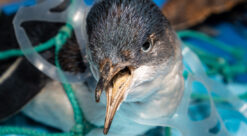
Ropes and fishing gear used in the fisheries and aquaculture industries are a major source of microplastics in the ocean and littering along the coastline. A multidisciplinary international research team has now drawn up a plan that will help to reduce pollution.
The delivery of nanomedicines using gas bubbles has shown itself to be a unique way of transporting cytotoxins to the lungs of cancer patients. The method enables precise and focused treatments, and the local action of the drugs also prevents a range of side-effects.
A recent innovation has the potential to accelerate the introduction of essential carbon capture processes in a range of industries. The technology has recently been demonstrated at a waste combustion plant in Bergen, with excellent results.
Mineral recovery by mining generates large volumes of surplus crushed rock that end up polluting natural environments. If we succeed in generating new knowledge, such surpluses can instead be used to manufacture concrete or improve agricultural soils.
Researcher Hanne Haslene-Hox at SINTEF claims that bacteria are much better than their reputation suggests. Each of us hosts as many as 38 million of them in our bodies.
As early as next year, a hundred new hydrogen trucks will be rolling Norwegian roads – with zero emissions and a range of 500 kilometres. And that’s not all! It takes less than fifteen minutes to fill their tanks.
By imitating nature, it may be possible to recover seabed minerals by extracting hot water from the Earth’s crust. We can harvest green energy and be sensitive to the environment – all at the same time.
Both the glass and aluminium industries cast glass in furnaces that generate large volumes of greenhouse gases. Researchers believe that replacing natural gas with hydrogen will enable us to remove greenhouse gas emissions and promote smarter production.
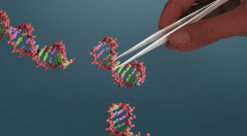
Conventional breeding techniques result in major and uncontrolled modifications to the genetic material of plants and animals. If arguments based on the ‘precautionary principle’ are used as blindly on this issue as in the gene technology debate, then we are condemning the world to starvation.
Did you know that the chemical industry supplies products to virtually all other value chains, including the food, construction, health and transport sectors? All these industries are now having to renew themselves as part of the green transition, and SINTEF is working to help them.
If the Norwegian government rejects the majority opinion of the Gene Technology Committee, it will miss a long overdue opportunity to boost food safety, improve animal welfare and promote more eco-friendly pesticides.
SINTEF researchers are applying methodologies used to transport oil and gas in their efforts to upscale a technology for carbon capture and storage. This is good news for the climate.
Necessary reductions in greenhouse gases will be achieved too late if we have to wait for all our aircraft, ships and trains to transition from fossil fuels. This is why we need biofuels – in spite of the criticisms levelled at their use in a recent article published on the opinions website ‘NRK Ytring’. Biofuels are no ‘climate change mitigation ruse’, as these authors would have you believe.
Today, products that utilise rare materials are for the most part manufactured in China. However, the EU has recently decided to boost its raw materials supply security. Researchers and the minerals industry are now looking to Norway.
Researchers have recently discovered a new way of making consumer items. They’ve developed a machine, based on AI technology, that can customise personal care products to your own requirements.
The addition of slag has been shown to reduce greenhouse gas emissions from concrete manufacture by more than 95 per cent. Researchers have now discovered that the concrete delivers.
Last week, the Hungarian Katalin Karikó and the American Drew Weissman were awarded the Nobel Prize for Medicine for their research into the mRNA-technology applied to develop the vaccines used to combat Covid-19. But what exactly is mRNA technology?
Every organism needs to breathe – including cells that we use in in vitro microphysiological systems. We now have promising results with a material that enhances the quality of our experiments.
The Privacy Statement is about how this website collects and uses visitor information. The statement contains information that you are entitled to when collecting information from our website, and general information about how we treat personal data.The legal owner of the website is the processing officer for the processing of personal data. It is voluntary for those who visit the web sites to provide personal information regarding services such as receiving newsletters and using the sharing and tip services. The treatment basis is the consent of the individual, unless otherwise specified.
1. Web analytics and cookies (cookies)
As an important part of the effort to create a user-friendly website, we look at the user pattern of those who visit the site. To analyze the information, we use the Google Analytics analysis tool.Google Analytics uses cookies (small text files that the site stores on the user's computer), which registers the users' IP address and provides information about the individual user's online movements. Examples of what the statistics give us answers to are; how many people visit different pages, how long the visit lasts, what websites users come from and what browsers are used. None of the cookies allow us to link information about your use of the site to you as an individual.The information collected by Google Analytics is stored on Google servers in the U.S.. The information received is subject to the Google Privacy Policy.An IP address is defined as a personal information because it can be traced back to a particular hardware and thus to an individual. We use Google Analytics's tracking code to anonymize the IP address before the information is stored and processed by Google. Thus, the stored IP address can not be used to identify the individual user.
2. Search
If the webpage has search function, it stores information about what keywords users use in Google Analytics. The purpose of the storage is to improve our information service. The search usage pattern is stored in aggregate form. Only the keyword is saved and they can not be linked to other information about the users, such as the IP addresses.
3. Share / Tips service
The "Share with others" feature can be used to forward links to the site by email, or to share the content of social networking. Tips for tips are not logged with us, but only used to add the tips to the community. However, we can not guarantee that the online community does not log this information. All such services should therefore be used wisely. If you use the email feature, we only use the provided email addresses to resend the message without any form of storage.
4. Newsletter
The website can send out newsletters by email if you have registered to receive this. In order for us to be able to send e-mail, you must register an e-mail address. Mailchimp is the data processor for the newsletter. The e-mail address is stored in a separate database, not shared with others and deleted when you unsubscribe. The e-mail address will also be deleted if we receive feedback that it is not active.
5. Registration, form
The website may have a form for registration, contact form or other form. These forms are available to the public to perform the tasks they are supposed to do.Registration form is for visitors to sign up or register.Contact form is for visitors to easily send a message to the website's contact person.We ask for the name of the sender and contact information for this. Personal information we receive is not used for purposes other than responding to the inquiry.The form is sent as email via Mailgun as a third party solution. The entire submission will be stored at Mailgun for 24 hours. Between 24 hours and 30 days, only mailheader is stored before the submission is deleted after 30 days. The reason for this storage is to confirm whether emails are sent from the website and forwarded to the correct recipient.Once the email is received by the recipient, it is up to the recipient to determine the data processing needs of the email.
6. Page and service functionality
Cookies are used in the operation and presentation of data from websites. Such cookies may contain language code information for languages selected by the user. There may be cookies with information supporting the load balancing of the system, ensuring all users the best possible experience. For services that require login or search, cookies can be used to ensure that the service presents data to the right recipient.