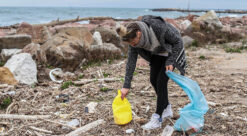
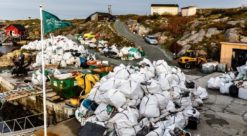
The Kunming-Montreal Global Biodiversity Framework states that plastic pollution must be eliminated by 2030. So why haven’t we enacted measures that make a real difference?
Geography as a school subject is under pressure. There aren’t enough qualified teachers and it loses out to other subjects in school. In many countries, important aspects are left out of the curricula.
Is teacher-led play really play? New students don’t necessarily think so. One researcher believes that more free play in school could improve classroom dynamics and strengthen relationships.
More than 80 years ago, Norwegian teachers refused to teach Nazi ideology to their students. They were tortured, imprisoned and starved. But they prevailed. The story of how they won — and why it still matters.
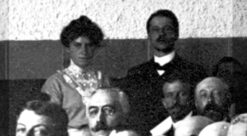
The Norwegian Institute of Technology had special status and an education from the institute virtually guaranteed good career opportunities. That allowed its women graduates to break the glass ceiling in the early 20th century and become chemical engineers. But every woman needed a supportive man behind her.
Assigning marks in Grade 7 can have negative effects. A new study shows that the practice can affect pupils’ academic performance and how they experience the transition to secondary school.
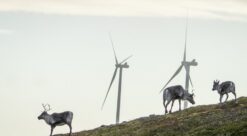
Wind turbines are contributing to the Southern Sámi losing grazing land for their reindeer husbandry. This livelihood is central to the identity of the Southern Sámi culture and thus to their language, researchers say.
How can we explain to school students how our nervous system works? An NTNU researcher has created a building kit designed to make our brain’s activity easier to understand.
Children engage in rough play today, just like they did in the past. What’s the same and what has changed? Researchers have taken a closer look and have a clear recommendation for today’s parents and kindergarten and school staff.
Norwegian youth from all over the country and across social affiliation point to teen activist Greta Thunberg as a role model and source of inspiration for climate engagement.
Mausund and the Froan Nature Reserve are located in an archipelago far out to sea along the Trøndelag county coast, but they are not exactly pristine. About 25 per cent of the soil in the area contains plastic.
Lower secondary school means grades, more tests and more freedom. On top of all that you have the major physical developments that the body is undergoing. Yet the vast majority of pupils find the transition to lower secondary school positive, according to research from NTNU.
For generations, children have played blind man’s bluff, hide-and-seek, hopscotch and climbed trees. But in the “olden days,” free play could more often end in injury and death.
There are different views among students, education policymakers and educators about what the qualities of a good teacher should be, according to a new NTNU study.
In the virtual world, inaccessible places become accessible. NTNU uses virtual reality – or VR – technology to create new teaching methods.
Published
02.04.19
Privacy Policy
The Privacy Statement is about how this website collects and uses visitor information. The statement contains information that you are entitled to when collecting information from our website, and general information about how we treat personal data.The legal owner of the website is the processing officer for the processing of personal data. It is voluntary for those who visit the web sites to provide personal information regarding services such as receiving newsletters and using the sharing and tip services. The treatment basis is the consent of the individual, unless otherwise specified.
1. Web analytics and cookies (cookies)
As an important part of the effort to create a user-friendly website, we look at the user pattern of those who visit the site. To analyze the information, we use the Google Analytics analysis tool.Google Analytics uses cookies (small text files that the site stores on the user's computer), which registers the users' IP address and provides information about the individual user's online movements. Examples of what the statistics give us answers to are; how many people visit different pages, how long the visit lasts, what websites users come from and what browsers are used. None of the cookies allow us to link information about your use of the site to you as an individual.The information collected by Google Analytics is stored on Google servers in the U.S.. The information received is subject to the Google Privacy Policy.An IP address is defined as a personal information because it can be traced back to a particular hardware and thus to an individual. We use Google Analytics's tracking code to anonymize the IP address before the information is stored and processed by Google. Thus, the stored IP address can not be used to identify the individual user.
2. Search
If the webpage has search function, it stores information about what keywords users use in Google Analytics. The purpose of the storage is to improve our information service. The search usage pattern is stored in aggregate form. Only the keyword is saved and they can not be linked to other information about the users, such as the IP addresses.
3. Share / Tips service
The "Share with others" feature can be used to forward links to the site by email, or to share the content of social networking. Tips for tips are not logged with us, but only used to add the tips to the community. However, we can not guarantee that the online community does not log this information. All such services should therefore be used wisely. If you use the email feature, we only use the provided email addresses to resend the message without any form of storage.
4. Newsletter
The website can send out newsletters by email if you have registered to receive this. In order for us to be able to send e-mail, you must register an e-mail address. Mailchimp is the data processor for the newsletter. The e-mail address is stored in a separate database, not shared with others and deleted when you unsubscribe. The e-mail address will also be deleted if we receive feedback that it is not active.
5. Registration, form
The website may have a form for registration, contact form or other form. These forms are available to the public to perform the tasks they are supposed to do.Registration form is for visitors to sign up or register.Contact form is for visitors to easily send a message to the website's contact person.We ask for the name of the sender and contact information for this. Personal information we receive is not used for purposes other than responding to the inquiry.The form is sent as email via Mailgun as a third party solution. The entire submission will be stored at Mailgun for 24 hours. Between 24 hours and 30 days, only mailheader is stored before the submission is deleted after 30 days. The reason for this storage is to confirm whether emails are sent from the website and forwarded to the correct recipient.Once the email is received by the recipient, it is up to the recipient to determine the data processing needs of the email.
6. Page and service functionality
Cookies are used in the operation and presentation of data from websites. Such cookies may contain language code information for languages selected by the user. There may be cookies with information supporting the load balancing of the system, ensuring all users the best possible experience. For services that require login or search, cookies can be used to ensure that the service presents data to the right recipient.